The Impact of ChatGPT on Self-Regulated Learning among Islamic Religious Education Students: A Case Study at UIN Mataram
DOI:
https://doi.org/10.61455/sujiem.v4i02.668Keywords:
chatgpt, self-regulated learning, islamic religious education, higher education, artificial intelligenceAbstract
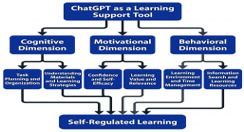
Objective: To analyze the impact of ChatGPT use on self-regulated learning among Islamic Religious Education (IRE) students at Universitas Islam Negeri (UIN) Mataram, particularly their perceptions of its benefits, challenges, and effects on learning independence. Theoretical framework: This study adopts Zimmerman’s theory of self-regulated learning, which examines learning through three dimensions: cognitive, motivational, and behavioral. These dimensions provide the framework for analyzing students’ interactions with ChatGPT. Literature review: The literature review focuses on the use of artificial intelligence, particularly ChatGPT, in higher education and its relationship with self-regulated learning. It addresses the potential benefits and risks of AI-assisted learning for students’ independence, creativity, and critical thinking. Methods: This study employs a qualitative case study approach involving four IRE students from semesters 2, 4, and 6 at UIN Mataram. Data were collected through individual interviews and analyzed using data reduction, data display, and conclusion drawing, supported by triangulation. Results: The findings reveal that ChatGPT supports assignment planning, information access, material comprehension, idea development, and classroom confidence. However, excessive use may lead to dependency, reduced creativity and critical thinking, and difficulties in verifying information accuracy. Implications: The findings highlight the importance of promoting responsible and critical ChatGPT use in Islamic Religious Education. Lecturers should encourage students to use AI as a learning support tool while maintaining independent thinking, creativity, and information-verification skills. Novelty: This study provides a context-specific understanding of ChatGPT’s influence on self-regulated learning among IRE students at UIN Mataram. Its contribution lies in examining both the supportive and potentially detrimental effects of ChatGPT across Zimmerman’s cognitive, motivational, and behavioral dimensions.
References
Salwa Tadzkirotul Aula, Rachil Najma Shifa, and Dewi Khurun Aini, “Analisis Strategi Management Waktu dalam Meningkatkan Produktivitas Belajar Untuk Menghindari Stress Akademik Pada Mahasiswa,” Obs. J. Publ. Ilmu Psikol., vol. 2, no. 3, pp. 91–113, 2024, https://doi.org/10.61132/observasi.v2i3.467.
R. Hey, M. McDaniel, and F. A. Hodis, “How undergraduate students learn: uncovering interrelationships between factors that support self-regulated learning and strategy use,” Metacognition Learn., vol. 19, no. 3, pp. 743–772, 2024, https://doi.org/10.1007/s11409-024-09389-8.
K. Kusworo, G. Goreta, I. Hanafi, T. T. Djoko Susanto, and I. A. D. Astuti, “Chat GPT sebagai Era Baru dalam Transformasi Pembelajaran: Systematic Literature Review,” SAP (Susunan Artik. Pendidikan), vol. 8, no. 3, p. 480, 2024, https://doi.org/10.30998/sap.v8i3.17991.
R. Rahman, M. Murniyetti, and W. Q. S, “Pengembangan nilai moderasi beragama dalam materi akidah pada perkuliahan pendidikan agama Islam di Universitas Negeri Padang,” Humanika, vol. 23, no. 2, pp. 211–216, 2023, https://doi.org/10.21831/hum.v23i2.65538.
Izzatul Mula and Auliya Ristiani, “Transformasi Struktur Pekerjaan dan Kebutuhan Keterampilan di Era Teknologi AI dan Otomatisasi di Pasar Global,” Nian Tana Sikk. J. ilmiah Mahasiswa, vol. 3, no. 1, pp. 155–167, 2025, https://doi.org/10.59603/niantanasikka.v3i1.665.
A. M. Meihan, J. Y. Sinurat, and L. Rukmana, “Analisis Pemanfaatan Chatgpt Dalam Pembelajaran Sejarah Oleh Mahasiswa Progam Studi Pendidikan Sejarah Universitas Jambi,” J. Pendidik. Sej. Indones., vol. 6, no. 2, p. 348, 2023, https://doi.org/10.17977/um0330v6i2p348-357.
Ayun Hafifatul Mukarohmah, Koderi, Agus Jatmiko, and Ihsan Mustofa, “Literature Review on the Use of ChatGPT in Islamic Religious Education Learning,” Al-Masail J. Islam. Stud., vol. 2, no. 1, pp. 28–34, 2024, https://doi.org/10.61677/al-masail.v2i1.185.
A. Fitria, E. A. Rahma, and D. K. Aini, “Dukungan Sosial Teman Sebaya dan Self-regulated learning pada Mahasiswa Perantau,” Psimphoni, vol. 5, no. 1, p. 31, 2024, https://doi.org/10.30595/psimphoni.v5i1.22450.
K. H. Najib, E. R. Nofrida, S. Budiarto, T. Taryatman, and T. Ardhian, “ChatGPT in higher education: Does acceptance lead to self-directed learning?,” J. Prima Edukasia, vol. 14, no. 1, pp. 36–48, 2026, https://doi.org/10.21831/jpe.v14i1.87199.
W. Suharmawan, “Pemanfaatan Chat GPT Dalam Dunia Pendidikan,” Educ. J. J. Educ. Res. Dev., vol. 7, no. 2, pp. 158–166, 2023, https://doi.org/10.31537/ej.v7i2.1248.
I. Ledang and S. M. Asshagab, “Penguatan Self-Regulated Learning Mahasiswa melalui Pembelajaran IPA Berbasis Nilai-Nilai Islam pada Mata Kuliah Materi dan Energi,” Al-Alam Islam. Nat. Sci. Educ. J., vol. 4, no. 2, pp. 201–212, 2025, https://doi.org/10.33477/al-alam.v4i2.12060.
Rahmania and A. Gafur, “Pemanfaatan kecerdasan buatan (AI) berbasis Chat-GPT dalam meningkatkan kemampuan berpikir kritis peserta didik,” CaXra J. Pendidik. Sekol. Dasar, vol. 6, no. 3, pp. 1206–1217, https://doi.org/10.31980/caxra.v6i3.3937.
Arfah Sahabudin, “ChatGPT: Sebuah Transformasi Cara Belajar Mahasiswa Studi Kasus : Mahasiswa ITBM Polman di Kabupaten Polewali Mandar,” J. e-bussiness Inst. Teknol. dan Bisnis Muhammadiyah Polewali Mandar, vol. 3, no. 1, pp. 65–73, 2023, https://doi.org/10.59903/ebussiness.v3i1.63.
E. Angruningrum, A. A. A. Meitridwiastiti, M. A. Pratama, L. P. R. Utami, D. A. D. K. Ameria, and K. P. S. Putra, “Pengaruh Artificial Intelligence Berbasis Chat terhadap Efektivitas dan Efisiensi Penyelesaian Masalah Pembelajaran di Tingkat Perguruan Tinggi,” J. JTIK (Jurnal Teknol. Inf. dan Komunikasi), vol. 9, no. 2, pp. 520–529, 2025, https://doi.org/10.35870/jtik.v9i2.3316.
E. D. Fatmala and D. Nastiti, “Learning motivation and self-regulation linked to academic procrastination,” Indones. J. Educ. Methods Dev., vol. 20, no. 2, pp. 1–15, 2025, https://doi.org/10.21070/ijemd.v20i2.885.
Toga Ari Harmawan and A. Makmur, “Teacher’S Perception of the Use of the ChatGPT Application As a Learning-Supporting Media,” Perspekt. Ilmu Pendidik., vol. 37, no. 2, pp. 130–138, 2023, https://doi.org/10.21009/pip.372.5.
I Ketut Aria Darmawan, Supriyadi, and Junaidi Adiguna, “Analisis Persepsi Dan Preferensi Mahasiswa Terhadap Penggunaan Chatgpt Dalam Proses Pembelajaran (Studi Kasus Di Universitas Samawa Fakultas Ekonomi Dan Manajemen),” J. TAMBORA, vol. 8, no. 2, pp. 10–24, 2024, https://doi.org/10.36761/tambora.v8i2.4176.
S. Silfiasari, “Penyusunan Skala Self-Regulated Learning Pada Mahasiswa Dalam Konteks Pembelajaran Daring,” J. Ecopsy, vol. 10, no. 1, p. 31, 2024, https://doi.org/10.20527/2023.11.004.
M. J. Maulana, C. Darmawan, and R. Rahmat, “Penggunaan Chatgpt Dalam Tinjauan Pendidikan Berdasarkan Perspektif Etika Akademik,” Bhineka Tunggal Ika Kaji. Teor. dan Prakt. Pendidik. PKn, vol. 10, no. 1, pp. 58–66, 2023, https://doi.org/10.36706/jbti.v10i1.21090.
L. Anthonysamy, A. C. Koo, and S. H. Hew, “Self-regulated learning strategies in higher education: Fostering digital literacy for sustainable lifelong learning,” Educ. Inf. Technol., vol. 25, no. 4, pp. 2393–2414, 2020, https://doi.org/10.1007/s10639-020-10201-8.
J. Rudolph, S. Tan, and S. Tan, “War of the chatbots: Bard, Bing Chat, ChatGPT, Ernie and beyond. The new AI gold rush and its impact on higher education,” J. Appl. Learn. Teach., vol. 6, no. 1, pp. 364–389, 2023, https://doi.org/10.37074/jalt.2023.6.1.23.
O. Barzilai, R. Shmallo, and R. Zviel-Girshin, “Generative AI-Guided Versus Human-Guided Learning from Errors in Higher Education: A Comparison of Student Perceptions,” Educ. Sci., vol. 16, no. 10, p. 1698, 2026, https://doi.org/10.3390/educsci16101698.
C. Navas-Romero, G. Zakharova-García, F. D. Guillén-Gámez, and S. Cebrián-Cifuentes, “Designing Teaching Materials with GenAI: Perceptions of Cognitive Load and Learner Competencies in Higher Education,” Educ. Sci., vol. 16, no. 10, p. 1736, 2026, https://doi.org/10.3390/educsci16101736.
J. C. Mustapha, M. Abdullah, and G. Kumar, “HAICA: A framework for reasoning transparency in AI-enabled higher education assessment,” Soc. Sci. Humanit. Open, vol. 14, 2026, https://doi.org/10.1016/j.ssaho.2026.103601.
H. A. Ajani and S. Ramaila, “Generative AI vs. future competencies of Nigerian public university students,” Discov. Educ., vol. 5, no. 1, 2026, https://doi.org/10.1007/s44217-026-02218-x.
J. Sardi, Darmansyah, O. Candra, N. Hidayat, and D. F. Yuliana, “Students’ Attitudes Toward Generative AI as a Mediating Pathway To Perceived Generative AI Support for Self-Regulated Learning in Higher Education,” J. Effic. Responsib. Educ. Sci., vol. 19, no. 3, pp. 196–209, 2026, https://doi.org/10.7160/eriesj.2026.190302.
M. Yilmaz, H. B. Temur, L. Emmungil, E. Çelik, A. Gauthier, and M. Cukurova, “Supporting self-regulated learning through generative AI feedback in online higher education: the importance of student perceptions of the source of feedback,” Int. J. Educ. Technol. High. Educ., vol. 23, no. 1, 2026, https://doi.org/10.1186/s41239-026-00592-y.
Q. V. Lu and N. C. L. Nguyen, “Reconceptualising Learner Autonomy in Generative AI-Supported Higher Education: A Technology-Mediated Framework,” Int. J. Learn. Teach. Educ. Res., vol. 25, no. 9, pp. 523–550, 2026, https://doi.org/10.26803/ijlter.25.9.21.
M. Amzalag, R. Zviel-Girshin, and D. Beimel, “The illusion of cognitive independence in the age of generative AI: unpacking GenAI literacy and learner profiles,” Front. Educ., vol. 11, 2026, https://doi.org/10.3389/feduc.2026.1861548.
N. Mujeeb, M. Arfan Lodhi, A. Ali, W. K. Mashwani, S. M. Mostafa, and A. A. H. Ahmadini, “Beyond red ink: AI feedback and ESL academic writing development in higher education,” Lang. Test. Asia, vol. 16, no. 1, 2026, https://doi.org/10.1186/s40468-026-00442-8.
H. Elyacoubi, E. M. Baytar, N. Saqri, and L. Ouchaouka, “Generative-AI/LLM-Enabled E-Assessment in Higher Education: A Bibliometric Analysis of Research Trends, Collaboration Networks, and Thematic Evolution,” Computers, vol. 15, no. 10, 2026, https://doi.org/10.3390/computers15100665.
H. B. Essel, D. Vlachopoulos, E. E. Johnson, and E. K. Quansah, “Undergraduate students’ perceptions of generative artificial intelligence as a predictor of learning autonomy in Ghana,” Discov. Artif. Intell., vol. 6, no. 1, 2026, https://doi.org/10.1007/s44163-025-00725-8.
S. Rahman and A. Alam, “The behavioral determinants of generative AI use and self-directed learning outcomes in higher education,” Discov. Educ., vol. 5, no. 1, 2026, https://doi.org/10.1007/s44217-026-01681-w.
X. Wang, Z. Zheng, J. Zhang, X. Hou, and Z. Zhu, “The IDEA framework for metacognitively regulated GenAI use in higher education: Development and exploratory pilot evidence,” Comput. Educ. Artif. Intell., vol. 11, 2026, https://doi.org/10.1016/j.caeai.2026.100657.
N. Burkšaitienė, “Student-Adopted Self-Regulating Strategies of Seeking Help or Information in Higher Education in Lithuania,” J. Educ. Cult. Soc., vol. 17, no. 2, pp. 535–549, 2026, https://doi.org/10.15503/jecs2026.2.535.549.
D. H. Chang, M. P.-C. Lin, J.-Y. Huang, and J. Ryoo, “‘Should I tell my teacher?’ Student AI disclosure practices, stigma, and self-regulated learning in higher education,” Front. Educ., vol. 11, 2026, https://doi.org/10.3389/feduc.2026.1826174.
O. Hakola, J. Kukkonen, and T. Valtonen, “Self-regulated approaches to students’ generative AI use in higher education,” Comput. Hum. Behav. Reports, vol. 24, 2026, https://doi.org/10.1016/j.chbr.2026.101340.
S. Baradziej and A. Kochanska, “The adaptive learning taxonomy for responsible large language model integration in higher education,” Discov. Artif. Intell., vol. 6, no. 1, 2026, https://doi.org/10.1007/s44163-026-01528-1.
S. Li, J. Tian, M. Chen, and Z. Wang, “Enhancing or Hindering? The Moderating Role of Self-Regulated Learning in the Relationship Between GenAI Usage and Higher-Order Thinking Skills Among Chinese University Students,” J. Intell., vol. 14, no. 9, 2026, https://doi.org/10.3390/jintelligence14090208.
L. Eyal and I. Koloshi-Minsker, “From self-regulated to self-determined learning: identifying the heutagogical gap and designing GenAI scaffolds in asynchronous higher education,” Front. Educ., vol. 11, 2026, https://doi.org/10.3389/feduc.2026.1895481.
Q. An, J. H. L. Koh, and Q. Liu, “Generative artificial intelligence in higher education: A systematic review of student use and learning outcomes,” Australas. J. Educ. Technol., vol. 42, no. 3, pp. 62–82, 2026, https://doi.org/10.14742/ajet.10561.