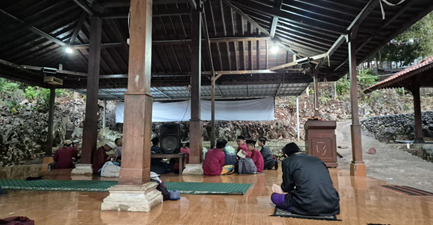
Therapeutic Communication in Inclusive Islamic Education: Integrating Qur’anic Qaulan Principles at Ainul Yakin Pesantren
DOI:
https://doi.org/10.61455/sujiem.v4i01.657Keywords:
therapeutic communication, therapeutic da'wah, inclusive Islamic education, psychosocial disabilities, digital da'wahAbstract
Objective: This study analyzes therapeutic communication practices at Ainul Yakin Islamic Boarding School in Gunungkidul, Yogyakarta, and develops a conceptual model of hybrid therapeutic da'wah integrating Islamic communication, psychosocial assistance, and digital media. Theoretical framework: The study draws on therapeutic communication, Islamic da'wah, inclusive education, and psychosocial rehabilitation to examine how relational security, spiritual meaning, accessibility, and dignity shape supportive interactions. Literature review: Relevant literature published between 2015 and 2026 was reviewed to identify connections among therapeutic communication, pesantren-based rehabilitation, inclusive Islamic education, and digital da'wah, particularly the integration of interpersonal mentoring and new media. Methods: A qualitative single-case study design combined semi-structured interviews, available institutional observations and documents, and literature analysis. Data were examined using the Framework Method, incorporating deductive and inductive coding to identify communication practices and develop a conceptual model. Results: Therapeutic communication was embedded in daily educational activities, worship routines, and independence training through gentle language, individualized instructions, appreciation, repeated assistance, and student participation. These practices highlighted the importance of relational security, accessible communication, spiritual meaning, and respect for the dignity of students with psychosocial disabilities. The proposed hybrid model positions face-to-face mentoring as central to trust formation, complemented by digital channels for psychoeducation, family support, activity reminders, communication coordination, and public education. Implications: The model offers guidance for developing context-sensitive, inclusive Islamic communication practices. Implementation should prioritize consent, confidentiality, accessibility, and professional referral, while avoiding assumptions that religious participation alone demonstrates clinical recovery. Novelty: This study integrates Islamic therapeutic communication, pesantren-based psychosocial rehabilitation, and new media within an inclusive conceptual framework. However, its feasibility, acceptability, safety, and potential benefits require empirical evaluation.
References
A. Martinelli, “The key pillars of psychosocial disability: a European perspective on challenges and solutions,” Front. Psychiatry, vol. 16, pp. 1–7, 2025, https://doi.org/10.3389/fpsyt.2025.1574301.
J. Mishra, N. Kaur, S. Tyagi, and N. Gupta, “Behavioral Management in the Rehabilitation of a Person with Severe Mental Illness: The Path Less Travelled,” Indian J. Psychol. Med., vol. 47, no. 5, pp. 507–510, 2025, https://doi.org/10.1177/02537176241273712.
H. Hendrawati, I. Amira, N. Sumarni, U. Rosidin, and I. Maulana, “Peran keluarga dalam merawat orang dengan gangguan jiwa: A scoping review,” Holistik J. Kesehat., vol. 17, no. 7, pp. 575–588, 2023, https://doi.org/10.33024/hjk.v17i7.12741.
F. Rinawati, Hengky Irawan, Muhammad Ali Sodik, and Lingga Kusuma Wardani, “Pengetahuan Dan Stigma Tentang Orang Dengan Gangguan Jiwa Pada Tim Penanganan Jiwa Masyarakat,” J. Ilmu Kesehat., vol. 14, no. 2, pp. 236–240, 2026, https://doi.org/10.32831/jik.v14i2.998.
W. A. Alurmei, “Stigma Masyarakat Terhadap Penderita Gangguan Jiwa: Tinjauan Literatur,” World Heal. Digit. J., vol. 2, no. 2, pp. 149–157, 2026, https://doi.org/10.31004/wolgitj.v2i2.71.
L. Badran, N. Rizkalla, and S. P. Segal, “Muslim considerations in seeking mental health help in California and Israel: a qualitative approach,” BMC Public Health, vol. 25, no. 1, 2025, https://doi.org/10.1186/s12889-025-22224-2.
L. Jojan and K. Carroll, “Peplau’s Theory of Interpersonal Relations: Scholarly Practice,” Nurs. Sci. Q., vol. 38, no. 1, pp. 27–30, 2025, https://doi.org/10.1177/08943184241291544.
C. W. Suseno, P. A. Andung, and F. T. Hana, “Komunikasi Terapeutik Petugas Kesehatan dengan Pasien RSJ Naimata Kupang,” J. Communio J. Jur. Ilmu Komun., vol. 9, no. 1, pp. 1533–1547, 2020, https://doi.org/10.35508/jikom.v9i1.2312.
M. H. Dianthi, “Komunikasi Terapeutik Guru Pada Siswa Berkebutuhan Khusus SLB Karabela (Down Syndrome) Kota Bengkulu,” J. Prof., vol. 11, no. 2, pp. 713–718, 2024.
R. L. Sinaulan, “Komunikasi Terapeutik Dalam Perspektif Islam,” J. Komun. Islam, vol. 6, no. 1, pp. 129–157, 2017, https://doi.org/10.15642/jki.2016.6.1.129-157.
S. Aggarwal, J. Wright, A. Morgan, G. Patton, and N. Reavley, “Religiosity and spirituality in the prevention and management of depression and anxiety in young people: a systematic review and meta-analysis,” BMC Psychiatry, vol. 23, no. 1, p. 729, 2023, https://doi.org/10.1186/s12888-023-05091-2.
A. Muntakhib, M. M. Taruna, and W. Wahab, “Education Model for Children with Special Needs in Ainul Yakin Islamic Boarding Schools Gunung Kidul, Yogyakarta,” TA’DIBUNA J. Pendidik. Agama Islam, vol. 6, no. 2, p. 185, 2024, https://doi.org/10.30659/jpai.6.2.185-203.
Rafif and A. A., “Implementasi Habitual Learning untuk Penyandang Disabilitas Mental di Pondok Pesantren Ainul Yakin Gunung Kidul Yogyakarta. … on Disability Studies and Inclusive Education. https://conference.uin-suka,” in The Indonesian Conference on Disability Studies and Inclusive Education, Yogyakarta, 2020, pp. 63–80.
I. Faldiansyah, “Dakwah Virtual Di Media Sosial,” PTIQ, 2022.
S. H. Wahid, “Exploring the intersection of Islam and digital technology: A bibliometric analysis,” Soc. Sci. Humanit. Open, vol. 10, 2024, https://doi.org/10.1016/j.ssaho.2024.101085.
H. Hurnawijaya et al., “Islamic preaching on social media and its impact on religious attitudes: A bibliometric and systematic review of global research,” Res. J. Adv. Humanit., vol. 7, no. 1, pp. 1–22, 2026, https://doi.org/10.58256/vwk8e276.
F. E. Ramadhani, Z. A. Maulana, and Wahyu Budiantoro, “Analisis Konsep Jiwa dalam Perspektif Komunikasi Terapeutik,” J-KIs J. Komun. Islam, vol. 5, no. 2, pp. 437–460, 2024, https://doi.org/10.53429/j-kis.v5i2.1184.
M. Babula and A. I. Ersoy-Babula, “The Influence of Ṣadaqa on Mental Health and Well-Being in Turkey,” Pastoral Psychol., no. 0123456789, 2026, https://doi.org/10.1007/s11089-026-01316-9.
S. G. Helder, G. Mosterd-Pol, M. van der Maten, and H. Schaap-Jonker, “The Faith Relationship Interview for Adolescents: A Qualitative Explorative Study in the Netherlands to Evaluate a New Method to Integrate Religion in Psychotherapy,” J. Relig. Health, vol. 64, no. 4, pp. 3236–3254, 2025, https://doi.org/10.1007/s10943-025-02389-1.
E. Goldstein, B. Chokshi, G. J. Melendez-Torres, A. Rios, M. Jelley, and A. Lewis-O’Connor, “Effectiveness of Trauma-Informed Care Implementation in Health Care Settings: Systematic Review of Reviews and Realist Synthesis,” Perm. J., vol. 28, no. 1, pp. 135–150, 2024, https://doi.org/10.7812/TPP/23.127.
F. Nikopaschos, O. Gibbons, E. Bailey, A. Foxall, C. Giachero, and G. Burrell, “Trauma-Informed Care on mental health wards: staff and service user perspectives,” Front. Psychol., vol. 16, no. September, pp. 1–13, 2025, https://doi.org/10.3389/fpsyg.2025.1578821.
Ai Nursyamsiah, Sayidah Afyatul Masruroh, and Shofa Nadya Rahmah, “Implementasi Komunikasi Terapeutik Pada Santri ODGJ Di Pondok Pesantren Sunan Kalijaga,” Spektra Komunika, vol. 5, no. 1, pp. 18–31, 2025, https://doi.org/10.33752/spektra.v5i1.9512.
Fatimatuz Zahroh and Dewi Mulyani, “Program Rehabilitasi ODGJ melalui Terapi Spiritual di Pondok Pesantren X,” J. Ris. Pendidik. Agama Islam, vol. 2, no. 2, pp. 95–102, 2022, https://doi.org/10.29313/jrpai.v2i2.1264.
A. Muntakhib and T. Ta’rif, “Model Pendidikan Inklusi di Pesantren Ainul Yakin Gunung Kidul,” EDUKASI J. Penelit. Pendidik. Agama dan Keagamaan, vol. 21, no. 2, pp. 193–205, 2023, https://doi.org/10.32729/edukasi.v21i2.1578.
A. Asiyah, E. S. Fadilah, and V. P. Rahayu, “Inclusive Education at Makrifatul Ilmi Islamic Boarding School, South Bengkulu,” Khazanah Pendidik. Islam, vol. 4, no. 2, pp. 89–97, 2022, https://doi.org/10.15575/kp.v4i2.18982.
Putri Tiaratul Firdaus and Mohammad Rofiq, “Strategi Pembelajaran Pendidikan Agama Islam Pada Anak Berkebutuhan Khusus Autis di Pondok Pesantren Salafiyah Nurul Ulum Kebomas Gresik.,” Al-Zayn J. Ilmu Sos. Huk., vol. 3, no. 2, pp. 719–730, 2025, https://doi.org/10.61104/alz.v3i2.1139.
Nuri Fauziyyah, Bambang Saiful Ma’arif, and Muhammad Fadhli Muttaqien, “Strategi Komunikasi Dakwah dalam Membina Aqidah santri: Studi Kasus di Pondok Pesantren Nurul Huda Fauziyyah.,” in Bandung Conference Series: Islamic Broadcast Communication, Bandung, 2025, pp. 1–8. https://doi.org/10.29313/bcsibc.v5i2.20131.
Firmawati, R. Febriyona, and R. Rengkung, “Stigma Masyarakat Terhadap Penderita Gangguan Jiwa Di Wilayah Kerja Puskesmas Limboto Barat,” J. Anestesi J. Ilmu Kesehat. dan Kedokt., vol. 1, no. 3, pp. 01–12, 2023, https://doi.org/10.55606/anestesi.v1i2.320.
L. A. Zoellner et al., “Islamic trauma healing (ITH): A scalable, community-based program for trauma: Cluster randomized controlled trial design and method,” Contemp. Clin. Trials Commun., vol. 37, no. December 2023, p. 101237, 2024, https://doi.org/10.1016/j.conctc.2023.101237.
M. Smith et al., “A randomised controlled trial of a faith-based culturally adapted intervention for depression in young Muslim women (IM-Adapted): a multi-site feasibility trial protocol,” Pilot Feasibility Stud., vol. 11, no. 1, 2025, https://doi.org/10.1186/s40814-025-01691-9.
G. Larsson and E. Willander, “Muslims and social media: A scoping review,” Inf. Commun. Soc., vol. 28, no. 11, pp. 1908–1922, 2025, https://doi.org/10.1080/1369118X.2024.2379835.
F. Fauzi, “Dakwah Islam dan Artificial Intelligence: Penelitian Atas Pemanfaatan AI Dalam Penyebaran Nilai-nilai Islam,” RIGGS J. Artif. Intell. Digit. Bus., vol. 4, no. 2, pp. 3702–3709, 2025, https://doi.org/10.31004/riggs.v4i2.1087.
M. Mursidin, G. R. Azzam, M. Z. Salihima, and M. F. N. Arsy, “Social Media Use, Adolescent Emotion Regulation Factors, and Islamic Counseling Constructs: A Systematic Literature Review,” J. Humanit. Katalisator Perubahan dan Inov. Pendidik, vol. 12, no. 3, pp. 1049–1070, 2026, https://doi.org/10.29408/jhm.v12i3.35091.
Kurnia Nur Khodijah and Adinda Tessa Naumi, “Therapeutic Da’wah Based in Pesantren: A Systematic Review of Islamic Psychosocial Communication in the Digital Media Era (Study of the ODGJ Pesantren Ainul Yakin Yogyakarta),” J. Komunikan, vol. 5, no. 2, pp. 385–408, 2026, https://doi.org/10.30993/jurnalkomunikan.v5i2.911.
K. Sleman, D. I. Yogyakarta, K. Sleman, and D. I. Yogyakarta, “Relasi Al-Qur’an dengan Manusia dalam Penyembuhan Gangguan Kejiwaan di Pondok Pesantren Tetirah Dzikir Kuton Berbah Sleman Yogyakarta (Analisis Teori Wilfried Cantwell Smith),” MAGHZA J. Ilmu Al-Qur’an dan Tafsir, vol. 10, no. 2, pp. 309–323, 2025, https://doi.org/10.24090/maghza.v10i2.12749.
R. Batchelor et al., “Perceived Acceptability and Experiences of a Digital Psychoeducation and Peer Support Intervention (COPe-support): Interview Study with Carers Supporting Individuals with Psychosis,” J. Med. Internet Res., vol. 24, no. 2, 2022, https://doi.org/10.2196/27781.
P. S. Münchenberg, D. Yessimova, D. Panteli, and T. Kurth, “Digital Health Interventions for Informal Family Caregivers of People With First-Episode Psychosis: Systematic Review on User Experience and Effectiveness,” JMIR Ment. Heal., vol. 11, 2024, https://doi.org/10.2196/63743.
H. Syafaq, N. L. Musyafa’ah, A. H. Al Banna, and U. Rosyidah, “‘Santri without pesantren’ and the sectarian violence on Indonesian Muslim social media,” Cogent Arts Humanit., vol. 13, no. 1, 2026, https://doi.org/10.1080/23311983.2025.2612046.
A. Doukani et al., “Comparison of the Working Alliance in Blended Cognitive Behavioral Therapy and Treatment as Usual for Depression in Europe: Secondary Data Analysis of the E-COMPARED Randomized Controlled Trial,” J. Med. Internet Res., vol. 26, 2024, https://doi.org/10.2196/47515.
G. Nicol, R. Wang, S. Graham, S. Dodd, and J. Garbutt, “Chatbot-Delivered Cognitive Behavioral Therapy in Adolescents With Depression and Anxiety During the COVID-19 Pandemic: Feasibility and Acceptability Study,” JMIR Form. Res., vol. 6, no. 11, 2022, https://doi.org/10.2196/40242.
R. Taher et al., “The Safety of Digital Mental Health Interventions: Systematic Review and Recommendations,” JMIR Ment. Heal., vol. 10, no. 1, 2023, https://doi.org/10.2196/47433.