Student Consumerism and Critical Thinking in Islamic Higher Education: Testing A Service Orientation Entitlement Mechanism in Indonesia
DOI:
https://doi.org/10.61455/sujiem.v4i01.636Keywords:
islamic higher education, student consumerism, academic rigour, grade entitlement, critical thinkingAbstract
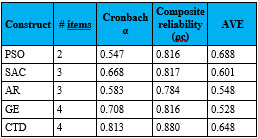
Objective: This study investigates how undergraduate students' perceptions of institutional service orientation connect to a consumer-style educational identity, and how that identity relates—through academic rigour and grade entitlement as distinct norm-pathways—to critical-thinking disposition in one Indonesian Islamic higher-education institution. Theoretical framework: Drawing on educational marketisation and student-consumer identity scholarship, the study treats perceived service orientation (PSO) as an institutional signal and students-as-customers mindset (SAC) as an individually internalised stance. Academic rigour (AR) and grade entitlement (GE) are positioned as theoretically divergent pathways through which consumer identity may reach epistemic outcomes. Literature review: Previous studies have mainly discussed student consumerism in relation to academic performance, satisfaction, and learning. However, few studies have examined its relationship with critical thinking through academic rigour and grade entitlement, especially in Indonesian Islamic higher education. Method: A cross-sectional online survey produced 155 usable responses from one Indonesian Islamic institute. Five reflective constructs were assessed with theory-informed Likert items. A frozen 16-indicator model was evaluated using reflective PLS path modelling, 5,000 bootstrap resamples, percentile confidence intervals, HTMT, inner VIF, R², f², specific indirect effects, and out-of-sample Q²_predict. Results: PSO predicted SAC (β=.309, p<.001). SAC was strongly associated with GE (β=.487, p<.001) but not with AR. AR positively predicted critical-thinking disposition (β=.353, p<.001). Against expectations, GE was positively associated with self-reported critical-thinking disposition (β=.208, p=.011). Significant indirect effects were SAC→GE→CTD (β=.101, p=.013) and PSO→SAC→GE→CTD (β=.031, p=.041). Implications: Institutions need to explicitly separate service responsiveness from guarantees of academic outcomes while ensuring assessment practices sustain genuine cognitive demand. Novelty: Rather than treating marketisation as uniformly corrosive, this study identifies grade entitlement—not reduced academic rigour—as the visible pathway through which consumer identity operates, sharpening both the theoretical account and the policy focus.
References
A. Calma and C. Dickson-Deane, “The student as customer and quality in higher education,” Int. J. Educ. Manag., vol. 34, no. 8, pp. 1221–1235, 2020, https://doi.org/10.1108/IJEM-03-2019-0093.
D. L. Jackson, M. P. Frey, C. McLellan, C. M. Rauti, P. B. Lamborn, and J. A. Singleton-Jackson, “I deserve more A’s: A report on the development of a measure of academic entitlement,” PLoS One, vol. 15, no. 9, September, 2020, https://doi.org/10.1371/journal.pone.0239721.
L. Bunce and M. Bennett, “A degree of studying? Approaches to learning and academic performance among student ‘consumers,’” Act. Learn. High. Educ., vol. 22, no. 3, pp. 203–214, 2021, https://doi.org/10.1177/1469787419860204.
K. C. Culver, J. M. Braxton, and E. T. Pascarella, “What We Talk about When We Talk about Rigour: Examining Conceptions of Academic Rigour,” J. Higher Educ., vol. 92, no. 7, pp. 1140–1163, 2021, https://doi.org/10.1080/00221546.2021.1920825.
J. F. Hair, G. T. M. Hult, C. M. Ringle, M. Sarstedt, N. P. Danks, and S. Ray, Partial Least Squares Structural Equation Modelling (PLS-SEM) Using R: A Workbook, 3rd ed., vol. Part F9796. Thousand Oaks, CA, USA: Sage, 2021. https://doi.org/10.1007/978-3-030-80519-7.
E. S. Kusumaputri, H. L. Muslimah, A. Ahmad, and M. Nurwardani, “Positioning indonesian islamic higher-education vis-a-vis globalisation: Organisational-resilience dynamics,” Cakrawala Pendidik, vol. 40, no. 2, pp. 413–427, 2021, https://doi.org/10.21831/cp.v40i2.39357.
K. A. Knepp and M. M. Knepp, “Academic entitlement decreases engagement in and out of the classroom and increases classroom incivility attitudes,” Soc. Psychol. Educ., vol. 25, no. 5, pp. 1113–1134, 2022, https://doi.org/10.1007/s11218-022-09716-4.
Suyadi, Z. Nuryana, Sutrisno, and Baidi, “Academic reform and sustainability of Islamic higher education in Indonesia,” Int. J. Educ. Dev., vol. 89, no. 102534, 2022, https://doi.org/10.1016/j.ijedudev.2021.102534.
R. Brooks, “Students as consumers? The perspectives of students’ union leaders across Europe,” High. Educ. Q., vol. 76, no. 3, pp. 626–637, 2022, https://doi.org/10.1111/hequ.12332.
P. Álvarez-Huerta, A. Muela, and I. Larrea, “Disposition Towards Critical Thinking and Student Engagement in Higher Education,” Innov. High. Educ., vol. 48, no. 2, pp. 239–256, 2023, https://doi.org/10.1007/s10755-022-09614-9.
P. Andreucci-Annunziata, A. Riedemann, S. Cortés, A. Mellado, M. T. del Río, and A. Vega-Muñoz, “Conceptualisations and instructional strategies on critical thinking in higher education: A systematic review of systematic reviews,” Front. Educ., vol. 8, 2023, https://doi.org/10.3389/feduc.2023.1141686.
Y. Liu and A. Pásztor, “Moderated mediating effects of gender among the components of critical thinking disposition in undergraduate students,” Heliyon, vol. 9, no. 4, 2023, https://doi.org/10.1016/j.heliyon.2023.e14664.
D. Candarli and S. Jones, “The representation of students in undergraduate prospectuses between 1998 and 2021: a diachronic corpus-assisted discourse study,” Crit. Discourse Stud., vol. 21, no. 3, pp. 254–273, 2024, https://doi.org/10.1080/17405904.2022.2130952.
H. Fathana, E. F. Herdianto, and K. U. Dewi, “Academic Capitalism in Southeast Asia: Lessons from Islamic Universities in Indonesia,” J. ASEAN Stud., vol. 12, no. 2, pp. 263–282, 2024, https://doi.org/10.21512/jas.v12i2.11501.
P. Ashwin, B. Goldschneider, A. Agrawal, and R. Smit, “Beyond the dichotomy of students-as-consumers and personal transformation: what students want from their degrees and their engagement with knowledge,” Stud. High. Educ., vol. 49, no. 8, pp. 1439–1450, 2024, https://doi.org/10.1080/03075079.2023.2267589.
B. Peng et al., “A serial mediation model reveals the association between parental over-protection and academic entitlement among nursing students,” Sci. Rep., vol. 14, no. 1, 2024, https://doi.org/10.1038/s41598-024-66207-6.
P. Álvarez-Huerta, A. Muela, and I. Larrea, “Influence of internship, service learning and student mobility programmes on the development of critical thinking disposition in higher education,” Soc. Sci. Humanit. Open, vol. 10, no. 101006, 2024, https://doi.org/10.1016/j.ssaho.2024.101006.
İ. Karakuş, “University students’ cognitive flexibility and critical thinking dispositions,” Front. Psychol., vol. 15, no. 1420272, 2024, https://doi.org/10.3389/fpsyg.2024.1420272.
S. Sibawaihi, S. Suyatno, S. Suyadi, and V. Fernandes, “Transforming Islamic higher education institutions in Indonesia from ‘institutes/colleges’ into ‘universities’: Globalisation or glocalisation?” Manag. Educ., 2024, https://doi.org/10.1177/08920206241268506.
Z. Goyzueta Mejía, C. Consolación - Segura, and D. Barredo Ibáñez, “The student as a customer in higher education: a systematic review (2000–2022),” Cogent Bus. Manag., vol. 12, no. 1, 2025, https://doi.org/10.1080/23311975.2025.2551388.
N. Muthohirin, A. A. Aziz, C. Mahfud, F. Mukhlis, and R. Hikmawati, “Islamic Sciences In Transition: Post-Reformation Developments in Indonesia’s State Islamic Universities,” Ulumuna, vol. 29, no. 1, pp. 429–460, 2025, https://doi.org/10.20414/ujis.v29i1.849.
A. R. Ibrahim and M. A. Nemt-allah, “Development and initial validation of an academic entitlement scale in Egyptian college students,” BMC Psychol., vol. 13, no. 1, 2025, https://doi.org/10.1186/s40359-025-03740-7.
A. Gupta, R. Brooks, and J. Abrahams, “Higher education students as consumers: a cross-country comparative analysis of students’ views,” Compare, vol. 55, no. 2, pp. 174–191, 2025, https://doi.org/10.1080/03057925.2023.2234283.
Z. Shafait and U. F. Sahibzada, “‘I deserve better grades.’ Compliance-gaining perspective of dark triad traits, power distance and academic entitlement in Chinese higher education,” Kybernetes, vol. 54, no. 4, pp. 2224–2244, 2025, https://doi.org/10.1108/K-08-2023-1454.
M. Iskarim, M. Aenurofik, and M. Junaeti, “Readiness of Islamic Higher Education Institutions in Indonesia for future quality assurance,” Qual. Assur. Educ., vol. 33, no. 1, pp. 80–92, 2025, https://doi.org/10.1108/QAE-03-2024-0046.
A. Finkel-Gates, “ChatGPT in academic assessments: upholding integrity,” J. Learn. Dev. High. Educ., vol. 2025, no. 36, 2025, https://doi.org/10.47408/jldhe.vi36.1491.
S. Estaphan, D. Kramer, and H. J. Witchel, “Navigating the frontier of AI-assisted student assignments: challenges, skills, and solutions,” Adv. Physiol. Educ., vol. 49, no. 3, pp. 633–639, 2025, https://doi.org/10.1152/advan.00253.2024.
M. Elkhodr and E. Gide, “The SAGE framework for developing critical thinking and responsible generative AI use in cybersecurity education,” Discov. Educ., vol. 4, no. 1, 2025, https://doi.org/10.1007/s44217-025-00935-3.
H. Camiring-Picpican, K. G. Flores, R. M. Caban, S. D. Mohadali, D. C. Galdonez, and C. B. Alih, “Pedagogical Innovations Based on Philippine Cultural Practices: A Framework for Culturally Responsive Teaching in Higher Education,” Int. J. Cult. Hist. Relig., vol. 7, no. SI2, pp. 433–451, 2025, https://doi.org/10.63931/ijchr.v7iSI2.168.
B. Ahmaderaghi and D. Stewart, “From Curiosity to Convenience: The Role of AI in Higher Education in an Age of Student Impatience,” in IEEE Global Engineering Education Conference, EDUCON, IEEE Computer Society, 2026, pp. 1–5. https://doi.org/10.1109/educon67543.2026.11574183.
J. L. Khun, The Decline in Campus Diversity: Causes, Consequences, and Catastrophic Futures. IGI Global, 2026. https://doi.org/10.4018/979-8-3373-3663-3.ch002.
M. Freeshah, N. Osama, A. R. Masoud, A. Bediwy, and M. Abdelsamie, “Reimagining Peer Review in the Age of AI: Lessons from a Graduate Education Experiment: Pre-Results,” in IEEE Global Engineering Education Conference, EDUCON, IEEE Computer Society, 2026, pp. 1–4. https://doi.org/10.1109/educon67543.2026.11574319.
S. Richter et al., “Back to the Future: Navigating the AI Landscape with Interactive Oral Assessments,” Commun. Assoc. Inf. Syst., vol. 58, pp. 985–1010, 2026, https://doi.org/10.17705/1CAIS.05839.
J. T. Owen, “A case study: rethinking ‘Average Intelligence’ and the artificiality of AI in academia,” AI Soc., vol. 41, no. 5, pp. 5151–5162, 2026, https://doi.org/10.1007/s00146-026-02873-6.
S. M. Natale and C. Doran, “Marketisation of Education: An Ethical Dilemma,” J. Bus. Ethics, vol. 105, no. 2, pp. 187–196, 2012, https://doi.org/10.1007/s10551-011-0958-y.
C. Daymon and K. Durkin, “The impact of marketisation on postgraduate career preparedness in a high skills economy,” Stud. High. Educ., vol. 38, no. 4, pp. 595–612, 2013, https://doi.org/10.1080/03075079.2011.590896.
J. E. Johnson, R. M. Turick, M. F. Dalgety, K. B. Walker, E. L. Klosterman, and A. T. Eicher, “Perceived course rigour in sport management: Class level, course grades, and student ratings,” Sport Manag. Educ. J., vol. 14, no. 1, pp. 37–47, 2020, https://doi.org/10.1123/smej.2019-0058.
A. M. Brígido-Corachán, “Multiliteracies, Critical Framing, and Literary Analysis in BookTube Reviews,” Int. J. Learn. High. Educ., vol. 28, no. 1, pp. 127–138, 2021, https://doi.org/10.18848/2327-7955/CGP/v28i01/127-138.
Y. Xiong and M. Wang, “Psychological resilience as a selective perceptual amplifier in post-crisis learning: a dual-pathway model of academic motivation, perceived school support, and cognitive engagement – a multi-country study based on PISA 2022,” BMC Psychol., vol. 14, no. 1, 2026, https://doi.org/10.1186/s40359-026-04665-5.
W. Qian, C. Chen, and B. Wei, “Bullying, minority stress and revenge impulse among autistic college students: group differences by sexual and gender minority status,” Front. Public Health, vol. 14, 2026, https://doi.org/10.3389/fpubh.2026.1727508.
S. Peng and F. Zhu, “Determinants of Higher Education Learners’ Behavioural Intention Toward Generative AI Tools: A Hybrid SEM–Machine Learning Approach,” Inf., vol. 17, no. 7, 2026, https://doi.org/10.3390/info17070677.
A. L. Berr, K. M. Ridge, and J. Y. S. Hu, “Pivoting to a Remote-Learning Summer Student Program during the COVID-19 Pandemic,” ATS Sch., vol. 2, no. 4, pp. 521–534, 2021, https://doi.org/10.34197/ats-scholar.2021-0047PS.
M. E. Gómez-Parra, “Impact of virtual vs. face-to-face learning on 21st-century skills among pre-service bilingual teachers,” Aula Abierta, vol. 50, no. 2, pp. 593–602, 2021, https://doi.org/10.17811/RIFIE.50.2.2021.593-602.
A. T. Win and J. D. Wilang, “Integrating Values Education into Teaching: Perspective from Subject Teachers in Thailand,” Hum. Behav. Dev. Soc., vol. 26, no. 3, p. 459, 2025, https://doi.org/10.62370/hbds.v26i3.281917.
A. Burns and M. Saunders, “Building a Novel Online Reflective and Connected Curriculum for Environmental Science,” Int. J. Innov. Sci. Math. Educ., vol. 33, no. 6, pp. 1–17, 2025, https://doi.org/10.30722/33.06.001.
Kharis, Ediyanto, D. N. Wijaya, E. Yafie, B. Waluyo, and R. G. Resultay, “The Impact of AI Usage on Transforming Student Learning Culture in Indonesia in Alignment with SDG 4,” J. Ecohumanism, vol. 3, no. 8, pp. 1651–1661, 2024, https://doi.org/10.62754/joe.v3i8.4845.
G. Gunawan, K. Kosim, N. Nisrina, A. Busyairi, A. Harjono, and L. Herayanti, “Integrating Project-Based Learning, e-Modules, and Gamification: An Approach to Develop Critical Thinking in Pre-Service Physics Teachers,” Int. J. Inf. Educ. Technol., vol. 16, no. 4, pp. 959–968, 2026, https://doi.org/10.18178/ijiet.2026.16.4.2567.