The Role of Islamic Education in Fostering Tolerance and Diversity in Indonesia’s Pluralistic Society
DOI:
https://doi.org/10.61455/sujiem.v3i03.550Keywords:
islamic education, multicultural education, tolerance, diversity, pluralismAbstract
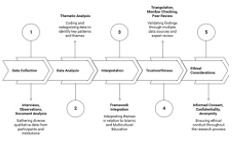
Objective: This study examines the role of Islamic education in fostering tolerance and diversity in Indonesia’s pluralistic society. It focuses on how Islamic educational practices promote mutual respect, inclusivity, and peaceful coexistence across diverse cultural, ethnic, and religious backgrounds. Theoretical framework: The study is grounded in Islamic educational philosophy and Multicultural Education. Islamic education emphasizes moral values, social harmony, and the principle of rahmatan lil ‘alamin (mercy to all creation), while multicultural education promotes inclusivity, respect for diversity, and intercultural understanding. Literature review: Existing scholarship on Islamic education highlights its role in character formation, ethical development, and community cohesion. Meanwhile, studies on Multicultural Education emphasize the importance of inclusive curricula and pedagogies in fostering tolerance and addressing diversity in pluralistic societies. Method: This study employs a qualitative approach, with data collected through interviews, classroom observations, and document analysis in selected formal institutions such as schools and pesantren, as well as non-formal community-based learning environments. Results: The findings reveal that Islamic education significantly contributes to the development of tolerant attitudes when it integrates multicultural perspectives, emphasizes ethical teachings such as rahmatan lil ‘alamin, and adopts participatory and dialogical pedagogies. However, challenges persist, including rigid curricula, limited teacher training in multicultural education, and the presence of exclusive interpretations of religious texts. Implications: The study suggests that strengthening Islamic education through inclusive curricula, teacher capacity building, and contextualized learning approaches can enhance its role in nurturing unity in diversity. It underscores the need for educational reforms that align religious teachings with contemporary societal demands. Novelty: This study offers a contextual analysis of Islamic education in Indonesia by integrating Multicultural Education principles, highlighting its potential as a transformative tool for promoting tolerance and diversity in a pluralistic society.
References
H. Huang, Y. Liu, and D. Wang, “Bridging or widening: How digital infrastructure shapes wage inequality through the lens of urban–rural interdependence,” Econ. Model, vol. 160, p. 107625, 2026, https://doi.org/10.1016/j.econmod.2026.107625.
E. Şahin, Ö. F. Görçün, Ö. Görçün, C. Ş. Kölemen, and E. B. Tirkolaee, “An integrated TFN-MARCOS-SWOT model for multi-criteria evaluation of digital transformation and maturity in higher education institutions,” Expert Syst. Appl., vol. 311, p. 131455, 2026, https://doi.org/10.1016/j.eswa.2026.131455.
C. Sáez-Linero, I. Rodríguez-de-Dios, and M. Jiménez-Morales, “Algorithmic personalization and social inequality: young people’s knowledge and perceptions of bias in digital advertising,” Technol. Soc., vol. 86, p. 103287, 2026, https://doi.org/10.1016/j.techsoc.2026.103287.
T. Mora, C. Nicodemo, and D. Roche, “Digital health and social inequality: Population-based evidence from MyHealth platform use in Catalonia,” Heal. Policy Technol., vol. 15, no. 4, p. 101184, 2026, https://doi.org/10.1016/j.hlpt.2026.101184.
L. Colonna, “Free and Open Source Software in education and the Interoperable Europe Act: Advancing digital autonomy?,” Comput. Law Secur. Rev., vol. 61, p. 106305, 2026, https://doi.org/10.1016/j.clsr.2026.106305.
A. Durand et al., “‘Who can I ask for help?’: Mechanisms behind digital inequality in public transport,” Cities, vol. 137, p. 104335, 2023, https://doi.org/10.1016/j.cities.2023.104335.
D. I. Yasmine, F. Colombijn, A. J. A. M. van Deursen, and E. van Ingen, “Youth digital well-being: The role of digital skills and positive and negative digital outcomes in youth’s subjective well-being,” Comput. Hum. Behav. Reports, vol. 20, p. 100796, 2025, https://doi.org/10.1016/j.chbr.2025.100796.
M. Zhou and X. Du, “Digital government and air pollution inequality: Evidence from Chinese cities,” Econ. Model, vol. 152, p. 107301, 2025, https://doi.org/10.1016/j.econmod.2025.107301.
Z. Li, L. Chen, W. Sun, Y. Zhang, and G. Lin, “Multiscale spatial heterogeneity and interactions of digital economy development and urban-rural income inequality on energy-related carbon emissions in Chinese cities,” Energy, vol. 342, p. 139739, 2026, https://doi.org/10.1016/j.energy.2025.139739.
S. I. Mo, “A curriculum study for raising professional ethical competence in counselling,” Bull. Educ. Psychol., vol. 54, no. 3, pp. 705–726, 2023, https://doi.org/10.6251/BEP.202303_54(3).0009.
H. Jho, “Analysis of explanations of quantum mechanics in physics textbooks according to the 2015 revised curriculum,” New Phys. Sae Mulli, vol. 68, no. 8, pp. 869–879, 2018, https://doi.org/10.3938/NPSM.68.869.
I. K. S. Ng, W. G. W. Goh, D. B. Teo, K. M. Chong, L. F. Tan, and C. M. Teoh, “Clinical reasoning in real-world practice: a primer for medical trainees and practitioners,” Postgrad. Med. J., vol. 101, no. 1191, pp. 68–75, 2024, https://doi.org/10.1093/postmj/qgae079.
P. Xiong and Y. Zhang, “Artificial intelligence as an assistive technology in language education: investigating TPACK, self-efficacy, and organizational support,” Disabil. Rehabil. Assist. Technol., 2025, https://doi.org/10.1080/17483107.2025.2561927.
Y. Røe, T. S. Johansen, and E. B. Bruset, “From Peer Educators to Digital Change Agents: Rethinking Health Education Through VR-Enhanced Peer Learning,” in Lecture Notes in Computer Science, vol. 15913 LNCS, S. F.E. and S. T.A, Eds., Springer Science and Business Media Deutschland GmbH, 2026, pp. 354–362. https://doi.org/10.1007/978-3-031-98185-2_37.
E. Chen et al., “Identifying Effective Praise in Tutoring: Large Language Models with Transparent Explanations,” in Lecture Notes in Computer Science, vol. 15882 LNAI, W. E., L. Y., S. O.C., and I. S, Eds., Springer Science and Business Media Deutschland GmbH, 2025, pp. 157–163. https://doi.org/10.1007/978-3-031-98465-5_20.
W. Zheng, H. Li, R. Gu, and Y. Ji, “Research on the Practical Teaching Mode for Cultivating Autonomous Learning Abilities in Networking Courses,” in Proc. Front. Educ. Conf, FIE, Institute of Electrical and Electronics Engineers Inc, 2026, pp. 1–10. https://doi.org/10.1109/fie63693.2025.11328529.
Y. Shi, “Research on Long-term Mechanism of School-Enterprise Cooperation for Civic and Political Education Professional Talent Cultivation in Colleges and Universities under Big Data Technology,” Appl. Math. Nonlinear Sci., vol. 9, no. 1, 2024, https://doi.org/10.2478/amns-2024-0836.
W. Diarsvitri and J. Hart, “Assessing medical student preparedness for the clinical phase: perspectives of clinical faculty across specialties and medical school types in Indonesia,” Educ. Medica, vol. 27, no. 3, p. 101165, 2026, https://doi.org/10.1016/j.edumed.2026.101165.
A. A. Mohamed, M. A. Rozaq, M. Ndow, and M. Rabe, “Adab as the Epistemological Foundation of Islamic Education: A Study of Syed Naquib al-Attas.” 2025.
A. A. Mohamed, H. Azizah, D. N. Khasanah, and A. Ali, “A Comparative Analysis of the Subject, Object, and Passive Agent in Arabic Grammar: Linguistic Insights for Quality Education (SDG 4).” 2025.
Alwy Ahmed Mohamed, Zaki Afifi, and M. Mahmudulhassan, “Critical Pedagogy in Islamic History Education: Applying Henry Giroux’s Framework,” Bull. Islam. Res., vol. 3, no. 3, pp. 541–554, 2025, https://doi.org/10.69526/bir.v3i3.363.
A. A. Mohamed, F. N. Anggraini, M. W. Shohib, H. Z. Harun, and A. Alkhateeb, “Enhancing School Management Efficiency through Digital Classroom Management: A Comparative Study of Kenya and Indonesia.”
A. A. M. Yahya Muhdiana Fauzin, “Optimizing Teacher Student Dynamics through the Nash Principle: Towards Academic Excellence and SDG 4 on Quality Education,” Maktabah Reviews on Sustainable Development Goals, vol. 1, no. 1, pp. 29–44, 2024.
Alwy Ahmed Mohamed, Muhammad Ndow, and Mowafg Masuwd, “Reconstructing Madrasa Education through Critical Pedagogy: A Freirean Framework for Islamic Educational Reform,” Lect. J. Islam. Educ. Stud., vol. 5, no. 1, pp. 97–114, Mar. 2026, https://doi.org/10.58355/lectures.v5i1.207.
Nahrul Faidin, Tri Marhaeni Pudji Astuti, Sucihatiningsih Dian Wisika Prajanti, Puji Hardati, and Alwy Ahmed Mohamed, “Shaping Children’s Social Ethics in Female Migrant Families: Islamic Insights on Education and Gender within the SDGs Framework,” Profetika J. Stud. Islam, vol. 26, no. 01, pp. 321–338, 2025, https://doi.org/10.23917/profetika.v26i01.11124.
Meti Fatimah, Edy Muslimin, Aminatus Sayidah, and Alwy Ahmed Mohamed, “Technological Mastery and Competence Development of Islamic Religious Education Teachers in Wonogiri: Supporting SDG 4 on Quality Education,” Profetika J. Stud. Islam, vol. 26, no. 01, pp. 245–258, 2025, https://doi.org/10.23917/profetika.v26i01.11744.
M. Lörz, B. Becker, J. Niemann, K. Drossel, and B. Eickelmann, “Social inequality in digital competencies among students in Germany: A trend analysis using ICILS data 2013-2023,” Comput. Educ., p. 105637, Apr. 2026, https://doi.org/10.1016/j.compedu.2026.105637.
F. Liu, W. Liu, K. Nesar Rather, H. S. Panda, M. K. Mahalik, and G. Gozgor, “Do digital technology and political risk reduce CO2 emissions inequality in OECD economies? Panel evidence,” J. Environ. Manage., vol. 392, p. 126742, 2025, https://doi.org/10.1016/j.jenvman.2025.126742.
T. Shen, “Right to learn in the digital age: Challenges and protection in China,” Comput. Law Secur. Rev., vol. 53, p. 105989, 2024, https://doi.org/10.1016/j.clsr.2024.105989.
N. Chen and Y. Hu, “The critical role of digital infrastructure in inequality: New evidence from urban-rural consumption in China,” Int. Rev. Econ. Financ., vol. 104, p. 104766, 2025, https://doi.org/10.1016/j.iref.2025.104766.
T. D. Purnat et al., “Impacts of Sexual and Reproductive Health and Rights Misinformation in Digital Spaces on Human Rights Protection and Promotion: Scoping Review,” JMIR Infodemiology, vol. 5, p. e83747, 2025, https://doi.org/10.2196/83747.
Y. Zhu, H. Guo, S. Liu, and S. Jin, “Design of adaptive electrician learning system based on user model,” in Proceedings - 2016 8th International Conference on Information Technology in Medicine and Education, ITME 2016, D. Y., L. S., and C. Y, Eds., Educ., ITME: Institute of Electrical and Electronics Engineers Inc, 2017, pp. 513–516. https://doi.org/10.1109/ITME.2016.0122.
S. Luojus and O. Vilkki, “Development of user-driven research methods as the starting point for living lab activities,” in ACM International Conference Proceeding Series, 2008, pp. 589–590. https://doi.org/10.1145/1463160.1463257.
F. Sun, J. Wang, L. Mendoza, and H. Li, “Exploring the relationships among large language model acceptance, enjoyment, anxiety, and self-efficacy in L2 academic writing,” Acta Psychol. (Amst), vol. 263, 2026, https://doi.org/10.1016/j.actpsy.2026.106237.
P. S. Cox and T. N. Bowles, “Expanding the neighbourhood watch: Orthographic neighbours in isiXhosa reading and spelling,” Read. Writ. (South Africa), vol. 15, no. 1, 2024, https://doi.org/10.4102/rw.v15i1.461.
J. Li, X. Yin, and J. Han, “Construction and instructional application experiment design of digital light processing 3D printing equipment,” Exp. Technol. Manag., vol. 42, no. 7, pp. 240–245, 2025, https://doi.org/10.16791/j.cnki.sjg.2025.07.031.
S. S. Deshpande et al., “Curriculum and Community with Research, Action and Service (CCBALwRAS), a Pedagogical Shift for Social Change,” High. Educ. Futur., vol. 11, no. 1, pp. 11–31, 2024, https://doi.org/10.1177/23476311231210636.
H. Hochrinner, “New role model for teachers in Higher Education?” in Balkan Region Conference on Engineering and Business Education, vol. 2019-October, L. L., K. C.V., G. N., and S. Eds., Eds., 2019, pp. 62–67. https://doi.org/10.2478/cplbu-2020-0007.
W. Akmaliah, P. Sulistiyanto, and Sukendar, “Making Moderate Islam in Indonesia,” Stud. Confl. Terror., vol. 47, no. 11, pp. 1495–1509, 2024, https://doi.org/10.1080/1057610X.2022.2034224.
M. Sanches and M. D’Amico, “Adult educators’ perspectives on implementing critical pedagogy in a Freirean tradition in non-formal settings,” Int. J. Lifelong Educ., 2026, https://doi.org/10.1080/02601370.2026.2624459.
V. S. Manivannan, L. Lathasuresh, and R. Krishnaraj, “Academic stress due to in-campus romances of faculty in engineering educational institutions in Chennai,” Int. J. Appl. Eng. Res., vol. 10, no. 4, pp. 9467–9481, 2015.
C. Hinojosa-Torres et al., “Competency assessment in initial teacher training in physical education: a systematic review,” Rev. Digit. Investig. en Docencia Univ., vol. 19, no. 1, 2025, https://doi.org/10.19083/ridu.2025.2047.
X. Hou, Z. Feng, J. Feng, W. Li, G. Li, and D. Shi, “A constructing study on professional competency standards of school health education teachers,” Chinese J. Sch. Heal., vol. 41, no. 2, pp. 283–289, 2020, https://doi.org/10.16835/j.cnki.1000-9817.2020.02.033.