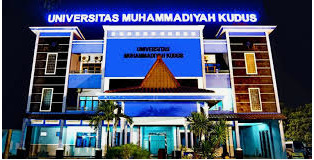
Prophetic Leadership in Dormitory Education at the Universitas Muhammadiyah Kudus
DOI:
https://doi.org/10.61455/sujiem.v3i01.367Keywords:
prophetic leadership, dormitory education, character development, islamic values, servant leadershipAbstract
Objective: This study aims to explore the implementation of prophetic leadership by dormitory managers at the Universitas Muhammadiyah Kudus (UMKU), analyze the various challenges faced in its implementation, and evaluate its impact on the formation of student character, morals, and spirituality. Theoretical framework: This research is based on prophetic leadership theory that is rooted in prophetic values of humanization, liberation, and transcendence, and is connected to the concept of servant leadership that emphasizes service and exemplary leadership. Literature review: This study includes a study of prophetic leadership, character development theories in a dormitory education environment, as well as various previous studies on the influence of leadership on the spiritual and moral development of students. Methods: This study uses a descriptive qualitative method with data collection techniques through in-depth interviews, participatory observations, and documentation, then analyzed using a thematic approach to find relevant patterns. Results: The results show that more than 80% of students recognize the significant role of dormitory leaders in shaping their worship habits and character, although formal coaching related to prophetic values is still not optimal. The challenges faced in the implementation of prophetic leadership include limited conceptual understanding among managers, lack of formal training, and the lack of integration of prophetic coaching in the overall dormitory management system. Implications: This study emphasizes the importance of periodic training for dormitory managers and strengthening the prophetic value-based character development curriculum as a strategic step to increase the effectiveness of coaching in the UMKU dormitory environment. Novelty: this research lies in the systematic integration of the concept of prophetic leadership with the principle of servant leadership in the context of dormitory education, as well as in a comprehensive evaluation of the challenges and real impact of prophetic leadership on the formation of Islamic and academically superior student character.
References
D. M. Putri, “The Impact of Social Inequality on Educational Quality in Indonesia: Challenges and Policy Recommendations,” Solo Univers. J. Islam. Educ. Multicult., vol. 3, no. 1, pp. 43–56, 2025, https://doi.org/10.61455/sujiem.v3i01.248.
M. M, Nuha, Gamal, I. Elbasiouny, A. E-sor, and M. M. Sule, “Analysis Of Compliance With The Muamalah Verse In Bmt Attunnisa Boyolali And Its Implications For The Sustainable Development Goals (SDGs) Baitul Maal Wat Tamwil ( BMT ),” J. Lifestyle SDG’S Rev., vol. 5, pp. 1–21, 2025, https://doi.org/10.47172/2965-730X.SDGsReview.v5.n02.pe03066.
Waston, Mahmudulhassan, A. Nirwana, and I. Afiyah, “Student-Centered Learning to Prevent Radicalization at Islamic Junior Schools in Surakarta Indonesia,” vol. 2, no. 3, pp. 249–262, 2024, https://doi.org/10.61455/sujiem.v2i03.207.
Muthoifin et al., “Bibliometric Analysis of the Socialization of Islamic Inheritance Law in the Scopus Database and Its Contribution To Sustainable Development Goals (SDGs),” J. Lifestyle SDG’S Rev., vol. 5, no. 2, 2025, https://doi.org/10.47172/2965-730X.SDGsReview.v5.n02.pe03057.
N. Hamid, Sutama, S. Hidayat, Waston, A. Nirwana, and M, “Creative Leadership: an Implementing Study of Transformative Leadership Models in High School for Sustainable Development Goals,” J. Lifestyle SDG’S Rev., vol. 5, no. 1, 2024, https://doi.org/10.47172/2965-730X.SDGsReview.v5.n01.pe01686.
M. Suhadi and A. Muslim, “Islam Dan Produk Halal: Muslimah, Komodifikasi Agama Dan Konsolidasi Identitas Keagamaan Di Indonesia,” Profetika J. Stud. Islam, vol. 23, no. 1, pp. 164–176, 2021, https://doi.org/10.23917/profetika.v23i1.18082.
I. Arifin, F. F. Fara, and L. Y. Wati, “Produksi Seni Patung Dalam Dunia Bisnis Perspektif Hukum Islam,” Profetika J. Stud. Islam, vol. 23, no. 1, pp. 153–163, 2021, https://doi.org/10.23917/profetika.v23i1.16805.
T. M, Oktatianti, I. Afiyah, A. A. Astuti, A. Nirwana, E. Geraldine, and U. Kingdom, “The Election and the Criteria for Ideal Leaders : A Leadership Management Study Based on the Principles of Justice and Wisdom,” J. Manag. World, vol. 1, no. 1, pp. 341–350, 2025, https://doi.org/10.53935/jomw.v2024i4.673.
T. A. Rafsanjani, M. Abdurozaq, and R. Saputro, “Multicultural Learning : Christian Students at Muhammadiyah Mayong Senior High School,” Solo Univers. J. Islam. Educ. Multicult., vol. 3, no. 1, pp. 1–10, 2025, https://doi.org/10.61455/sujiem.v3i01.217.
A. Jayanegara, A. Mukhtarom, and I. Marzuki, “Innovative learning methods of Islamic education subject in Indonesia: a meta-analysis,” Int. J. Eval. Res. Educ. , vol. 13, no. 2, pp. 1148–1158, 2024, https://doi.org/10.11591/ijere.v13i2.26364.
W. Albra, D. Muchtar, N. Nurlela, M. Muliani, R. Safitri, and F. Z. Nisa, “The Role of Halal Awareness on the Relationship between Religiosity and Halal Purchase Intention,” Int. J. Islam. Econ. Financ., vol. 6, no. 2, pp. 312–336, 2023, https://doi.org/10.18196/ijief.v6i2.16685.
A. W. Nugroho and B. P. Wibowo, “Evaluation Of Awareness And Perception Of Islamic Microfinance Institutions And Higher Education Institutions In Indonesia Towards The Implementation Of Sharia Governance: Dyad’s Perspective,” Int. J. Prof. Bus. Rev., vol. 7, no. 4, 2022, https://doi.org/10.26668/businessreview/2022.v7i4.743.
T. A. Rafsanjani, M. Abdurrozaq, and F. Inayati, “Islamic Religious Learning in the Digital Age : An Interactive Method for Generation Z,” Solo Int. Colab. Publ. Soc. Sci. Humanit., vol. 2, no. 3, pp. 304–315, 2024, https://doi.org/10.61455/sicopus.v2i03.222.
M. A. R. Toni Ardi Rafsanjani and 1, “Educational Problems in Indonesia,” Solo Univers. J. Islam. Educ. Multicult., vol. 2, no. 2, pp. 135–144, 2024, https://doi.org/10.61455/sujiem.v2i02.197.
P. Anak, D. I. Sekolah, T. A. Rafsanjani, and M. A. Rozaq, “Internalisasi Nilai-Nilai Keislaman Terhadap Muhammadiyah Kriyan Jepara,” vol. 20, no. 1, pp. 16–29, 2018.
T. A. Rafsanjani, R. P. Rahmawati, and M. Abdurrozaq, “Sharia Pharmacy in the Perspective of the Qur ’ an : An Analysis of Verses About Medicine,” Demak Univers. J. Islam Sharia, vol. 3, no. 1, pp. 55–66, 2025, https://doi.org/10.61455/deujis.v3i01.246.
S. Arifin, S. A. Aryani, and H. J. Prayitno, “Improving The Professional Teacher Competence Through Clinical Supervision Based on Multicultural Values in Pesantren,” Nazhruna J. Pendidik. Islam, vol. 6, no. 3, pp. 386–402, 2023, https://doi.org/10.31538/nzh.v6i3.4037.
M. A. Rozaq and T. A. Rafsanjani, “The Effect of Speech Therapy With Hijaiyyah Letters on the Capability of Verbal Communication of Stroke Patients,” vol. 27, no. ICoSHEET 2019, pp. 233–235, 2020.
T. A. Rafsanjani and M. A. Rozaq, “Peran Gerakan Jama’Ah Dan Dakwah Jama’Ah Dalam Internalisasi Nilai-Nilai Islam Di Ranting Muhammadiyah Blimbingrejo,” Profetika J. Stud. Islam, vol. 23, no. 1, pp. 146–152, 2021, https://doi.org/10.23917/profetika.v23i1.16804.
T. A. Rafsanjani and M. A. Razaq, “Internalisasi Nilai-Nilai Keislaman Terhadap Perkembangan Anak Di Sekolah Dasar Muhammadiyah Kriyan Jepara,” Profetika J. Stud. Islam, vol. 20, no. 1, pp. 16–29, 2019, https://doi.org/10.23917/profetika.v20i1.8945.
A. Haironi and M, “Implementasi Metode Taḥfīẓul Qur’an ‘Sabaq, Sabqi, Manzil’ Di Marhalah Mutawasithah Dan Tsanawiyah Putri Pondok Pesantren Imam Bukhari Tahun Pelajaran 2010-2014,” UMS, 2016.
S. Trihariyanto, E. Supriyanto, M. M, and Z. ’Uyun, “Strategi Pembelajaran Inovatif Pendidikan Agama Islam Dengan Media Powerpoint Dalam Meningkatkan Mutu Pendidikan Di Sdit Muhammadiyah Sinar Fajar Cawas Dan Sd Muhammadiyah Pk Bayat,” Profetika J. Stud. Islam, vol. 21, no. 1, pp. 109–120, 2020, https://doi.org/10.23917/profetika.v21i1.11653.
S. Rochanah, A. R. Ridha, and A. Nirwana, “Development Teacher ’ s Performance of Construct Reliability and Avarice Variance Extracted Measurement Instruments of Certified Islamic Education Teacher ’ s,” Int. J. Relig., vol. 3538, no. 10, pp. 3828–3849, 2024, https://doi.org/10.61707/xzjvmb82.
A. Jayanegara, A. Mukhtarom, and I. Marzuki, “Innovative learning methods of Islamic education subject in Indonesia: a meta-analysis,” Int. J. Eval. Res. Educ., vol. 13, no. 2, pp. 1148 – 1158, 2024, https://doi.org/10.11591/ijere.v13i2.26364.
S. N. Asia, M. M, M. S. Apriantoro, A. Amrin, S. Sya’roni, and R. Irfan Rosyadi, “Analysis of Islamic Economic Law on Fishing Pool Business in Indonesia,” Demak Univers. J. Islam Sharia, vol. 1, no. 01, pp. 01–09, 2023, https://doi.org/10.61455/deujis.v1i01.7.
M. M, I. Amelia, and A. B. Eprahim Ali, “Islamic accounting: Ethics and contextualization of recording in Muamalah transactions,” Multidiscip. Rev., vol. 7, no. 8, 2024, https://doi.org/10.31893/multirev.2024132.
M. M. Nugroho. M, “Outsourcing System in View of Islamic Law : Study on Employees at Universitas Muhammadiyah Surakarta,” in Proceedings of the International Conference on Engineering, Technology and Social Science (ICONETOS 2020), Atlantis Press, 2021, https://doi.org/10.2991/assehr.k.210421.015.
M. Apriantoro, A. Suryaningsih, and M. M, “Bibliometric Analysis of Research Development of Economic Dispute Settlement,” EUDL Eur. Union Digit. Libr., 2023, https://doi.org/10.4108/eai.19-10-2022.2329068.
N. Muthoifin, “Mengungkap Isi Pendidikan Islam Perspektif Al- Qur ’ an Surat Al -Ashr Ayat 1-3,” in The 7th University Research Colloqium 2018 STIKES, 2018, pp. 206–218.
P. Hapsari, “Correlation Between Islamic Religiosity and Mental Well-Being in Students in the Perspective of Achieving Sustainable Development Goals ( SDGs ),” Profetika J. Stud. Islam, vol. 25, no. 2, pp. 363–374, 2024, https://doi.org/10.23917/profetika.v25i02.4363.
M. E. Ruhullah, T. Ushama, N. Ain, and B. Norman, “Al- ‘ Ulama Warasatul Anbiya : Theological Leadership, Wasatiyyah ( Modernization ) in Advancing Sustainable Development Goals ( SDGs ),” Profetika J. Stud. Islam, vol. 25, no. 2, pp. 317–336, 2024, https://doi.org/10.23917/profetika.v25i02.8346.
U. I. Indonesia, “Existence and Optimization of Zakat, Infaq, Sadaqah in Indonesia for Sustainable Development Goals ( SDGs ),” Profetika J. Stud. Islam, vol. 25, no. 2, pp. 337–350, 2024, https://doi.org/10.23917/profetika.v25i02.8424.
A. A. Sarvestani, “Insights into Self-Knowledge from Islamic Teachings : A Path Towards Ethical Environmental Stewardship within the Framework of the SDGs,” Profetika J. Stud. Islam, vol. 25, no. 2, pp. 375–386, 2024, https://doi.org/10.23917/profetika.v25i02.6721.
A. Mahmud and H. Ilyas, “Islam and Tolerance Education for the Sustainable Development Goals ( SDGs ),” Profetika J. Stud. Islam, vol. 25, no. 2, pp. 387–404, 2024, https://doi.org/10.23917/profetika.v25i02.8510.
M. Rusli and I. Khullatil Mardliyah, “The Urgency and Revitalization of the Development of the Economic System in Indonesia Through the Management of the Scientific Approach of Fiqh Pesantren,” Profetika J. Stud. Islam, vol. 24, no. 02, pp. 244–258, 2023, https://doi.org/10.23917/profetika.v24i02.2160.
R. Duivenbode and A. I. Padela, “The problem of female genital cutting: Bridging secular and Islamic bioethical perspectives,” Perspect. Biol. Med., vol. 62, no. 2, pp. 273–300, 2019, https://doi.org/10.1353/pbm.2019.0014.
M. R. S. Izurrohman, M. Z. Azani, and ..., “The Concept of Prophetic Education According to Imam Tirmidzi in the Book of Syamail Muhammadiyah,” Solo Int. Collab. Publ. Soc. Sci. Humanit., vol. 1, no. 1, pp. 52–61, 2023, https://doi.org/10.61455/sicopus.v1i01.33.
I. Rosyadi., M. M, “The phenomenon of the rise of online transactions : A case study Tokopedia. com and Bukalapak. com,” Multidiscip. Rev., 2024, https://doi.org/10.31893/multirev.2024133.
E. B. G. Suwoko, Waston, Bambang Setiaji, Muthoifin, Huda Kurnia Maulana, “Family Education To Improve The Quality Of Human Resources And Sustainable Development In Samarinda,” Rev. Gestão Soc. e Ambient., vol. 18, no. 6, pp. 1–19, 2024, https://doi.org/10.24857/rgsa.v18n6-011.
H. J. Prayitno et al., “Prophetic educational values in the Indonesian language textbook: pillars of positive politeness and character education,” Heliyon, vol. 8, no. 8, p. e10016, 2022, https://doi.org/10.1016/j.heliyon.2022.e10016.
E. Islami and J. P. Islam, “Islamic Prophetic Guidance Model To Develop Noble Character Islamic Prophetic Guidance Model To … Islamic Prophetic Guidance Model To …,” no. 3, pp. 281–296, 2021.
H. Hermawan, “Prophetic Values In Aik Learning (Al-Islam And Kemuhamadiyah At Muhammadiyah High Education: Case Study at Muhammadiyah University of Purworejo,” Profetika J. Stud. Islam, vol. 23, no. 2, pp. 265–271, 2022, https://doi.org/10.23917/profetika.v23i2.19660.
T. Immawan Nurdin, Sutama, “Implications Of Tolerance Character Values In Home-Stay Activities: A Multicultural Education Perspective In Assalaam Senior High School,” Profetika J. Stud. Islam, vol. 221, no. 2, pp. 113–124, 2020, https://doi.org/10.2307/2110618.
S. Suryono, S. Sutama, M. Asy’arie, and M. Fatimah, “Model of Tolerance Education in the Tahfidzul Qur’an Al-Kahfi Hidayatullah Islamic Boarding School in Surakarta, Central Java, Indonesia,” Profetika J. Stud. Islam, vol. 21, no. 2, pp. 125–133, 2020, https://doi.org/10.23917/profetika.v21i2.13074.
M. H. Islam, “Tolerance Limitation in Facing Religious Diversity Based on the Teaching of Islam,” Nazhruna J. Pendidik. Islam, vol. 3, no. 1, pp. 1–13, 2020, https://doi.org/10.31538/nzh.v3i1.483.
N. Berggren and T. Nilsson, “Tolerance in the United States: Does economic freedom transform racial, religious, political and sexual attitudes?,” Eur. J. Polit. Econ., vol. 45, pp. 53–70, 2016, https://doi.org/10.1016/j.ejpoleco.2016.06.001.
S. Shobron, T. Trisno, M. M, M. Mahmudulhassan, and M. N. Rochim Maksum, “Humanist Education the Dayak of Kalimantan Indonesia Islamic Perspective,” Solo Univers. J. Islam. Educ. Multicult., vol. 1, no. 01, pp. 20–29, 2023, https://doi.org/10.61455/sujiem.v1i01.27.
B. A. Nurdin Arifin, Muthoharun Jinan, M, “The Influence of Student Learning Styles on Student Achievement and Intelligence,” Solo Univers. J. Islam. Educ. Multicult., vol. 1, no. 2, pp. 135–146, 2023, https://doi.org/10.61455/sujiem.v1i02.68.
S. Shobron, M. Nur, and R. Maksum, “Humanist Education the Dayak of Kalimantan Indonesia Islamic Perspective,” Solo Univers. J. Islam. Educ. Multicult., vol. 1, no. 1, pp. 17–25, 2023, https://doi.org/10.61455/sujiem.v1i01.27.
S. Hidayat and I. A. Ghani, “Values of Progressive Islamic Education and Multicultural Education in Alaq : 1-5,” vol. 1, no. 2, pp. 147–160, 2023, https://doi.org/10.61455/sujiem.v1i02.69.
I. Yaumil, F. Bansu, N. S. B. Elmanaya, M. Gamal, I. Elbasiouny, and S. Shobron, “Religious Values and Multiculturalism in the Sayyang Pattu ’ du Tradition in West Sulawesi Indonesia,” vol. 1, no. 2, pp. 104–117, 2023, https://doi.org/10.61455/sujiem.v1i02.46.
S. Uddin Ahmed Khondoker, “Understanding the Essence of Islamic Education: Investigating Meaning, Essence, and Knowledge Sources,” Solo Univers. J. Islam. Educ. Multicult. E, vol. 2, no. 1, pp. 27–36, 2024, https://doi.org/10.61455/sujiem.v2i01.115.
A. N. Andri Nirwana, Mahmudulhassan, F. D. Marshal, Muthoifin, and N. Fadli, “Human Rights and Social Justice in Quranic Contexts: A Global Trend,” Leg. J. Ilm. Huk., vol. 32, no. 2, pp. 453–471, 2024, https://doi.org/10.22219/ljih.v32i2.35088.
B. Purnomo. M, “Readiness Towards Halal Tourism in Indonesia Perspective of Reality and Religion,” Int. J. Adv. Sci. Technol., vol. 29, no. 8, pp. 862–870, 2020.
Waston et al., “Islamophobia and Communism: Perpetual Prejudice in Contemporary Indonesia,” Rev. Gestão Soc. e Ambient., vol. 18, no. 2, p. e04875, Feb. 2024, https://doi.org/10.24857/rgsa.v18n2-075.
S. Raharja, “Boarding Model Education Concept to Improve the Quality of Pesantren Education,” Solo Univers. J. Islam. Educ. Multicult., vol. 1, no. 3, pp. 161–171, 2023, https://doi.org/10.61455/sujiem.v1i03.70.
A. Edler, M. Adamshick, R. Fanning, and N. Piro, “Leadership lessons from military education for postgraduate medical curricular improvement,” Clin. Teach., vol. 7, no. 1, pp. 26–31, 2010, https://doi.org/10.1111/j.1743-498X.2009.00336.x.
A. L. Bright, “Practicing Leadership Skills through Peer Mentoring and Teaching: the Lived Experience of BSN Students,” Int. J. Nurs. Educ. Scholarsh., vol. 16, no. 1, 2019, https://doi.org/10.1515/ijnes-2019-0022.
H. E. Vidergor, “The Case of a Leadership Course Based on the Multidimensional Curriculum Model: Gifted Elementary Students’ Perceptions,” Roeper Rev., vol. 42, no. 3, pp. 179–191, 2020, https://doi.org/10.1080/02783193.2020.1765922.
N. Faris and M. Abdalla, Leadership in Islam: Thoughts, processes, and solutions in Australian organizations. University of South Australia, Adelaide, SA, Australia: Springer International Publishing, 2017. https://doi.org/10.1007/978-3-319-66441-5.
M. D. Shuni, “Bello ’ s Leadership Style : A Lesson for the Nigeria ’ s Political Leadership,” Solo Int. Colab. Publ. Soc. Sci. Humanit., vol. 2, no. 3, pp. 328–340, 2024, https://doi.org/10.61455/sicopus.v2i03.227.
R. Albertyn and L. Frick, “A collaborative higher education initiative for leadership development: Lessons for knowledge sharing,” South African J. High. Educ., vol. 30, no. 5, pp. 11–27, 2016, https://doi.org/10.20853/30-5-617.
I. Rifai, “Various Dimensions of Globalization and Their Implications for The Leadership and Management of Education,” Ling. Cult., vol. 7, no. 2, p. 87, 2013, https://doi.org/10.21512/lc.v7i2.425.
D. Goleman, R. E. Boyatzis, and A. McKee, Primal leadership : kepemimpinan berdasarkan kecerdasan emosi. Boston, MA, USA: Harvard Business Publishing, 2008. [Online]. Available: https://books.google.com/books/about/Primal_leadership.html?hl=id&id=m_k4-CxQ7sMC
M. I. Alif and T. Nastiti, “Empowering leadership in creativity and work-effort: An elucidation through the psychological empowerment and self-leadership of the millennials generation,” Gadjah Mada Int. J. Bus., vol. 24, no. 3, pp. 269–288, 2022, https://doi.org/10.22146/gamaijb.61306.
A. L. Bright, “Practicing Leadership Skills through Peer Mentoring and Teaching: the Lived Experience of BSN Students,” Int. J. Nurs. Educ. Scholarsh., vol. 16, no. 1, 2019, https://doi.org/10.1515/ijnes-2019-0022.
E. Durkheim, “The elementary forms of religious life,” Soc. Theory Re-Wired New Connect. To Class. Contemp. Perspect. Second Ed., pp. 52–67, 2016, https://doi.org/10.4324/9781315775357.
H. Haroen, “Epistemologi Idealistik Syekh Az-Zarnuji Telaah Naskah Ta’lim al-Muta’alim,” Profetika J. Stud. Islam, vol. 15, no. 02, pp. 160–174, 2016.
M. R. Waston, “Pendidikan anak dalam perspektif psikologi islam (studi pemikiran prof. dr. zakiyah daradjat ),” Profetika J. Stud. Islam, vol. 18, no. 1, pp. 27–35, 2017, https://doi.org/10.23917/profetika.v18i1.6298.
Z. Qodir, “Kuntowijoyo dan kebudayaan profetik,” Profetika J. Stud. Islam, vol. 16, no. 1, pp. 103–113, 2015.
R. A. R. M, Nur Hanif Wachidah, “Contribution of Kartini’s Thought on Women Education,” Humanit. Soc. Sci. Rev., vol. 8, no. 2, pp. 143–150, 2020, https://doi.org/10.18510/hssr.2020.82e18.
R. Rudiyanto, “Pandangan Keuangan Publik Abu Yusuf Dan Implementasinya Di Indonesia,” Profetika J. Stud. Islam, vol. 22, no. 1, pp. 134–140, 2021, https://doi.org/10.23917/profetika.v22i1.14772.
S. M Fachdir Saputra, Rojif Mualim, M, Sudarno Shobron, “Penanaman Nilai-Nilai Karakter Di Paguyuban Pengajar Pinggiran Sungai Code (P3s) Yogyakarta,” Profetika J. Stud. Islam, vol. 22, no. 1, pp. 169–176, 2021, https://doi.org/10.23917/profetika.v22i1.14775.
S. Anwar, K. G. Permatasari, S. Nur, M. Munawar, and M. N. Shabrina, “History of Muhammadiyah in Blora Mustika City : Development and Challenges,” Pakistan J. Life Soc. Sci., vol. 22, pp. 812–821, 2024, https://doi.org/10.57239/PJLSS-2024-22.2.0059.