Sharia Socioeconomic Analysis of Free Nutritious Meal Program Impact on Street Vendors’ Income Stability
DOI:
https://doi.org/10.61455/jeisr.v2i02.604Keywords:
MBG program, street vendors, sharia economy, social justice, income stabilityAbstract
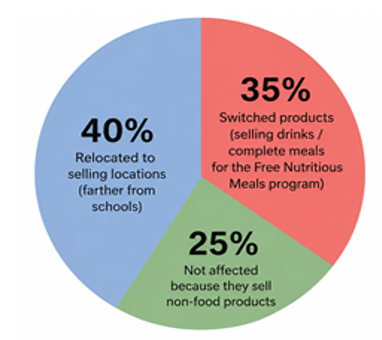
Objective: This study aims to analyze the impact of the implementation of the Free Nutritious Meal Program (MBG) on the income stability of street vendors (PKL) in Klaten, by reviewing it from the perspective of sharia and social economics. Theoretical framework: The theoretical framework used in this study includes the concept of al-mashlahah (common good), the principle of distributive justice in Islamic economics, and the social welfare approach. Literature Review: Based on a literature review, some previous studies have shown that social assistance programs such as MBG can provide benefits in improving people's nutrition, but at the same time can put pressure on the informal sector that previously provided similar services. Methods: The method used in this study is a descriptive qualitative approach with case study techniques on four street vendors located around schools and public areas that are directly affected by the implementation of the MBG program. Results: The results of the study show that the majority of street vendors have experienced a decrease in income of up to 50% since the program was implemented. However, some street vendors are able to survive economically by diversifying products and collaborating with schools. Implications: The implications of these findings confirm the importance of the active involvement of street vendors in the procurement scheme of the MBG program, in order to create an equitable distribution of economic benefits and avoid social inequality. Novelty: This study shows that the MBG program is in principle aligned with sharia economic values such as al-'adl (justice) and al-rahmah (social compassion), but its implementation still requires a more inclusive approach. The novelty of this study lies in the integration of sharia economic analysis with social impacts on the informal sector, as well as concrete recommendations for local governments to include street vendors in the MBG distribution system to improve the economic sustainability of small communities.