The Sharia Compliance of Buy Now Pay Later BNPL Contracts Contemporary Juristic and Financial Analysis
DOI:
https://doi.org/10.61455/jeisr.v2i01.594Keywords:
buy now pay later (bnpl), islamic finance, sharia compliance, gharar, fintechAbstract
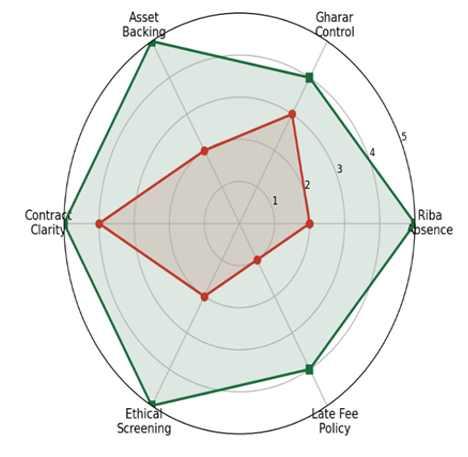
Objective: This study aims to evaluate the Sharia compliance of Buy Now Pay Later (BNPL) financial products by analyzing their contractual structures in relation to Islamic jurisprudential principles. Theoretical framework: The analysis is grounded in classical Islamic finance theory, particularly the prohibitions of riba, gharar, and maysir, as well as contemporary Sharia governance standards issued by AAOIFI. Literature review: Prior studies on consumer credit and Islamic fintech indicate growing scholarly concern over BNPL models offered by platforms such as Klarna, Afterpay, and Affirm, particularly regarding late fees and contractual opacity. Methods: This research adopts a qualitative juristic-analytical approach, examining Sharia standards, fatwas, and operational fintech models, alongside comparative contract analysis between conventional and Islamic BNPL structures. Results: Findings indicate that conventional BNPL models may involve elements of riba al-nasi’ah through punitive late fees, alongside gharar arising from unclear pricing structures. In contrast, Islamic BNPL models structured under murabahah, bay‘bi-thaman ajil, or ujrah frameworks demonstrate greater alignment with Sharia requirements when supervised by Sharia boards. Implications: The study highlights the need for regulatory frameworks that integrate Islamic finance governance standards into BNPL ecosystems to enhance financial inclusion while preserving ethical compliance. Novelty: This study proposes a structured Sharia Compliance Assessment Matrix that systematically evaluates BNPL contracts across legal, financial, and ethical dimensions, offering a practical tool for regulators and Islamic fintech developers.