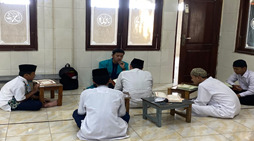
Strengthening Qira’at Traditions through Sanad-Based Tiered Training at Muhammadiyah Al-Firdaus Islamic Boarding School, Indonesia
DOI:
https://doi.org/10.61455/sicopus.v4i03.660Keywords:
qira’at education, sanad transmission, tiered training, direct instruction, oral transmissionAbstract
Objective: This study examines a tiered training model for strengthening sanad-based qira’at education at Muhammadiyah Al-Firdaus Qur’an Memorization Islamic Boarding School in Kartasura, Indonesia. Theoretical framework: Sanad is conceptualized as an integral component of Qur’anic learning, connecting recitation skills, oral transmission, teacher correction, competency assessment, and preservation of recitational traditions. Literature Review: Qira’at education emphasizes recognized transmission chains and talaqqi and musyāfahah. However, structured pathways are needed to accommodate learners’ initial competencies and connect foundational tahsin with advanced training. Methods: This qualitative descriptive study with an evaluative orientation analyzed program observations, activity documentation, recitation assessment records, and participant outcome summaries. Five stages were examined: foundational instruction in makhārij al-ḥurūf and ṣifāt al-ḥurūf; competency-based selection; intensive training in the qira’at of ʿĀṣim through Ḥafṣ and Shuʿbah; additional tahsin support; and final assessment for sanad transmission. Results: The program combined three initial tahsin sessions with approximately 30 hours of intensive talaqqi and musyāfahah. Participants received advanced training or additional foundational guidance according to readiness. Six students completed assessment and received a sanad in the qira’at of ʿĀṣim. Documentation records their completion of all 30 juz’ through Shuʿbah. However, incomplete participant counts, absent standardized pre- and post-training measurements, and limited longitudinal monitoring prevent conclusions about improvement rates and long-term effects. Implications: The model offers pesantren a practical framework for aligning instruction with learner readiness while maintaining transmission standards. Sustainability requires regular classes, transparent assessment, supervised instructor development, and systematic documentation. Novelty: The study documents an integrated pathway linking tahsin, readiness assessment, differentiated support, intensive instruction, competency verification, and sanad transmission within one community engagement program.
References
M. Levianasari, N. Iswandari, and M. Idris, “Diskrepansi Kompetensi Tahfidz Dan Tahsin: Analisis Faktor Penghambat Dan Peluang Strategis Mitigasi Pada Lembaga Pendidikan Islam Nonformal (Studi Kasus: Rumah Tahfidz Al-Hidayah, Musi Rawas, Sumatera Selatan),” J. Pema Tarb., vol. 5, no. 1, p. 59, 2026, https://doi.org/10.30829/pema.v5i1.5479.
H. H. Lubis, Khairul Anhar, A. M. Ritonga, and Nurlatifa Zahrah, “Strengthening Children’s Islamic Character Through Tahsin, Prayer Memorisation, and Etiquette Education at TPA At-Taqwa Air Tiris,” Al-arkhabiil J. Pengabdi. Masy., vol. 6, no. 1, pp. 47–55, 2026, https://doi.org/10.51590/jpm_assunnah.v6i1.1024.
Ainur Rhain, Andri Nirwana AN, Ahmad Nurrohim, Aulia Naufal, and Yeti Dahliana, “Bridging Tahfidz and Tahsin: A Model for Quranic Literacy in Indonesian Islamic Schools,” Solo Int. Collab. Publ. Soc. Sci. Humanit., vol. 3, no. 03, pp. 577–592, 2025, https://doi.org/10.61455/sicopus.v3i03.390.
A. Rahila, F. Faridi, and N. Nurhakim, “Curriculum Management of Tahsin Al-Qur’an with the Tahajji Method,” JIE (Journal Islam. Educ., vol. 10, no. 2, pp. 711–734, 2025, https://doi.org/10.35723/jie.v10i2.592.
M. Nailul Ulya and S. A. R. Alkaff, “An Analysis of the Sanad Transmission by K.H. Muhammad Arwani (1905 – 1994) and His Role in the Dissemination of Qiraat Sab’ah Knowledge in Indonesia,” Qof, vol. 7, no. 2, pp. 245–262, 2023, https://doi.org/10.30762/qof.v7i2.1400.
A. Rhain, A. Nirwana, A. Nurrohim, and M. Jinan, “Modernizing Qirāʾāt ʿasharah Education: A Direct Method Approach To Qur’Anic Recitation Learning,” Int. J. Lang. Cult., vol. 4, no. 1, pp. 128–145, 2026, https://doi.org/10.63762/ijolac.v4i1.55.
A. Azizah, “The Differences Between Arabic Language Teaching for Single Rooted Foreign Speakers and Multiple Rooted Foreign Speakers,” Ittishal Educ. Res. J., vol. 1, no. 1, pp. 26–39, 2020, https://doi.org/10.51425/ierj.v1i1.9.
I. Hidayatsah, D. Danusiri, D. Dartim, E. Suherman, R. W. Rizkillah, and M. Mamdukh, “The Effectiveness of the Talaqqi Method in Tahsin Al-Quràn Learning for Students,” ZAD Al-Mufassirin, vol. 8, no. 1, pp. 799–824, 2026, https://doi.org/10.55759/zam.v8i1.419.
M. Nor and Y. Dahliana, “Epistemologi Tafsir Fii Zhilalil Qur’an Karya Sayyid Qutb,” Hamalatul Qur’an J. Ilmu Ilmu Alqur’an, vol. 6, no. 1, pp. 152–174, 2025, https://doi.org/10.37985/hq.v6i1.502.
A. Madina and H. Hartono, “Studi Kualitatif: Penerapan Metode Tahsin dalam Meningkatkan Pemahaman Membaca Al-Qur’an pada Anak-anak Remaja dalam Pengabdian Masyarakat di Desa Kesatuan Dusun III, Kecamatan Perbaungan, Kabupaten Serdang Bedagai, Sumatera Utara,” Pema, vol. 5, no. 2, pp. 344–355, 2025, https://doi.org/10.56832/pema.v5i2.1060.
M. I. Abdul Latiff and N. Jaafar, “Institusi Tahfiz Di Malaysia: Proses Perkembangan Dan Cabaran,” 2024. https://doi.org/10.53840/jq.v7i2.84.
M. I. Abdul Latiff and N. Jaafar, “Institusi Tahfiz Di Malaysia: Proses Perkembangan Dan Cabaran,” QIRAAT J. Al-Quran dan isu-isu kontemporari, vol. 7, no. 2, pp. 54–63, 2024, https://doi.org/10.53840/jq.v7i2.84.
H. Hussin, A. R. Abd Ghani, A. R. Ahmad, and M. H. Saleh, “Motivasi Intrinsik: Isu Dan Cabaran Dalam Mengekalkan Hafazan Al-Quran Dalam Kalangan Pelajar Usim.,” QIRAAT J. Al-Quran dan isi-isu kontemporari, vol. 4, no. 2, pp. 75–83, 2021, https://doi.org/10.53840/jq.v4i2.28.
M. R. Susanti, B. Efendi, T. P. Lestari, N. Hafari, F. A. Zariroh, and N. Muslimawati, “Penerapan Media Permainan Ular Tangga Tajwid Untuk Meningkatkan Kemampuan Membaca Al-Qur’an Santri,” J. Pengabdi. Masy. Bhinneka, vol. 3, no. 3, pp. 78–82, 2025, https://doi.org/10.58266/jpmb.v3i3.114.
D. K. Mulyani, Y. Y. P. Pratama, and I. P. Pratiwi, “Pengaruh Penggunaan Aplikasi Al-Qur’an Digital Terhadap Kelancaran Tajwid Siswa : Analisis Komparatif,” Educ. J. Inov. Tenaga Pendidik dan Kependidikan, vol. 6, no. 2, pp. 166–175, 2026, https://doi.org/10.51878/educator.v6i2.11245.
F. N. Maywandang and S. Lisnawati, “Development of Tahsin Al-Qur’an E-module for high school students,” Tawazun J. Pendidik. Islam, vol. 19, no. 1, pp. 135–156, 2026, https://doi.org/10.32832/tawazun.v19i1.22903.
D. Susanto, Risnita, and M. S. Jailani, “Teknik Pemeriksaan Keabsahan Data Dalam Penelitian Ilmiah,” J. QOSIM J. Pendidikan, Sos. Hum., vol. 1, no. 1, pp. 53–61, 2023, https://doi.org/10.61104/jq.v1i1.60.
W. Yuliani, “Metode Penelitian Deskriptif Kualitatif Dalam Perspektif Bimbingan Dan Konseling,” QUANTA J. Kaji. Bimbing. dan Konseling dalam Pendidik., vol. 2, no. 2, pp. 1–10, 2018, https://doi.org/10.22460/q.v2i1p21-30.642.
S. H. J. Almalki, “Quranic Reading Between the High-Level Chain of Transmission and Criticism of Grammarians,” Eur. J. Philos. Relig., vol. 15, no. 3, pp. 296–315, 2023, https://doi.org/10.24204/EJPR.2023.4264.
M. F. M. Abdelgelil, B. S. Tahir, and S. N. B. S. Bidin, “Challenges of Artificial Intelligence (AI) and Its Impact on Qur’anic Qira’at: A Thematic Review Analysis,” Quranica, vol. 17, no. 2, pp. 74–96, 2025, https://doi.org/10.22452/quranica.vol17no2.4.
A. N. Laila, A. Rafiq, and S. Syamsuddin, “Model of Tahfizh Qirā’At Program Through Short Learning System in Pesantren Darut Ta’Lim Jepara Indonesia,” Quranica, vol. 18, no. 2, pp. 126–148, 2026, https://doi.org/10.22452/quranica.vol18no1.24.
R. Zakaria and S. Thanaa’, “Hubungan Antara Tadabbur Dengan Kalimah Mutarādif Dalam Al-Quran,” 2025. https://doi.org/10.53840/qiraat.v8i1.93.
W. Susanti, M. Kustati, G. Gusmirawati, and R. Amelia, “Pendampingan Tahsin Al-Qur’an bagi Ibu-Ibu Jamaah di Masjid Jihad Perak,” J. Abdi Masy. Indones., vol. 6, no. 3, pp. 2557–2568, 2026, https://doi.org/10.54082/jamsi.2926.
A. Faisal, Apriadi Amin, Rasyidin, Annisa Malihan, and Rushaifah Mumtazah Lubis, “Implementasi Metode Tahfiz Dan Tahsin Di Rumah Tahfiz Khairunnas Ahmed Al-Ihsan Medan,” J. Ilmu Pendidik. dan Sains Islam Interdisip., pp. 657–667, 2026, https://doi.org/10.59944/jipsi.v5i1.840.
M. M. Jaafar, M. F. A. Adi, and A. M. Mohammad Noor, “Tahap Minat Pelajar Diploma Tahfiz Al-Quran Dan Al-Qiraat Universiti Islam Selangor Terhadap Ilmu Al-Qiraat,” 2026. https://doi.org/10.53840/esf89s53.
N. Ustazdah and K. Nugroho, “Comparative Analysis of Qiraat in Surah At-Tin and Al-’Alaq: A Case Study of Qiraat Hafs and Warsy,” 2025, Proceedings of ISETH (International Summit on Science, Technology. https://doi.org/10.23917/iseth.5463.
M. F. A. Adi, M. Z. Shamsul Kamar, M. I. Mohd Nawi, U. Amer, and H. Muhammad Radhi, “Sorotan literatur naratif pembangunan kamus digital qiraat berasaskan keperluan kurikulum IPT di Malaysia,” ATTARBAWIY Malaysian Online J. Educ., vol. 10, no. 1, pp. 245–256, 2026, https://doi.org/10.53840/attarbawiy.v10i1.404.
M. M. Acar, “The Socio-Cultural Codes of the Interaction between the Science of Qirāʾāt and the City: The Case of the Mecca-Medina (Ḥaramayn) Qirāʾa,” Cumhur. Ilah. Derg., vol. 30, no. 1, pp. 342–361, 2026, https://doi.org/10.18505/cuid.1863861.
W. I. ABD HALIM, “Penerapan Ilmu Qiraat Dalam Kuliah Tafsir Di Negeri Kelantan: Suatu Sorotan Literatur,” 2023. https://doi.org/10.53840/qiraat.v6i2.67.
M. A. Minan and A. Mustaqim, “Preserving Sanad in the Digital Age: A Case Study of Virtual Talaqqi for Qira’at al-Qur’an at Markaz Qiroat Indonesia,” J. Pendidik. Agama Islam, vol. 23, no. 1, pp. 210–231, 2026, https://doi.org/10.14421/v23i1.12798.
H. Hussin, A. R. Ahmad, M. H. Saleh, M. Yahaya, R. Zakaria, and N. H. Mohd Haridi, “Motivasi Ekstrinsik: Analisis Terhadap Cabaran Mengekalkan Hafazan Al-Quran Dalam Kalangan Pelajar Sarjana Muda Pengajian Qiraat Usim,” 2023. https://doi.org/10.53840/qiraat.v6i2.72.
A. Rhain, Hafidz, H. Nashihin, T. H. Srihananto, and T. Hermawati, “Tahsin Reading Assistance for Islamic Boarding School Tahfidz Qur’an Muhammadiyah Daarul Arqom Sawahan Ngemplak Boyolali,” J. Pengabdi. Masy. Bestari, vol. 2, no. 1, pp. 27–44, 2023, https://doi.org/10.55927/jpmb.v2i1.2729.
A. A. N. Nirwana, Mahmudulhassan, Muthoifin, and Waston, “Bibliometric Analysis of Islamic Education and Character Development in Religious Education Practices in Indonesia,” Pakistan J. Life Soc. Sci., vol. 22, no. 2, pp. 1231–1245, 2024, https://doi.org/10.57239/PJLSS-2024-22.2.0086.
K. Nasir, R. K. Zaman, A. B. A. Hilmi, A. H. Mahadzir, and A. M. Bin Mustaffa, “Artificial Intelligence Integration in Mobile Applications: Innovation and Challenges in Supporting Quran Memorization and Review,” Quranica, vol. 17, no. 2, pp. 612–645, 2025, https://doi.org/10.22452/quranica.vol17no2.24.
E. M. Ladja and C. M. L. Ladja, “Maligay: An Iconic Tausug Traditional Token for Pagtammat in the Sulu Archipelago,” Southeast. Philipp. J. Res. Dev., vol. 29, no. 2, pp. 109–123, 2024, https://doi.org/10.53899/spjrd.v29i2.462.
E. Mahrus, Z. H. Prasojo, Sukino, N. Purwanti, and B. Suratman, “Transmission of Local Islamic Texts in Islamic Education: Materials, Actors, and the Historical Trajectory of Islamic Knowledge in Borneo,” Nazhruna J. Pendidik. Islam, vol. 8, no. 2, pp. 447–463, 2025, https://doi.org/10.31538/nzh.v8i2.200.
A. Dramé, “The Institutionalization of Islam in Southern Senegal: Intermarriage, Qur’anic Education, and Jihãd,” Institutionalization Islam South. Senegal Intermarriage, Qur’anic Educ. Jihãd, pp. 1–255, 2025, https://doi.org/10.3998/mpub.11535757.
M. Pilgir, “The Essence of Preferences of the Methodology (Maslak) of ʿAṭāʾ Allāh in the Context of Mughnī al-Qurrāʾ fī Sharḥ Mukhtār al-Iqrāʾ,” Cumhur. Ilah. Derg., vol. 28, no. 1, pp. 242–263, 2024, https://doi.org/10.18505/cuid.1421128.
M. Sulaeman, M. N. Ichwan, and A. Rafiq, “Market Islam in Qur’an Reading Methods in Indonesia: Tradition and the Dynamics of Emerging Diversity,” Ascarya J. Islam. Sci. Cult. Soc. Stud., vol. 6, no. 1, pp. 108–128, 2026, https://doi.org/10.53754/s4a1rg45.
H. Chahdi, “Le paradoxe de la transmission des qirā’āt: Entre riwāya et qiyās ?,” J. Qur’anic Stud., vol. 19, no. 3, pp. 103–133, 2017, https://doi.org/10.3366/jqs.2017.0304.
M. Pilgir, “Ibn al-Jazarī’s Taḥrīrāt Practices Regarding the Content of al-Shāṭibiyya: A Study in the Context of Nashr,” Hitit Theol. J., vol. 22, no. 2, pp. 702–722, 2023, https://doi.org/10.14395/hid.1324594.