Collaborative Governance Model in Digital Innovation-Based Health Malpractice Law Enforcement
DOI:
https://doi.org/10.61455/sicopus.v4i03.618Keywords:
collaborative governance, medical malpractice, law enforcement, digital innovation, professional disciplinary boardAbstract
Objective: This study aims to formulate a Collaborative Governance model for medical malpractice law enforcement leveraging digital innovation to enhance inter-agency coordination, legal certainty, and legal protection for both patients and healthcare professionals. Theoretical framework: The study is grounded in the concepts of Collaborative Governance and digital transformation in public administration, serving as a foundation for establishing effective, transparent, and accountable cross-sector coordination. Literature review: Previous studies have generally focused on litigation mechanisms, legal protections for healthcare professionals, and the role of Professional Disciplinary Councils; however, they have yet to integrate collaborative governance with digital innovation into a unified law enforcement model. Method: The study employs a normative-juridical approach with qualitative methods, utilizing a literature review of legislation, scholarly works, and secondary data analyzed through an interactive process. Results: Findings indicate that the low resolution rate of medical malpractice cases stems from weak inter-agency coordination, divergent perspectives regarding the evidentiary process, and a lack of integrated information systems. The study produces a model comprising five stages: digital reporting, collaborative verification, joint investigation, dispute resolution, and data-driven evaluation. Implications: This model has the potential to improve coordination effectiveness, transparency, accountability, and legal certainty in the handling of medical malpractice cases. Novelty: The research offers a conceptual model that integrates Collaborative Governance, the authority of Professional Disciplinary Councils, and digital innovation into a law enforcement system that is more responsive, integrated, and adaptive.
References
N. N. Lisitskii and T. G. Maximova, “Prospects for the development of digital innovations in public healthcare,” R-Economy, vol. 11, no. 4, pp. 391–405, 2025, https://doi.org/10.15826/recon.2025.11.4.021.
A. Fitira, R. Subekti, and I. Isharyanto, “Kedudukan Rekomendasi Majelis Disiplin Profesi Sebagai Quasi-Penyelidikan Dalam Penyelesaian Sengketa Medik di Indonesia,” J. Huk. IUS QUIA IUSTUM, vol. 32, no. 3, pp. 653–680, 2025, https://doi.org/10.20885/iustum.vol32.iss3.art6.
F. Zhuravka et al., “Digital Capacity, Startup Ecosystems, and Collaborative Governance As Drivers of Regional Economic Growth: Evidence From Ukrainian Regions,” Probl. Perspect. Manag., vol. 23, no. 4, pp. 635–649, 2025, https://doi.org/10.21511/ppm.23(4).2025.43.
G. Consorti, L. Catarzi, A. Frosolini, L. A. Vaira, U. Committeri, and G. Cirignaco, “Artificial intelligence in oral and maxillofacial surgery: a scoping review of clinical applications, ethical challenges, and legal considerations,” Int. J. Oral Maxillofac. Surg., vol. 55, no. 7, pp. 756–773, 2026, https://doi.org/10.1016/j.ijom.2026.02.020.
P. Robles, L. Azevedo, E. Best, and D. J. Mallinson, “Building Trust in Government AI: Balancing Innovation and Privacy in Healthcare Services,” Public Organ. Rev., 2026, https://doi.org/10.1007/s11115-026-01018-z.
L. Adams, E. Fontaine, M. Matheny, and S. Krishnan, An Artificial Intelligence Code of Conduct for Health and Medicine: Essential Guidance for Aligned Action. National Academies Press, 2025. https://doi.org/10.17226/29087.
Undang-Undang Nomor 17 Tahun 2023 Tentang Kesehatan. Lembaran Negara Republik Indonesia Nomor 105 Tahun 2023, 2023.
S. T. Alfina and Y. A. Mangesti, “Peran Majelis Disiplin Profesi Dalam Penyelesaian Sengketa Medis Ditinjau Dari Undang-Undang Nomor 17 Tahun 2023 Tentang Kesehatan,” vol. 7, no. 1, 2025.
W. Andrianto, “Secarik Catatan Untuk Majelis Disiplin Dokter.” Hukumonline, Jul. 2024.
D. A. Hyman and C. Silver, “Medical Malpractice Litigation and Tort Reform: It’s the Incentives, Stupid,” Vanderbilt Law Rev., vol. 59, no. 4, pp. 1085–1116, 2006.
N. Sherman and B. T. Nomani, “Alternative Dispute Resolution: Mediation as a Model,” F1000Research, vol. 13, no. 778, 2025, https://doi.org/10.12688/f1000research.152362.2.
J. Luo, “Analysis of Medical Malpractice Liability Disputes Related to Novel Antineoplastic Drugs and Research on Risk Prevention and Control Strategies,” PLoS One, vol. 18, no. 6, 2023, https://doi.org/10.1371/journal.pone.0286623.
M. Wei, “Doctors, Apologies, and the Law: An Analysis and Critique of Apology Laws,” J. Health Law, vol. 39, no. 4, 2007.
L. Mulcahy and W. Teeder, “Are Litigants, Trials and Precedents Vanishing After All?,” Mod. Law Rev., vol. 85, no. 2, pp. 326–348, 2022, https://doi.org/10.1111/1468-2230.12685.
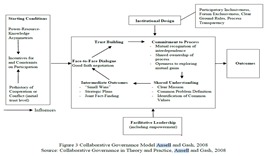
C. Ansell and A. Gash, “Collaborative governance in theory and practice,” J. Public Adm. Res. Theory, vol. 18, no. 4, pp. 543–571, 2008, https://doi.org/10.1093/jopart/mum032.
K. Emerson, T. Nabatchi, and S. Balogh, “An Integrative Framework for Collaborative Governance,” J. Public Adm. Res. Theory, vol. 22, no. 1, pp. 1–29, 2012, https://doi.org/10.1093/jopart/mur011.
M. U. Tariq, Regulating AI in Healthcare. IGI Global Scientific Publishing, 2026. https://doi.org/10.4018/979-8-3373-5452-1.ch004.
F. Bin Alam, A. Nijhof, A. Sohal, T. De Vass, and G. Croy, “Resilience for you, vulnerability for me: lessons to build a resilient, equitable, and sustainable global apparel supply chain,” Int. J. Logist. Manag., 2026, https://doi.org/10.1108/IJLM-03-2025-0225.
M. S. Nasution, A. Syahza, Z. Rusli, M. Mayarni, D. Mashur, and F. Ananda, “Public Administration in the Era of Digital and Collaborative Governance: A Bibliometric Analysis,” Otoritas J. Ilmu Pemerintah, 2024, https://doi.org/10.26618/ojip.v15i1.15911.
M. P. Y. Ahad and A. N. Barsei, “Collaborative Governance Sistem Pemerintahan Berbasis Elektronik: Best Practice dari Pemerintah Daerah di Indonesia Timur,” J. Transform. Adm., vol. 13, no. 1, pp. 53–72, 2023, https://doi.org/10.56196/jta.v13i01.236.
R. Mahardhika, “Complaint Management Strategy in Dealing with Allegations of Malpractice in the Digital Age,” Strateg. Manaj. Pengaduan dalam Menghadapi Dugaan Malpraktik di Era Digit., 2023, https://doi.org/10.37680/amalee.v4i2.3238.
A. A. Çelik, Y. S. Balcioğlu, and E. Altindağ, “Cross-national variations and demographic disparities in health surveillance system performance: a comparative analysis of OECD member countries,” Heal. Res. Policy Syst., vol. 24, no. 1, 2026, https://doi.org/10.1186/s12961-026-01471-8.
J. He, Y. Bai, Y. Wang, Y. Zhang, Y. Song, and L. Lu, “Application of artificial intelligence in mental health management: toward early screening, assessment, and intervention,” Acad. J. Nav. Med. Univ., vol. 47, no. 3, pp. 300–308, 2026, https://doi.org/10.16781/j.CN31-2187/R.20250707.
S. Fritzen, “Beyond Political Will: How Institutional Context Shapes the Implementation of Anti-Corruption Policies,” Policy Soc., vol. 24, no. 3, pp. 79–96, 2005, https://doi.org/10.1016/S1449-4035(05)70061-8.
D. Siswantoro, “Regulatory Compliance And Experiences Of Islamic Cooperatives In Competitive Business In Indonesia,” Sustain., vol. 11, no. 1, pp. 1–14, 2019, https://doi.org/10.12816/0001418.
J. Saldaña, The Coding Manual for Qualitative Researchers. London: Sage Publications, 2021.
A. Fitira, “Kedudukan Rekomendasi Majelis Disiplin Profesi Sebagai Quasi- Penyelidikan Dalam Penyelesaian Sengketa Medik di Indonesia,” J. Huk. IUS QUIA IUSTUM, vol. 32, no. November, pp. 653–680, 2025, https://doi.org/10.20885/iustum.vol32.iss3.art6.
H. Li and Y. Yao, “Interactive Effects Between Green Finance and the Digital Economy Across Chinese Provinces: Evidence from a Simultaneous Equation Model,” J. Logist. Informatics Serv. Sci., vol. 12, no. 10, pp. 67–86, 2025, https://doi.org/10.33168/JLISS.2025.1005.
M. Sundström, “The integration void: knowledge-integrated governance in digital place innovation,” J. Place Manag. Dev., vol. 19, no. 2, 2026, https://doi.org/10.1108/JPMD-11-2025-0174.
J. Nogueira, T. Santos, A. Pina, and S. S. Martins, Code Meets Care: The Digital Shift in Health Promotion. IGI Global, 2026. https://doi.org/10.4018/979-8-3373-3531-5.ch003.
E. Handritha et al., “Governance Innovation for Health Sustainability: Balikpapan City SDG Strategies,” in E3S Web of Conferences, E. A., Ed., EDP Sciences, 2025. https://doi.org/10.1051/e3sconf/20256570306.
T. Polzer and S. Öner, “Digital Accountability in Collaborative Public Governance in Times of Crisis: Analysing the Debate in a Polarized Social Forum,” Abacus, vol. 61, no. 1, pp. 239–271, 2025, https://doi.org/10.1111/abac.12351.
M. Labor, M. Cooke, R. Lombard-Vance, A. Zurkuhlen, B. Meenen, and A. Schüttler, “Mechanisms for the Participatory Governance of Technology-Mediated Health and Social Care,” Stud. Health Technol. Inform., vol. 306, pp. 33–40, 2023, https://doi.org/10.3233/SHTI230593.
G. Luo, “Governing for sustainable health: institutional pathways in China’s sport and health policy (1949–present),” Front. Public Heal., vol. 13, 2025, https://doi.org/10.3389/fpubh.2025.1660488.
H. Wang, Y. Gong, Y. Zhang, and F. Li, “Artificial Intelligence for Sustainable Cultural Heritage: Practical Guidelines and Case-Based Evidence,” Sustain., vol. 17, no. 20, 2025, https://doi.org/10.3390/su17209192.
J. E. Yang and A. R. Kim, “Policy-aligned Research Trajectories in AI-Enabled Clinical Trials: A 2015–2025 Bibliometric Synthesis and Governance Implications for Korea and the UK,” Open Public Health J., vol. 19, no. 1, 2026, https://doi.org/10.2174/0118749445454045260120075224.
W. Li, “Digital Innovation Networks for the SDGs: A Research Agenda for Higher Education Transformation,” Eur. J. Educ., vol. 60, no. 4, 2025, https://doi.org/10.1111/ejed.70292.
R. Lombard-Vance, M. Labor, A. Zurkuhlen, and M. Cooke, “Barriers to and Facilitators of Participation in Health and Social Care Governance: Categories and Cross-Cutting Themes from a Survey of SHAPES Project Partners,” Stud. Health Technol. Inform., vol. 306, pp. 41–48, 2023, https://doi.org/10.3233/SHTI230594.
C. Oga-Omenka et al., “Implementation of digital tuberculosis information systems: perspectives from 10 high TB burden countries,” BMC Infect. Dis., vol. 26, no. 1, 2026, https://doi.org/10.1186/s12879-026-12852-3.
K. Chen, Q. Tao, Y. Wang, Z. Ding, and R. Fu, “Coupled coordination relationship and enhancement path between digital economy and essential public health services in China,” Front. Public Heal., vol. 13, 2025, https://doi.org/10.3389/fpubh.2025.1517353.
Y. Xin Sun and L. Ying Wu, “From information literacy to health literacy: AI-driven transformation in university libraries under digital public health—a perspective,” Front. Public Heal., vol. 14, 2026, https://doi.org/10.3389/fpubh.2026.1841351.
S. Arabi, D. Vindigni, and K. Butler-Henderson, “Exploring Challenges and Opportunities in International Healthcare Partnerships: A Thematic Analysis,” World Med. Heal. Policy, vol. 17, no. 3, pp. 456–467, 2025, https://doi.org/10.1002/wmh3.70012.
Y. Tong, H. Qianzhen, T. Bo, H. Bin, and Z. Min, “Analyzing the collaborative development needs of grassroots centers for disease control and prevention using the Kano model: A case study of China’s Chengdu–Chongqing Economic Circle,” PLoS One, vol. 21, no. 4, April, 2026, https://doi.org/10.1371/journal.pone.0347594.
Z. Zeng, L. Zhang, Z. Wang, and K. Guo, “Artificial intelligence empowering diabetes prevention and control in primary care: challenges and strategies,” J. Chinese Physician, vol. 28, no. 2, pp. 185–188, 2026, https://doi.org/10.3760/cma.j.cn431274-20260204-00126.