The Impact of PP-PKH on the Economic Welfare of Decile 1–2 Households through Maqasid al-Shariah-Based Economic Empowerment: Evidence from Panca Mulya Village, South Sumatera
DOI:
https://doi.org/10.61455/sicopus.v4i03.602Keywords:
economic well-being, economic empowerment, maqasid al-shariah, smartpls 4, low-income householdsAbstract
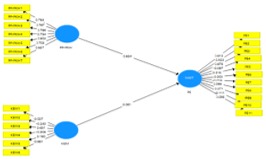
Objective: This study aims to examine the effect of the Protection and Empowerment Program through the Family Hope Program (PP-PKH) on the economic welfare of households in decile groups 1–2 in Panca Mulya Village, while investigating the mediating role of Maqasid al-Shariah-based economic empowerment in strengthening the relationship between social protection and community welfare. Theoretical framework: The research is based on social protection theory integrated with the Maqasid al-Shariah framework, emphasizing that empowerment grounded in Islamic values promotes sustainable welfare beyond financial assistance alone. Literature review: Previous studies primarily emphasize the direct impact of PKH on welfare, while limited research explores the mediating role of Islamic-based economic empowerment in strengthening program effectiveness. Method: This study employs a quantitative explanatory design, collecting data through questionnaires, observations, and interviews, which are analyzed using PLS-SEM with SmartPLS 3. Results: The findings demonstrate that PP-PKH positively influences both community economic welfare and Maqasid al-Shariah-based economic empowerment. Economic empowerment also has a significant positive effect on welfare and serves as a mediating variable, indicating that the program's effectiveness is strengthened when social assistance is accompanied by empowerment strategies rooted in Islamic economic values. Implications: The results suggest that social protection policies should integrate Islamic-based economic empowerment to enhance the long-term effectiveness and sustainability of poverty alleviation programs. Novelty: This study introduces an integrated model that links the Family Hope Program (PKH) with Maqasid al-Shariah based economic empowerment, demonstrating its mediating role in improving community economic welfare.
References
N. A. W. M Ashraf Al Haq, “The Maqasid Al Shariah and the Sustainability Paradigm : Literature Review and Proposed Mutual Framework for Asnaf Development,” vol. 5, no. 2, pp. 179–196, 2019, https://doi.org/10.26710/jafee.v5i2.854.
D. Mardianto, J. Khaerullah, S. Ulvah, and K. Karmila, “Maqashid Sharia as a Pillar of Inclusive Development : Moderation in Economic Growth Towards Poverty,” vol. 5, no. December, pp. 154–181, 2025, https://doi.org/10.18860/miec.v5i2.37557.
E. P. Wulandari, K. Saiban, and M. Munir, “Implementasi Maqashid Syariah Dalam Pemberdayaan Ekonomi Masyarakat (Implementation of Sharia Maqashid in Community Economic Empowerment) Efriza,” vol. 2, no. 1, pp. 1–15, 2022, https://doi.org/10.21154/invest.v2i1.3661.
A. Fathurrahman, M. Wulandari, and M. Rizki, “Maqashid Shariah Indicators Impact on Poverty Eradication in Java Island,” vol. 8, no. January, pp. 147–162, 2025, https://doi.org/10.18196/ijief.v8i1.26842.
M. S. Wangloan, J. A. Mollet, and H. Z. Kaiwai, “The Impact of Social Assistance on the Social Welfare of PKH Beneficiary Families in Sentani District, Jayapura District,” vol. 1, no. 2, pp. 81–96, 2025, https://doi.org/10.61401/rabi.v1i2.235.
A. Furqon and M. , Nurhayati, “Islamic Social Finance and Poverty Alleviation Keuangan Sosial Islam dan Pengentasan Kemiskinan,” vol. 1, no. 5, pp. 256–264, 2024.
F. R. Inat, Fathy, Fadly, and Idrus Abubakar, “Descriptive Study of Government Expenditure & Poverty Reduction in South Halmahera, Indonesia,” vol. 20, no. 2, pp. 246–259, 2024, https://doi.org/10.21831/economia.v20i2.58027.
D. E. Mirlana, A. K. Fatta, and A. Subagyo, “Program Keluarga Harapan dalam Upaya Peningkatkan Kualitas Sumber Daya Manusia,” vol. 12, no. 1, pp. 35–52, 2024, https://doi.org/10.33603/publika.v12i1.9836.
A. W. Kurniawan, M. Sholahuddin, I. Rosyadi, and A. Alam, “Integrating Maslahah Mursalah in Indonesia ’ s Sharia Economic Product Innovation Policy : An Adaptive Regulatory Perspective,” vol. 9, no. 1, pp. 17–27, 2026, https://doi.org/10.47076/362k3630.
A. M. Jibril, “Operationalizing Maqāṣid al-Sharīʿah in Islamic Finance: Pathways to Poverty Alleviation and Sustainable Development,” vol. 5, no. 2, pp. 169–183, 2025, https://doi.org/10.21154/joie.v5i2.12145.
M. Dehani, D. Hernawan, and I. Purnamasari, “Evaluasi Program Keluarga Harapan ( Pkh ) Di Kecamatan Bogor Selatan Kota Bogor Evaluation Of Keluarga Harapan Program ( Pkh ) In South,” vol. 4, no. April, pp. 45–56, 2018, https://doi.org/10.30997/jgs.v4i1.1140.
D. Kurniasih and M. C. Anjani, “Social Welfare of Rural Communities as a Function of Social Workers’ Empowerment,” vol. 12, no. 1, pp. 124–140, 2025, https://doi.org/10.29333/ejecs/2350.
M. Z. Mustafar, M. Khairul, and N. Mohd, “A General Bibliometric and Conceptual Structure Approach to Global Trend on Poverty Research in Islam Using Biblioshiny,” vol. 24, no. 2, pp. 803–834, 2025, https://doi.org/10.20885/millah.vol24.iss2.ar8.
S. A. S. & R. Resnawaty, “Program Keluarga Harapan ( Pkh ): Antara Perlindungan Sosial,” 2016.
H. S. Arum, N. E. Rupita, H. S. Arum, N. E. Rupita, M. Albahi, and A. Info, “Maqasid Sharia As A Philosophical Foundation In Islamic Economic Policy Making,” vol. 16, no. 1, pp. 28–43, 2024, https://doi.org/10.35891/ml.v16i1.5798.
L. Subra, A. Kurniawan, and A. Zuliansyah, “The Role Of Productive Zakat In Improving Mustahik Welfare : A Comparative Study In Malaysia And Indonesia”.
C. S. Nisa, Faridatun, Helmi Fitriansyah and Universitas, “The Integration of Ma ṣ la ḥ ah into Islamic Economic Law through the policy of Halal and Tayyib Certification in Indonesia,” vol. 12, no. 01, pp. 258–268, 2025, https://doi.org/10.29300/mzn.v12i1.6968.
P. Indriyanti and W. Qarni, “The effectiveness of Bantuan Langsung Tunai ( Direct Cash Assistance ) implementation in enhancing community welfare from the perspective of Islamic economics,” vol. 10, no. 1, pp. 331–346, 2024, https://doi.org/10.20885/jielariba.vol10.iss1.art18.
Resdati, “The Role of the Family Hope Program ( PKH ) Facilitator in Increasing Family Development Session in Sipungguk Village,” vol. 11, no. 2, pp. 463–468, 2021.
M. M. and Suliswanto, Muhammad Sri Wahyudi and M. N. Barom, “A Maqasid -Based Welfare Index in Indonesia : An Empirical Investigation,” vol. 11, no. 1, pp. 119–146, 2025, https://doi.org/10.21098/jimf.v11i1.2098.
V. E. Tobing-David, I. R. Adi, and M. Nuryana, “Conditions of Sustainable Welfare : A Cross-Case Empirical Analysis of 22 Locality-Based Welfare Systems in Decentralised Indonesia,” 2024, https://doi.org/10.3390/su16041629.
S. R. Ningsih and W. I. Sholihah, “Pengalaman Keluarga Penerima Manfaat (Kpm) Dalam Menavigasi Kemandirian Sosial Ekonomi Melalui Program Keluarga Harapan (PKH),” vol. 14, no. 1, 2025, https://doi.org/10.15408/empati.
I. El Zuhri, “Policy Analysis of the Family Hope Program ( Program Keluarga Harapan ) from a Long-Term Investment Perspective for the Indonesian Government,” vol. 10, no. 12, 2024, https://doi.org/10.22178/pos.112-2.
M. A. Algifari and R. Andrini, “Maqasid Syariah dalam Pengembangan Ekonomi Islam ( Analisis Komprehensif dan Implementasi ),” vol. 2, no. 3, pp. 95–100, 2024.
F. A. Siregar, “Integration Islamic Social Finance And Sdgs: Perspective Maqasid Sharia Based On Scientific Mapping,” 2025.
P. H. Prayitno and S. Sahid, “Social Capital and Household Economic Welfare : Do Entrepreneurship, Financial and Digital Literacy Matter ?” 2022, https://doi.org/10.3390/su142416970.
M. Mukhlishin, “Integration of Maqāṣid Sharia and Social Philanthropy in the Economic Empowerment of the Shrimp Pond Labor Community,” vol. 6, no. 6, pp. 1669–1687.
A. J. Septia Nur Wardani and Romi Adetio Setiawan, “The Effectiveness Of The Family Hope Program (Pkh) in Improving Welfare (A Study Of The Rena Jaya Village Community from an Islamic Economic Perspective) Efektivitas,” vol. 8, pp. 3678–3691, 2025, https://doi.org/10.31539/costing.v8i3.15638.
M. Syahrullah and I. Khalid, “Analysis of the Effectiveness of the Family Hope Program ( PKH ) on Poverty Reduction in the Perspective of Islamic Economics,” pp. 1011–1026, 2023.
S. Halim, E. R. Yanti, and R. Dilena, “Community Understanding of Obligations as a Recipient of PKH Assistance in the Perspective of Islamic Law,” vol. 6, no. 2, pp. 325–342, 2024, https://doi.org/10.37680/almanhaj.v6i2.5151.
D. Iswanto, “The Role of Social Workers in Empowering Poor Village Communities (Study of Indonesian Conditional Cash Transfer Programme (PKH) Facilitators in Jegulo Village, Tuban Regency),” vol. 2, no. September, pp. 34–44, 2023.
A. Cinthia and R. A. Wineini, “Analysis of the Effectiveness of Social Assistance Policies in Reducing Social Inequality in Indonesia,” vol. 8, no. 2, pp. 612–620, 2026, https://doi.org/10.36312/jihad.v8i2.612/https.
U. S. Mekkah, “The Program Keluarga Harapan ( PKH ): For Poverty Reduction and Social Protection,” vol. 04, no. 1, pp. 2–7, 2021.
A. Malik and A. A. Wakhid, “Efektivitas Kebijakan Fiskal melalui Bantuan Program Keluarga Harapan Perspektif Maqashid Syariah,” vol. 4, no. 1, 2024, https://doi.org/10.28918/elhisbah.v4i1.8485.
F. Jewed and M. R. Abdullah, “Evaluating the effectiveness of social assistance programs for poverty reduction : Evidence from Baramamase Village, Indonesia,” vol. 11, no. 2, pp. 1079–1114, 2025, https://doi.org/10.20885/jielariba.vol11.iss2.art16.
T. Intensitas, N. Haid, and P. Dismenore, “Jurnal Manajemen dan,” vol. 5, no. 2, pp. 41–49, 2023.
N. Cahyadi, R. Hanna, B. A. Olken, R. A. Prima, E. Satriawan, and E. Syamsulhakim, “Cumulative Impacts of Conditional Cash Transfer Programs: Experimental Evidence from Indonesia,” vol. 12, no. 4, pp. 88–110, 2020, https://doi.org/10.1257/pol.20190245.
A. S. Ulandari, Sri Ayu, “From Poverty to Inequality : Evaluation of the Implementation of the Family Hope Program ( PKH ) and Its Impact on Social Inequality in North Sumatra,” vol. 8, no. 1, pp. 65–76, 2025, https://doi.org/10.15575/jt.v8i1.43770.
R. Setiawan, F. Andrianus, and R. E. Putera, “Effectiveness of Extreme Poverty Alleviation Implementation in Meranti Islands Regency,” vol. 12, no. 1, pp. 163–174, 2026, https://doi.org/10.25299/jiap.2026.27410.
A. A. Arsyadani and A. Wahyudi, “Poverty Alleviation from an Islamic Perspective : Study of LazisNU Ponorogo Programs,” vol. 3, no. 2, pp. 51–64, 2024, https://doi.org/10.37680/ijief.v3i2.6188.
S. E. Y. Mohd Suffian Mohamed Esa, Hairunnizam Wahid, “Introduction Of Transfer Introduction Of Conditional Transfer Programs Programs As New Distribution Mechanism In,” pp. 321–335.
M. Ekawaty and M. R. Hanafiansyah, “Bridging Theory And Practice In Islamic Economics: A Prisma-Based Systematic Review On Zakat, Waqf, And Islamic Social Finance For Welfare Enhancement,” vol. 3, no. 3, pp. 3125–3134, 2026.