From Exegesis to Performativity: An Epistemological-Phenomenological Study of the Transformation of Qur'anic Reception in Indonesia
DOI:
https://doi.org/10.61455/sicopus.v4i03.598Keywords:
living qur’an, epistemology, phenomenology, qur’anic reception, performativityAbstract
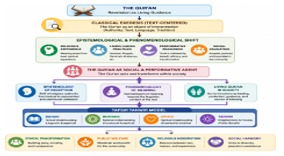
Objective: This study examines the paradigm shift in the reception of the Qur’an in Indonesia through epistemological and phenomenological perspectives, explaining its transformation from an object of interpretation into a subject of social performativity. Theoretical framework: The study integrates epistemology and phenomenology to analyze shifts in religious authority, meaning construction, and the lived experience of Qur’anic reception in Indonesian society. Literature review: Previous Living Qur’an studies mainly provide descriptive phenomenological accounts while overlooking epistemological dimensions. This study addresses that gap by linking reception practices with the transformation of religious knowledge. Method: A qualitative-philosophical approach is employed, combining epistemological inquiry and phenomenological analysis to interpret the transformation of Qur’anic reception. Results: The findings demonstrate three major transformations in the reception of the Qur’an in Indonesia. First, religious authority has shifted from textual interpretation toward subjective and communal experiences based on the perceived efficacy of Qur’anic practices. Second, phenomenologically, these practices reflect an internalization of meaning that extends beyond the linguistic content of the Qur’anic text. Third, these developments have produced a new "Epistemology of Reception," in which the Qur’an functions as an active social agent shaping religious and public life within Indonesian society. Implications: The study enriches Living Qur’an scholarship by offering an integrated framework for understanding the dynamic interaction between sacred texts and contemporary sociocultural contexts. Novelty: This study introduces the concept of "Epistemology of Reception," reconceptualizing the Qur’an as an active social force rather than merely an object of textual interpretation.
References
A. Rafiq, “The Living Qur’an: Its Text and Practice in the Function of the Scripture,” J. Stud. Ilmu-ilmu Al-Qur’an dan Hadis, vol. 22, no. 2, pp. 469–484, Jul. 2021, https://doi.org/10.14421/qh.2021.2202-10.
M, S. Shobron, and S. A. Rahman, “Humanist Islam in Indonesia: Ahmad Syafii Maarif perspective,” Humanit. Soc. Sci. Rev., vol. 7, no. 6, pp. 780–786, 2019, https://doi.org/10.18510/hssr.2019.76118.
M. Afifi, A. Fattah, M. Mareta, and M. Fakhri, “Dzikr and Meditation in Tashawwuf: Spiritual Disciplines, Psychological Benefits, and Their Contemporary Relevance,” MIQOT J. Ilmu-ilmu Keislam., vol. 49, no. 2, p. 400, 2025, https://doi.org/10.30821/miqot.v49i2.1485.
D. A. Pandie, “Konsep ‘Satu Tungku Tiga Batu’ Sosio-Kultutal Fakfak sebagai Model Interaksi dalam Kehidupan Antarumat Beragama,” Soc. Dei J. Agama dan Masy., vol. 5, no. 1, p. 49, 2018, https://doi.org/10.33550/sd.v5i1.78.
A. Duderija, The imperatives of progressive Islam. London: Routledge, 2017. https://doi.org/10.4324/9781315438849.
D. W. A. Dendy, “Tahlilan and Yasinan as Phenomenological Expressions of Islamic Religious Experience in Indonesia,” J. Penelit. Keislam., vol. 21, no. 1, pp. 49–65, 2025, https://doi.org/10.20414/jpk.v21i1.13056.
A. Z. Abidin, S. Noorhidayati, and I. Ahmadi, “Amulet of Quranic Verses in East Javanese Rural: Unraveling Mystical Theology and Living Quran,” Acad. J. Interdiscip. Stud., vol. 12, no. 6, pp. 392–400, 2023, https://doi.org/10.36941/ajis-2023-0177.
M. Z. Hasan, “Resepsi Al-Qur’an Sebagai Medium Penyembuhan Dalam Tradisi Bejampi Di Lombok,” J. Stud. Ilmu-ilmu Al-Qur’an dan Hadis, vol. 21, no. 1, pp. 133–152, 2020, https://doi.org/10.14421/qh.2020.2101-07.
M. Amin and M. A. Nurhayat, “Resepsi Masyarakat Terhadap Al-Quran,” J. Ilmu Agama Mengkaji Doktrin, Pemikiran, dan Fenom. Agama, vol. 21, no. 2, pp. 290–303, 2020, https://doi.org/10.19109/jia.v21i2.7423.
Y. B. Zulliandi, Intan Wulansari, and Nurul Aulia, “The Transformation of Qur’an Interpretation and the Dynamics of Text Authority in Indonesia: A Critical Analysis,” MIYAH J. Stud. Islam, vol. 21, no. 01, pp. 1–30, 2025, https://doi.org/10.33754/miyah.v21i01.1270.
Zarkasi et al., “Learning Al-Qur’an Hadith Using Study Tours to Improve Religious Moderation Attitudes and Socio-Cultural Literacy of Madrasah Aliyah Students,” J. Pendidik. Agama Islam, vol. 21, no. 2, pp. 461–476, 2024, https://doi.org/10.14421/jpai.v21i2.8744.
L. Nadhiroh and A. F. Aini, “Resepsi Fungsional Al-Quran dalam Tradisi Nariyahan di PP. Putri Mahyajatul Qurro’ Kunir, Wonodadi Blitar,” MAGHZA J. Ilmu Al-Qur’an dan Tafsir, vol. 9, no. 1, pp. 75–97, 2024, https://doi.org/10.24090/maghza.v9i1.8625.
M. H. Ghani, M. S. Moktar, W. N. I. W. Nor Anas, and A. W. Md Ali, “Integration of Revelation and Science in the Context of Al-Tafsir Al-‘Ilmiy: An Overview,” Int. J. Acad. Res. Bus. Soc. Sci., vol. 14, no. 12, pp. 3331–3339, 2024, https://doi.org/10.6007/ijarbss/v14-i12/24310.
R. Wijaya, “Makna Syifa dalam al-Qur’an (Analisis Semiotika Roland Barthes pada QS al-Isra 82),” Al-Adabiya J. Kebud. dan Keagamaan, vol. 16, no. 2, pp. 185–196, 2021, https://doi.org/10.37680/adabiya.v16i2.924.
M. Mariana, “Integration of Islam in the Adat Basandi Syarak, Syarak Basandi Kitabullah in Minangkabau Society,” Indones. J. Islam. Hist. Cult., vol. 5, no. 2, 2024, https://doi.org/10.22373/ijihc.v5i2.5163.
A. A. Faiz, “Epistemologi Tafsir Al-Qur’an Kontekstual Abdullah Saeed Dalam Arus Perubahan Sosial-Budaya Masyarakat Kontemporer,” Empirisma J. Pemikir. dan Kebud. Islam, vol. 33, no. 2, pp. 271–290, 2024, https://doi.org/10.30762/empirisma.v33i2.2019.
Latifah, K. Anwar, and T. W. Mahfuzh, “Metode Tafsir Ilmi dan Implementasinya dalam Praktik Pendidikan Islam: Integrasi Sains dan Tafsir Perspektif Epistemologi Islam,” EduCurio Educ. Curiosit., vol. 4, no. 1, pp. 156–163, 2025, https://doi.org/10.71456/ecu.v4i1.1549.
S. Bakri and S. N. Muhadiyatiningsih, “Tradisi Malam Selikuran Kraton Kasunanan Surakarta,” IBDA` J. Kaji. Islam dan Budaya, vol. 17, no. 1, pp. 21–32, 2019, https://doi.org/10.24090/ibda.v17i1.1753.
H. S. Ahimsa-Putra, “the Living Al-Qur’an: Beberapa Perspektif Antropologi,” Walisongo J. Penelit. Sos. Keagamaan, vol. 20, no. 1, p. 235, 2012, https://doi.org/10.21580/ws.20.1.198.
L. U. Kaltsum and A. S. Amin, “The Development of Qur’anic Thematic Exegesis in Indonesia: Historical Landscape and Shifts of Authority,” J. Stud. Ilmu-ilmu al-Qur’an dan Hadis, vol. 25, no. 2, pp. 296–319, 2024, https://doi.org/10.14421/qh.v25i2.5422.
R. Riyaldi, M. Muslim, and M. Kafrawi, “Six Forms, Multiple Meanings: Unpacking The Yasinan Tradition As a Living Engagement With The Qur’an In Rural Indonesia,” Madinah J. Stud. Islam, vol. 12, no. 1, pp. 84–101, 2025, https://doi.org/10.58518/madinah.v12i1.3426.
Samsul Ariyadi, “Verses of the Qur’an and the Nyadran Ritual : Ethnographic Study Phenomenology in Javanese Muslim Community,” Multidisciplinary Indonesian Center Journal (MICJO), vol. 2, no. 2, pp. 1493–1502, 2025. https://doi.org/10.62567/micjo.v2i2.663.
M. E. Pregill, “From the Mishnah to Muh. ammad: Jewish Traditions of Late Antiquity and the Composition of the Qur’an,” Stud. Late Antiq., vol. 7, no. 4, pp. 516–560, 2023, https://doi.org/10.1525/sla.2023.7.4.516.
D. Liberatoscioli, “The New Testament and the Qur’an as Depicted in Abraham Silveira’s ‘Telling’ Mute Book,” Eur. Jud., vol. 56, no. 2, pp. 47–62, 2023, https://doi.org/10.3167/ej.2023.560206.
S. Saude, K. Kamridah, and S. Boulahnane, “Living Sufism: The Transformation of Dhikr Practices in Indonesian Majelis Taklim,” J. Ilm. Peuradeun, vol. 14, no. 1, pp. 439–460, 2026, https://doi.org/10.26811/peuradeun.v14i1.2425.
D. Irawan, “Fungsi Dan Peran Agama Dalam Perubahan Sosial Individu, Masyarakat,” Borneo J. Islam. Stud., vol. 2, no. 2, pp. 125–135, 2022, https://doi.org/10.37567/borneo.v2i2.1255.
A. Sahin, “Critical issues in Islamic education studies: Rethinking Islamic and Western liberal secular values of education,” Religions, vol. 9, no. 11, p. 335, 2018, https://doi.org/10.3390/rel9110335.
Karman, R. A. Yudhiantara, and A. Muhyidin, “The Qur’an And The Earth: Qur’anic Reception Among Pesantren Residents toward Environmental Conservation,” Ulumuna, vol. 29, no. 1, pp. 310–338, 2025, https://doi.org/10.20414/ujis.v29i1.1127.
A. R. Ritonga, A. M. Purba, and Z. A. Rangkuti, “Knowledge as Trust (Amanah): An Islamic Theological Perspective on Information Accessibility,” Pharos J. Theol., vol. 106, no. 106.5, pp. 1–15, 2025, https://doi.org/10.46222/pharosjot.106.528.
Ja’far and M. Iqbal, “Bayani Epistemologies In Modern Indonesia: The Contribution of AI Washliyah Ulama to Quranic Exegesis Studies,” Miqot J. Ilmu-ilmu Keislam., vol. 47, no. 1, pp. 1–17, 2023, https://doi.org/10.30821/miqot.v47i1.1079.
S. S. Syeed and A. El-Muhammady, “Reconciliation and Islamisation - a Roadmap for an Islamic Intellectual Revival,” Al-Shajarah, vol. 2024, no. Special issue, pp. 141–166, 2024, https://doi.org/10.31436/shajarah.vi.1933.
M. Ayyıldız, “The Issue of Afdaliya/Tafādul in the Qurān in Terms of the Nature and Epistemology of the Divine Speech,” Darulf. Ilah., vol. 35, no. 2, pp. 487–509, 2024, https://doi.org/10.26650/di.2023.34.2.1355166.
Z. Razzaq and R. Nawaz, “Harmonizing the Qur’ān and Modern Science: A Critical Study in the Context of the Indian Subcontinent,” J. Islam. Thought Civiliz., vol. 15, no. 1, pp. 352–366, 2025, https://doi.org/10.32350/jitc.151.20.
E. V. R. Kojonen, “On Literary Miracles and Social Credibility: The Epistemology of an Islamic Argument,” Religions, vol. 16, no. 10, 2025, https://doi.org/10.3390/rel16101319.
L. Osborne, “Qur’anic Orality and Textual Epistemologies of the Humanities,” ReOrient, vol. 9, no. 1, pp. 114–130, 2024, https://doi.org/10.13169/reorient.9.1.0114.
H. Bin Sajjad, “The Designed Limitation of Human Epistemology and the Necessity of Faith: An Islamic Perspective,” Islam. Stud., vol. 62, no. 3, pp. 403–422, 2023, https://doi.org/10.52541/ISIRI.V62I3.2793.
F. Sogukoglu, “The Dichotomy of Juz’I and Kulli in the Subject of Islamic Theology: a Preliminary Proposal,” Afkar, vol. 26, no. 2, pp. 605–636, 2024, https://doi.org/10.22452/afkar.vol26no2.17.
S. Anwar, “Balancing Pluralism and Legal Certainty in Ijtihād through the Theories of Al-Mushawwibah and Al-Mukhaththiah,” Asy-Syari’ah, vol. 25, no. 2, pp. 139–160, 2023, https://doi.org/10.15575/as.v25i2.30327.
J. A. B. Badi, “Fundamental Thinking Terms in the Qur’Ān: a Connotative Analytical Framework for Islamic Epistemology,” Al-Shajarah, vol. 30, no. 2, pp. 313–354, 2025, https://doi.org/10.31436/shajarah.v30i02.2169.
H. Hassanein, “Less Form, More Meaning: A Case Study of al-Iẖtibāk in the Qur’an Through the Prism of Dependency Grammar,” SAGE Open, vol. 13, no. 4, 2023, https://doi.org/10.1177/21582440231199921.
L. Elouazzani, “Human dignity and the pursuit of knowledge in Islamic thought: Insights from the Quran,” J. Infrastructure, Policy Dev., vol. 8, no. 12, 2024, https://doi.org/10.24294/jipd.v8i12.9129.
S. S. Scatolini, “Expanding our horizons for new discourses about ʾIslām and Islamic living,” HTS Teol. Stud. / Theol. Stud., vol. 79, no. 2, 2023, https://doi.org/10.4102/hts.v79i2.8864.
M. G. Abdelnour, “From ‘What’ Makes It Miraculous to ‘How’ It Is Miraculous: The Qurʾān’s Methodological Revolution,” Religions, vol. 17, no. 1, p. 37, 2025, https://doi.org/10.3390/rel17010037.
I. Supena, “Epistemology of Tafsīr, Ta’wīl, and Hermeneutics: Towards an Integrative Approach,” J. Islam. Thought Civiliz., vol. 14, no. 1, pp. 121–136, 2024, https://doi.org/10.32350/jitc.141.08.
M. F. M. Yusoff, “Integration of Knowledge: an Overview of the Participation At the Faculty of Quranic and Sunnah Studies, Universiti Sains Islam Malaysia,” Kaji. Malaysia, vol. 43, no. 2, pp. 59–78, 2025, https://doi.org/10.21315/km2025.43.2.4.
E. Mahrus, Z. H. Prasojo, Sukino, N. Purwanti, and B. Suratman, “Transmission of Local Islamic Texts in Islamic Education: Materials, Actors, and the Historical Trajectory of Islamic Knowledge in Borneo,” Nazhruna J. Pendidik. Islam, vol. 8, no. 2, pp. 447–463, 2025, https://doi.org/10.31538/nzh.v8i2.200.
M. D. Husen, “‘Prophet Ibrahim’s faith and interfaith dialogue: a philosophical inquiry into religious epistemology’,” Cogent Arts Humanit., vol. 12, no. 1, 2025, https://doi.org/10.1080/23311983.2025.2457218.
V. Gonzalez, “Phenomenology of Quranic Corporeality and Affect: A Concrete Sense of Being Muslim in the World,” Religions, vol. 14, no. 7, p. 827, Jun. 2023, https://doi.org/10.3390/rel14070827.
S. Syarif, S. Herlambang, and B. Suratman, “Quran interpretation methodology, new media, and ideological contestation of Salafi in Sambas,” HTS Teol. Stud. / Theol. Stud., vol. 79, no. 1, 2023, https://doi.org/10.4102/HTS.V79I1.8814.
K. Mukhtar, K. Kubro, and M. A. Minan, “Senin Bersinar Tasmi’ Al-Qur’an Program (A Study of Living Al-Qur’an at MAN 2 Sleman, Yogyakarta),” J. Pendidik. Agama Islam, vol. 20, no. 1, pp. 150–168, 2023, https://doi.org/10.14421/jpai.v20i1.6488.
M. H. Ismail, “Experiences of listening to the Qur’an in Egypt: A qualitative phenomenological study of therapeutic and recreational listening,” Contemp. Islam, vol. 17, no. 1, pp. 109–131, 2023, https://doi.org/10.1007/s11562-023-00513-0.
Fatchiatuzahro, Imronudin, and R. Muhammad, “Edutainment in Qur’an Publishing: Integrating Learning Theories and Entertainment in Indonesian Mushaf,” J. Stud. Ilmu-ilmu al-Qur’an dan Hadis, vol. 25, no. 1, pp. 23–56, 2024, https://doi.org/10.14421/qh.v25i1.4666.
N. Azlan, M. Z. Mohd Yusoff, and S. Bin Ariffin, “Towards a Holistic Framework for Scientific Exegesis: a Comparative Methodological Study of Elmalili M. Hamdi Yazir and Tantawi Jawhari,” Aust. J. Islam. Stud., vol. 11, no. 2, 2026, https://doi.org/10.55831/ajis.v11i2.1123.