The Fulfillment of Children's Maintenance Rights in Post-Divorce Families: A Case Study of Dekatagung Village
DOI:
https://doi.org/10.61455/sicopus.v4i02.588Keywords:
child maintenance, children's rights, divorce, parental responsibility, rural family welfareAbstract
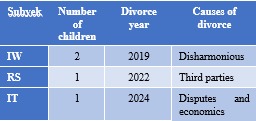
Objective: This study aims to analyze the implementation of children's maintenance rights in post-divorce families and identify the factors influencing the fulfillment of these rights in Dekatagung Village, Sangkapura District, Gresik Regency, Indonesia. Theoretical framework: The study is grounded in the theory of parental responsibility and children's rights, which emphasizes that parents, especially fathers, remain legally and morally obligated to provide financial support for their children despite marital dissolution. Literature review: Previous studies have highlighted persistent challenges in child support enforcement, including economic hardship, weak legal compliance, and changing family structures. However, limited research has explored these issues within rural Indonesian contexts through in-depth qualitative investigation. Method: This research employed a descriptive qualitative approach using a field study design. Data were collected through in-depth interviews, observation, and documentation involving six mothers who held legal custody of their children following divorce. The data were analyzed through data reduction, data display, and conclusion drawing to identify recurring patterns and themes. Results: The findings reveal that the fulfillment of children's maintenance rights in Dekatagung Village remains largely inadequate. Only one respondent reported receiving regular child support, while the remaining five experienced irregular payments or no support at all. Several factors contribute to this situation, including the former husband's economic instability, remarriage and shifting priorities, ineffective communication between former spouses, and limited legal awareness and sense of parental responsibility. These conditions indicate a significant gap between legal obligations and actual practice. Implications: The study implies the need for stronger collaboration among families, communities, and government institutions to enhance compliance with child support obligations. Novelty: The novelty of this research lies in its empirical examination of post-divorce child maintenance practices in a rural Indonesian setting, providing contextual insights into the socio-economic and legal barriers affecting the protection of children's rights.
References
A. S. Malisi, “Pernikahan Dalam Islam,” SEIKAT J. Ilmu Sos. Polit. dan Huk., vol. 1, no. 1, pp. 22–28, 2022, https://doi.org/10.55681/seikat.v1i1.97.
N. Rofiq et al., “Hak Nafkah Seorang Anak Setelah Terjadinya Perceraian Kedua Orang Tuanya,” Wahana Islam. J. Stud. Keislam, vol. 10, no. 2, pp. 70–79, 2024, https://doi.org/10.61136/hqcjme18.
S. Syam, I. Yazid, and M. Fadhil, “Efektifitas Mediasi Non Litigasi Dalam Menyelesaikan Kasus Perceraian Pada Keluarga Jamaah Tabligh Kabupaten Deli Serdang,” Al-maslahah J. Huk. Islam dan Pranata Sos. Islam, vol. 9, no. 01, pp. 1–25, 2021, https://doi.org/10.30868/am.v9i01.1275.
N. Cholifah and B. A. Kusumo, “Hak Nafkah Anak Akibat Perceraian,” Wacana Huk., vol. 9, no. 2, 2011, https://doi.org/10.33061/1.jwh.2011.10.2.255.
L. Yana and A. Trigiyatno, “Pemenuhan Hak Nafkah Anak Pasca Perceraian,” Al-Hukkam J. Islam. Fam. Law, vol. 2, no. 2, pp. 113–122, 2022, https://doi.org/10.28918/al-hukkam.v2i2.
S. Devy and D. Muliadi, “Pertimbangan Hakim dalam Menetapkan Nafkah Anak Pasca Perceraian (Studi Putusan Hakim Nomor 0233/Pdt.G/2017/MS-MBO),” El-USRAH J. Huk. Kel., vol. 2, no. 1, p. 123, 2020, https://doi.org/10.22373/ujhk.v2i1.7646.
A. M. Idin and M. Mustaming, “Nafkah Dalam Konteks Hukum Islam,” MADDIKA J. Islam. Fam. Law, vol. 4, no. 1, pp. 48–56, 2023, https://doi.org/10.24256/maddika.v4i1.4837.
S. Bahri, “Konsep Nafkah dalam Hukum Islam,” Kanun J. Ilmu Huk., vol. 17, no. 2, 2015, https://doi.org/10.24815/KANUN.V17I2.6069.
B. Sarianti, “Tingkat kepatuhan ayah membayar nafkah anak pasca perceraian,” supremasi Huk. J. Penelit. Huk., vol. 27, no. 2, pp. 105–117, 2018, https://doi.org/10.33369/jsh.27.2.105-117.
N. Antareng, “Perlindungan atas hak nafkah anak setelah perceraian menurut perspektif hukum islam. Study pengadilan agama manado,” Lex Soc., vol. 6, no. 4, 2018.
A. H. Muthoifin, Didin Saefuddin, “Pemikiran Pendidikan Ki Hadjar Dewantara Dalam Perspektif Pendidikan Islam,” Ta’dibuna J. Pendidik. Islam, vol. 2, no. 2, pp. 155–200, 2013, https://doi.org/10.32832/tadibuna.v2i2.562.
Muthoifin, Masithoh, Q. Qushayyi Yusran, I. Afiyah, and Nuha, “Optimizing the Potential of Zakat to Alleviate Poverty Problems and Improve Community Economy in Surakarta City,” J. Ecohumanism, vol. 3, no. 3, pp. 121–127, 2024, https://doi.org/10.62754/joe.v3i3.3394.
A. Nirwana et al., “The Role of Traditional Salt Production in Achieving Halal Standards of the Ulama Consultative Council: Implications for Sustainable Development Goals,” J. Lifestyle SDGs Rev., vol. 4, no. 2, pp. 1–47, 2024, https://doi.org/10.47172/2965-730X.SDGsReview.v4.n02.pe01721.
D. Astuti, E. Supriyanto, and M. Muthoifin, “Model Penjaminan Mutu Ketercapaian Kompetensi Dasar Dalam Sistem Pembelajaran Online Pada Situasi Work From Home (Wfh),” Profetika J. Stud. Islam, vol. 21, no. 1, pp. 129–139, 2020, https://doi.org/10.23917/profetika.v21i1.11655.
Q. Q. Yusran and A. Nirwana, “The Practice of Changing the Status of Change of Waqf Property in the Islamic Social Economic View,” J. Ecohumanism, vol. 6798, pp. 229–238, 2024, https://doi.org/10.62754/joe.v3i6.3996.
M. Sri Mega Indah Umi Zulfiani and I. Rosyadi, “Corporate Social Responsibility (CSR) Practices Of Shariaconsumer Cooperatives For Sustainable Development Goals (SDGs) Ethical Perspective,” J. Lifestyle SDGs Rev., vol. 4, pp. 1–20, 2024, https://doi.org/10.47172/2965-730X.SDGsReview.v4.n00.pe01752.
M. Nurdin, “Pemenuhan Hak-hak Anak Pasca Perceraian Orang Tua di Kecamatan Cikembar,” As-Sakinah J. Huk. Kel. Islam, vol. 1, no. 1, pp. 1–15, 2023, https://doi.org/10.51729/sakinah11130.
dian ayu Safitri, “Tanggung jawab orang tua atas nafkah anak pasca perceraian,” Court Rev. J. Penelit. Huk., vol. 4, no. 01, pp. 34–56, 2024, https://doi.org/10.69957/cr.v4i06.1610.
R. Pratama and Azhar, “Tanggung Jawab Ayah Terhadap Nafkah Anak Setelah Perceraian dalam Tinjauan Hukum Islam dan Undang-undang Nomor 35 Tahun 2014 tentang Perlindungan Anak ( Studi Kasus di Kelurahan Cengkeh Turi Kecamatan Binjai Utara ),” JSL; J. Smart Law, vol. 2, no. 2, pp. 208–216, 2024, https://doi.org/10.55606/eksekusi.v2i4.1502.
E. P. Sari, “Pemenuhan Hak Nafkah Anak Akibat Perceraian Di Kecamatan Ulu Talo Kabupaten Seluma Perspektif Hukum Islam,” IAIN bengkulu, 2021, https://doi.org/10.29300/qys.v7i1.6612.
H. H. Puspytasari and Firman, “Perlindungan Hukum Dalam Pembayaran Nafkah Anak Sebagai Akibat Perceraian,” J. Pendidik. Tambusai, vol. 5, no. 2, pp. 3606–3613, 2021.
N. Muthoifin, “Mengungkap Isi Pendidikan Islam Perspektif Al- Qur ’ an Surat Al -Ashr Ayat 1-3,” in The 7th University Research Colloqium 2018 STIKES, 2018, pp. 206–218.
M. Hanafi and H. Jibril, “Economic Rights of Women Under Sokoto Caliphate : A Lesson for Contemporary Women in Nigeria,” Demak Univers. J. Islam Sharia, vol. 2, no. 1, pp. 1–14, 2024, https://doi.org/10.61455/deujis.v2i01.81.
Y. M. Thaib, R. M. Elsakhawy, and T. Al-, “Marriages of More Than Four and Its Impacts on Community Perspective of Islamic Law and Indonesian Law,” Demak Univers. J. Islam Sharia, vol. 1, no. 2, pp. 67–82, 2023, https://doi.org/10.61455/deujis.v1i02.8.
E. Ahmed and A. E-sor, “Sharia, Secularism, and Economic Integration : A Comparative Analysis of Legal Pluralism in Contemporary Systems,” J. Econ-Islamic Law Soc. Res., vol. 1, no. 1, 2025.
A. Alkhateeb and A. Saib, “Sharia and Legal Legitimacy of Zakat Deduction from Tax Base Laws : A Comparative Study,” J. Econ-Islamic Law Soc. Res., vol. 1, no. 2, pp. 121–136, 2025.
A. A. M. Alaa Alkhateeb1, “Legal Pluralism in Muslim-Majority Asia: Sharia, Customary Law, and Sustainable Development Goals,” Maktab. Rev. Sustain. Dev. Goals, vol. 1, no. 2, pp. 87–104, 2024.
M. Elbanna, U. Shakilla, and N. Emanaya, “Reassessing Night Work in Cultural Contexts: Toward Inclusive, Fair, and Sustainable Labor Practices (SDGs 5),” Maktab. Rev. Sustain. Dev. Goals, vol. 2, no. 1, pp. 31–48, 2025.
Saini Saini and Ifadatul Hosniah, “Kewajiban Nafkah Ayah Bagi Anak Pasca Penceraian Perspektif Hukum Keluarga Islam Dan Hukum Perdata,” Tabsyir J. Dakwah dan Sos. Hum., vol. 2, no. 4, pp. 20–33, 2021, https://doi.org/10.59059/tabsyir.v2i4.665.
I. Fitriani, “Nafkah Anak Pasca Perceraian Menurut Ulama Mazhab,” IAIN Metro, 2017.
Mustika, “Batasan Nafkah Anak Perspektif Kompilasi Hukum Islam Dan Mazhab Syafi’i Serta Penerapanya Di Desa Pelakat Semende Darat Ulu,” Institut Agama Islam Negeri (IAIN) Curup, 2021.
Nasrah and A. Zubair, “Hak Dan Kewajiban Orang Tua Terhadap Anak Setelah Putusnya Perkawinan,” Maddika J. Islam. Fam. Law, vol. 03, no. 01, pp. 19–31, 2022.
Afrinal and A. Darmawan, “Pemenuhan Nafkah Anak Pasca Perceraian,” Sakena J. Huk. Kel., vol. 7, no. 1, pp. 59-70., 2022.
A. Sarayar, “Dampak Perceraian Orang Tua terhadap Pola Asuk Anak (Studi Kasus di Desa Bongkudai Induk Kecamatan Modayag Barat Kabupaten Bolaang Mongondow Timur Provinsi Sulawesi Utara),” IAIN Manado, 2020.
H. Octaviana, “Kekuatan Putusan Pengadilan dalam Menetapkan Hak Asuh Anak Akibat Perceraian Orang Tua Menurut Undang-Undang Nomor 16 Tahun 2019 Perubahan atas Undang-Undang Nomor 1 Tahun 1974 Tentang Perkawinan,” Universitas HKBP Nommensen, 2024.
N. Andini, “Sanksi Hukum Bagi Ayah Yang tidak melaksanakan Kewajiban Nafkah Terhadap Anak Pasca Perceraian (Studi Komparatif Prespektf Hukum Islam dan Hukum Positif di Indonesia),” Qiyas J. Huk. Islam dan Peradil., vol. 4, no. 1, 2019, http://dx.doi.org/10.29300/qys.v4i1.2003.
I. R. Sitorus, “Upaya Mantan Istri Dalam Menuntut Nafkah Anak Pasca Perceraian,” berasan J. Islam. Civ. law, vol. 2, no. 2, pp. 240–258, 2023, https://doi.org/10.29240/berasan.v2i2.9177.
N. U. Isaac, “Early Childhood Care Education ( ECCE ) and National Security,” Solo Int. Collab. Publ. Soc. Sci. Humanit., vol. 2, no. 3, pp. 282–293, 2024, https://doi.org/10.61455/sicopus.v2i03.203.
A. Mabrouk, “Human Resource Management in the Age of Artificial Intelligence : Concepts, Tools and Steps,” Solo Int. Colab. Publ. Soc. Sci. Humanit., vol. 3, no. 1, pp. 1–12, 2025, https://doi.org/10.61455/sicopus.v3i01.216.
I. Sholihah, “Reactivation Strategy : Reviving Forgotten Landfills,” Solo Univers. J. Islam. Educ. Multicult., vol. 2, no. 1, pp. 61–70, 2024, https://doi.org/10.61455/sujiem.v2i01.147.
I. N. Waston; Mahmudulhassan; Nirwana, Andri; Muthoifin; Afiyah, “Student-Centered Learning to Prevent Radicalization at Islamic Junior Schools in Surakarta, Indonesia,” Solo Univers. J. Islam. Educ. Multicult., vol. 2, no. 3, pp. 249–262, 2024, https://doi.org/10.61455/sujiem.v2i03.207.
Rahmat, “Economic Empowerment of Small Businesses Through Zakat Funds at the Amil Zakat Infaq Shadaqah Institute in Surakarta,” Demak Univers. J. Islam Sharia, vol. 2, no. 2, pp. 133–144, 2024, https://doi.org/10.61455/deujis.v2i02.116.
I. Afiyah, “Professional Zakat as a Catalyst for Welfare : Strategic Mapping for Sustainable Economic Growth in Semarang,” Demak Univers. J. Islam Sharia, vol. 2, no. 3, pp. 199–210, 2024, https://doi.org/10.61455/deujis.v2i03.129.
S. U. A. K. Mahmudulhassan, Waston, Muthoifin, “Understanding the Essence of Islamic Education : Investigating Meaning, Essence, and Knowledge Sources,” Solo Univers. J. Islam. Educ. Multicult., vol. 2, no. 1, pp. 27–36, 2024, https://doi.org/10.61455/sujiem.v2i01.115.
A. Barry and M. Elbanna, “The Challenges Confronting Islamic Education in Guinea,” Solo Univers. J. Islam. Educ. Multicult., vol. 3, no. 1, pp. 67–82, 2025, https://doi.org/10.61455/sujiem.v3i01.252.