The Role of Islamic Religious Education Teachers in Student Character Formation at Muhammadiyah Elementary School 12 Pamulang
DOI:
https://doi.org/10.61455/sicopus.v4i02.560Keywords:
islamic religious education teacher, character, religious culture, role model, teacherAbstract
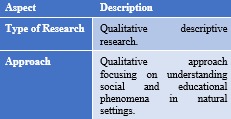
Objective: This study aims to analyze the role of Islamic Religious Education teachers in building student character at Muhammadiyah Elementary School 12 Pamulang through religious values learning, role models, moral habits, and the strengthening of Islamic school culture. Theoretical framework: This study draws on character education theory, social learning theory, and Islamic education theory, emphasizing the importance of role models, social interactions, and religious habituation in building student character. Literature review: This study examines the concept of character education in Islam, the role of teachers as role models (uswah hasanah), school religious culture, and the relationship between the educational environment and student moral formation. The literature shows that student character is formed through the integration of religious values, social habits, and teacher role models in everyday life. Method: This study uses a qualitative case study design. Data were obtained through observation, in-depth interviews, and documentation involving Islamic Religious Education teachers, students, and school officials at Muhammadiyah Elementary School 12, Pamulang. Data analysis was carried out through data reduction, data presentation, and inductive conclusion drawing. Results: The study indicates that Islamic Religious Education teachers play a strategic, multidimensional role in building student character. Character formation is carried out through learning religious values, habituating worship, providing motivation, moral guidance, and exemplary teacher behavior. School religious culture, such as congregational prayer, Qur'an reading, greeting culture, discipline, and socio-religious activities, has been shown to strengthen the internalization of student character values. Research also shows that students tend to imitate teacher behavior, making teachers a major factor in character formation. However, the influence of digital media, the lack of family supervision, and differences in student character pose challenges to the character development process. Implications: This study emphasizes the importance of strengthening the role of Islamic Religious Education teachers through role models, religious practices, and collaboration among schools, families, and the broader social environment in shaping student character. Novelty: The novelty of this study lies in its integrative analysis of the relationships among teacher role models, school religious culture, and Islamic habits in the internalization of student character in Muhammadiyah elementary schools.
References
M. D. Fajri and Amrin, “Integration of Deep Learning in Teaching Local Wisdom Values in Islamic Education,” Mimb. Agama Budaya, vol. 42, no. 1, pp. 25–43, 2025, https://doi.org/10.15408/mimbar.v42i1.45709.
M. D. F. Amirullah, Syamsul Arifin, “Implementasi Pendidikan Karakter Di Masa Pandemi Covid-19 Melalui Kuliah Kemuhammadiyahan Berbasis Pemberdayaan Keluarga Dhuafa,” MUADDIB Stud. Kependidikan dan Keislam., vol. 11, no. 01, pp. 20–39, 2021, https://doi.org/10.24269/muaddib.v1i1.4365.
S. A. S. A. M. M. A.-Q. A. I. I. M. U. R. Nailis, “New Normal and Islamic Education: Islamic Religious Education Strategy On Educational Institutions in Indonesia,” J. Pendidik. dan Konseling, vol. 4, no. 3, pp. 120–129, 2022.
A. U. Alfauzi and S. Choiriyah, “A character building effort for students in Barokah Nandan Sukoharjo Boarding School through three success programs: Alim faqih, Akhlakul karimah, and Mandiri,” J. Educ. Manag. Instr., vol. 1, no. 1, pp. 50–61, 2021, https://doi.org/10.22515/jemin.v1i1.3451.
S. Supriyanto, Amrin, “The Role of Islamic Religious Education Teachers in Implementing Multicultural Education Based on Values of Local Wisdom in State Junior High School 15 Surakarta,” iMProvement, vol. 9, no. 1, pp. 65–81, 2022, https://doi.org/10.21009/Improvement.091.07.
A. Supriyanto, “Management of Islamic Religious Education Learning Based on Cooperative Problem E-Learning During The Covid-19 Pandemic (Study on Muhammadiyah High School Sukoharjo, Central Java),” J. Pendidik. dan Konseling, vol. 4, no. 3, pp. 30–36, 2022.
A. Rumjaun and F. Narod, “Social Learning Theory-Albert Bandura,” in Science Education in Theory and Practice: An Introductory Guide to Learning Theory, B. Akpan and T. J. Kennedy, Eds., Cham: Springer Nature Switzerland, 2025, pp. 65–82. https://doi.org/10.1007/978-3-031-81351-1_5.
A. Rumjaun and F. Narod, “Social Learning Theory—Albert Bandura,” in Science Education in Theory and Practice: An Introductory Guide to Learning Theory, B. Akpan and T. J. Kennedy, Eds., Cham: Springer International Publishing, 2020, pp. 85–99. https://doi.org/10.1007/978-3-030-43620-9_7.
A. Rumjaun and F. Narod, “Social Learning Theory—Albert Bandura,” in Science Education in Theory and Practice: An Introductory Guide to Learning Theory, B. Akpan and T. J. Kennedy, Eds., Cham: Springer Nature Switzerland, 2025, pp. 65–82. https://doi.org/10.1007/978-3-031-81351-1_5.
T. Lickona, “Character Education The Cultivation of Virtue,” in Instructional-design Theories and Models, London: Routledge, 1999, p. 22.
A. Rijal, A. Kosasih, and E. S. Nurdin, “Thomas Lickona and Yusuf Qardhawi: Creating Value for Character Education Through Narrative,” in Proceedings of the International Conference on Language, Education, and Social Science (ICLESS 2022), Atlantis Press, 2022, pp. 15–24. https://doi.org/10.2991/978-2-494069-15-2_3.
N. Hidayah Mohamad and N. I. Ismail, “Islamic Education And Artificial Intelligence: Is Required?” Int. J. Islam. Theol. Civiliz., vol. 2, no. 3, pp. 1–9, 2024, https://doi.org/10.5281/zenodo.13932924.
A. Azra, “Genealogy of Indonesian Islamic Education: Roles in the Modernization of Muslim Society,” ritage Nusant. Int. J. Relig. Lit. Herit., vol. 4, no. 1, pp. 85–114, 2025, https://doi.org/10.31291/hn.v4i1.63.
N. Khoiriah and B. Sujanto, “Islamic Education Quality from an Islamic Perspective: An Analysis of Improvement Strategies,” J. Contemp. Islam. Educ., vol. 6, no. 1, pp. 1–16, 2026.
F. Muharom, L. R. Izzati, D. Purbowati, E. R. Dewi, and R. M. Said, “The Correlation Of Education Service Quality And Alumni Satisfaction : A Case Study In Islamic Higher Education,” vol. 5, 2023.
M. Sudarno Shobron, Amrin, Imron Rosyadi, “Islamic Education Values in the Tradition of Peta Kapanca of Mbojo Community Tribe in West Nusa Tenggara Department of Islamic Law Universitas Muhammadiyah Surakarta Indonesia,” Int. J. Adv. Sci. Technol., vol. 29, no. 5, pp. 6802–6812, 2020.
A. D. Saputro, Sudarmadi, A. K. Rois, S. Arifin, J. Arifin, and M. Wulandari, “The Role of Science in Islamic Religious Education in the Modern Era,” in Proceedings of the 4th Borobudur International Symposium on Humanities and Social Science, Atlantis Press SARL, 2024, pp. 1129–1137. https://doi.org/10.2991/978-2-38476-118-0_129.
Z. S. Septoyadi, V. L. Candrawati, and A. A. Rezal, “Peran Guru Pendidikan Agama Islam dalam Membangun Semangat Keberagaman Beragama di SMPN 13 Kota Kupang,” Transformatif, vol. 5, no. 2, pp. 145–162, 2021, https://doi.org/10.23971/tf.v5i2.2794.
N. Sahar, “Feminist Exegesis and Muslim Women ’ s Agency : A Critical Analysis of Fatima Mernissi and Saba Mahmood ’ s Perspectives for Contemporary Times,” Middle East J. Islam. Stud. Cult., vol. 8652, pp. 172–184, 2025, https://doi.org/10.36348/mejisc.2025.v05i02.007.
I. Chatterjee, J. Kunwar, and F. den Hond, “Anthony Giddens and structuration theory,” in Management, Organizations and Contemporary Social Theory, New York: Routledge, 2019, p. 20, https://doi.org/10.4324/9780429279591-4.
M. M. Wardi and M. Mappanyompa, “Islamic Religious Education Innovation for Preventing Bullying in Higher Education: Inovasi Pendidikan Agama Islam untuk Mencegah Perundungan di Perguruan Tinggi,” Halaqa Islam. Educ. J., vol. 9, no. 1, pp. 62–77, 2025, https://doi.org/10.21070/halaqa.v9i1.1720.
H. Husin, “Pemikiran Pembaharuan Pendidikan Islam Kh. Ahmad Dahlan, Perspektif Intelektual Muslim Di Indonesia,” J. Ilm. Glob. Educ., vol. 4, no. 2, pp. 662–684, 2023, https://doi.org/10.55681/jige.v4i2.784.
M. S. Arifin, “The concept of ideal leader in Al-Ghazali’s thought,” Indones. J. Interdiscip. Islam. Stud., vol. 4, no. 1, pp. 84–103, 2020, https://doi.org/10.20885/ijiis.vol4.iss1.art5.
Y. Kaya, “The Potential of Artificial Intelligence as the Learning Ecosystem of the Future in Adult Religious Education TT - Yetişkin Din Eğitiminde Geleceğin Öğrenme Ekosistemi Olarak Yapay Zekanın Potansiyeli,” Eskişehir Osmangazi Üniversitesi İlahiyat Fakültesi Derg., vol. 12, no. Din ve Yapay Zeka, pp. 127–156, 2025, https://doi.org/10.51702/esoguifd.1607220.
D. Firmansyah and D. Saepuloh, “Social Learning Theory: Cognitive and Behavioral Approaches,” J. Ilm. Pendidik. Holistik, vol. 1, no. 3, pp. 297–324, 2022.
E. A. Vargas, “B. F. Skinner’s theory of behavior,” Eur. J. Behav. Anal., vol. 18, no. 1, pp. 2–38, 2017, https://doi.org/10.1080/15021149.2015.1065640.
Zamroni et al., “Cross-cultural competence in multicultural education in Indonesian and New Zealand high schools,” Int. J. Instr., vol. 14, no. 3, pp. 597–612, 2021, https://doi.org/10.29333/iji.2021.14335a.
S. Utaminingsih, S. Utomo, and E. Zamroni, “Strengthening of Indonesian Islamic Character Through Islamic Education Management Based on Soft Skills,” Addin, vol. 11, no. 1, p. 215, 2017, https://doi.org/10.21043/addin.v11i1.2033.
Koentjaraningrat, Pengantar Ilmu Antropologi. 3rd Edition. Jakarta, 1986.
E Mulyasa, Menjadi Kepala Sekolah Profesional, 13th ed. Bandung: PT Remaja Rosdakarya, 2018.
A. Peterson, “Character education, the individual and the political,” J. Moral Educ., vol. 49, no. 2, pp. 143–157, Apr. 2020, https://doi.org/10.1080/03057240.2019.1653270.
Sugiyono, Metode Penelitian Pendidikan (Pendekatan Kuantitatif, Kualitatif, dan R&D). andung: Alfabeta, 2017.
J. W. Creswell and J. D. Creswell, Research Design: Qualitative, Quantitative, and Mixed Methods Approaches. California: Sage Publications, 2017.
S. H. Putri, A. Hudaiby, and A. Lestari, “Women ’ S Empowerment Through Radio Broadcast,” vol. 9, no. 1, pp. 143–166, 2024, https://doi.org/10.22515/albalagh.v9i1.8832.
S. Di and M. Nw, “Peran Guru IRE dalam Membentuk Karakter Tanggung Jawab,” vol. 10, no. 2, pp. 342–353, 2025.
M. B. Miles, A. M. Huberman, and J. Saldana, Qualitative data analysis: A methods sourcebook. Sage Publications, Inc, 2014.
A. A. Supriyanto , Amrin, “Model Pengembangan Kurikulum Pendidikan Agama Islam (Studi Komparasi Madrasah Aliyah Sabilul Huda dan Sekolah Menengah Kejuruan NU-BP Az-Zahra),” Fikr. J. Islam. Educ., vol. 5, no. 2, pp. 195–211, 2021, https://doi.org/10.32507/fikrah.v5i2.1307.
L. Kohlberg and R. H. Hersh, “Moral development: A review of the theory,” Theory Pract., vol. 16, no. 2, pp. 53–59, Apr. 1977, https://doi.org/10.1080/00405847709542675.
E. W. Mathes, “An evolutionary perspective on Kohlberg’s theory of moral development,” Curr. Psychol., vol. 40, no. 8, pp. 3908–3921, 2021, https://doi.org/10.1007/s12144-019-00348-0.
S. Joseph, “How Humanistic Is Positive Psychology? Lessons in Positive Psychology From Carl Rogers’ Person-Centered Approach—It’s the Social Environment That Must Change,” Front. Psychol., vol. 12, 2021, https://doi.org/10.3389/fpsyg.2021.709789.
T. K. F. Chiu, “Applying the self-determination theory (SDT) to explain student engagement in online learning during the COVID-19 pandemic,” J. Res. Technol. Educ., vol. 54, no. sup1, pp. S14–S30, Jan. 2022, https://doi.org/10.1080/15391523.2021.1891998.
J. R. H. Tudge, E. A. Merçon-Vargas, and A. Payir, “Urie Bronfenbrenner’s Bioecological Theory: Its Development, Core Concepts, and Critical Issues,” in Sourcebook of Family Theories and Methodologies: A Dynamic Approach, K. Adamsons, A. L. Few-Demo, C. Proulx, and K. Roy, Eds., Cham: Springer International Publishing, 2022, pp. 235–254. https://doi.org/10.1007/978-3-030-92002-9_16.
P. Smagorinsky, “Vygotsky’s Stage Theory: The Psychology of Art and the Actor under the Direction of Perezhivanie,” Mind, Cult. Act., vol. 18, no. 4, pp. 319–341, Oct. 2011, https://doi.org/10.1080/10749039.2010.518300.
A. M. Khasanah, “The Manners Concept According to Ki Hajar Dewantara and Hamka,” Educ. J. Pendidik. Islam, vol. 3, no. 2, pp. 1–19, 2019, https://doi.org/10.21111/educan.v3i2.3577.