Fatherhood and the Formation of Khairu Ummah: A Thematic Qur’anic Study
DOI:
https://doi.org/10.61455/sicopus.v4i02.555Keywords:
fatherhood, khairu ummah, childcare, tafsir maudhu'i, perspective of the qur'anAbstract
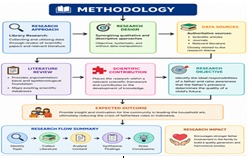
Objective: This study aims to analyze the urgency of the role of fathers in raising children to realize the generation of khaira ummah based on the perspective of the Qur'an. Fathers are positioned not only as breadwinners, but also as caregivers, educators, and role models for children. Theoretical framework: This study uses the theoretical framework of Islamic parenting and maudhu'i (thematic) interpretation of Qur'anic verses about the role of fathers. Child development theory is also used to explain the influence of fathers' involvement on the formation of children's character and emotions. Literature review: The literature review shows that the role of fathers in parenting is still often overlooked compared to the role of mothers. In fact, various studies prove that the involvement of fathers has a great influence on the cognitive, emotional, and character development of children. Method: This study uses a qualitative approach with the method of tafsir maudhu'i through literature study. Data was obtained from Qur'anic verses, journals, books, and scientific references related to the role of fathers in childcare. Results: The results of the study show that the involvement of fathers in parenting is an important foundation in shaping children's character, intellect, and emotional maturity. The active role of the father helps to create more optimal child development. Implications: This study confirms the importance of synergy between fathers and mothers in childcare. These findings are expected to raise awareness among families and communities about the importance of fathers' involvement in children's education. Novelty: The novelty of this research lies in the study of the role of fathers in raising children through the approach of interpretation of the Qur'an. This research places fathers as the main figures in the formation of the khairu ummah generation, not just breadwinners.
References
B. M. Gebresilase, M. Wang, Z. Chuanxia, E. T. Taddese, Z. Z. Elka, and Y. B. Biramo, “Father involvement in family dynamics: a qualitative exploration of perceptions and cultural influences,” Front. Psychol., vol. 16, 2025, https://doi.org/10.3389/fpsyg.2025.1672384.
S. Kuruwanshi and A. U. Joshi, “A Narrative Review-Participation of Fathers in Child Health Care in India,” J. Datta Meghe Inst. Med. Sci. Univ., vol. 19, no. 2, pp. 209–213, 2024, https://doi.org/10.4103/jdmimsu.jdmimsu_582_22.
M. Veil, “Family policies in conflict with gender equality? Reflections on paradox performances in the recent reform processes in Germany,” Fem. Stud., vol. 28, no. 2, pp. 214–228, 2010, https://doi.org/10.1515/fs-2010-0205.
O. Nešporová and K. Janurová, “Working fathers and childcare in the Czech Republic,” Contemp. Perspect. Fam. Res., vol. 12, pp. 103–128, 2018, https://doi.org/10.1108/s1530-353520180000012005.
A. Bartova and R. Keizer, How Well Do European Child-Related Leave Policies Support the Caring Role of Fathers? Springer, 2020. https://doi.org/10.1007/978-3-030-54618-2_15.
L. T. Gettler, T. W. McDade, S. S. Agustin, A. B. Feranil, and C. W. Kuzawa, “Longitudinal Perspectives on Fathers’ Residence Status, Time Allocation, and Testosterone in the Philippines,” Adapt. Hum. Behav. Physiol., vol. 1, no. 2, pp. 124–149, 2015, https://doi.org/10.1007/s40750-014-0018-9.
C. Giraud, R. Kossakowski, M. Żadkowska, and B. Dowgiałło, “The Empty Nest as a Phase of Fatherhood,” Palgrave Macmillan Stud. Fam. Intim. Life, vol. Part F2315, pp. 65–89, 2024, https://doi.org/10.1007/978-3-031-50403-7_4.
Z. Baghersad, F. Mokhtari, and P. Bahadoran, “Effect of Home Care on Husband’s Support During the Postpartum Period,” J. Holist. Nurs. Midwifery, vol. 29, no. 4, pp. 210–217, 2019, https://doi.org/10.32598/JHNM.29.4.210.
H. Wang, X. Hu, and Z. R. Han, “Parental stress, involvement, and family quality of life in mothers and fathers of children with autism spectrum disorder in mainland China: A dyadic analysis,” Res. Dev. Disabil., vol. 107, 2020, https://doi.org/10.1016/j.ridd.2020.103791.
H. Nakazato, “Culture, policies and practices on fathers’ work and childcare in Japan: A new departure from old persistence?” Contemp. Perspect. Fam. Res., vol. 12, pp. 235–255, 2018, https://doi.org/10.1108/S1530-353520180000012010.
B. Noergaard and P. E. Kofoed, “The long-term effect on nurses’ self-efficacy of father support by implementing a father-friendly neonatal intensive care unit,” J. Neonatal Nurs., vol. 30, no. 1, pp. 44–47, 2024, https://doi.org/10.1016/j.jnn.2023.06.004.
S. Dong, Q. Dong, and H. Chen, “Mothers’ parenting stress, depression, marital conflict, and marital satisfaction: The moderating effect of fathers’ empathy tendency,” J. Affect. Disord., vol. 299, pp. 682–690, 2022, https://doi.org/10.1016/j.jad.2021.12.079.
I. Chorvat, “Towards some aspects of childcare and housework from the gender perspective.” Sociologia, vol. 38, no. 1, pp. 31–48, 2006, [Online]. Available: https://www.scopus.com/pages/publications/33645661265?origin=resultslist
G. Ganfure, J. Darega, and L. D. Kitila, “Assessing male involvement in childcare and associated factors among fathers of below two in Toke Kutaye district, Central Ethiopia, 2024: a community-based cross-sectional study,” Front. Public Heal., vol. 13, 2025, https://doi.org/10.3389/fpubh.2025.1527675.
H. P. Halpern and M. Perry-Jenkins, “Parents’ Gender Ideology and Gendered Behavior as Predictors of Children’s Gender-Role Attitudes: A Longitudinal Exploration,” Sex Roles, vol. 74, no. 11–12, pp. 527–542, 2016, https://doi.org/10.1007/s11199-015-0539-0.
X. Zhang, W. Middlemiss, T. Zhang, and L. Kelly, “Mothers’ parenting stress in Chinese immigrant families: the role of fathers’ involvement and social support,” J. Fam. Stud., vol. 29, no. 2, pp. 683–701, 2023, https://doi.org/10.1080/13229400.2021.1976250.
M. Sari and A. Asmendri, “Penelitian Kepustakaan (Library Research) dalam Penelitian Pendidikan IPA,” Nat. Sci., vol. 6, no. 1, pp. 41–53, 2020, https://doi.org/10.15548/nsc.v6i1.1555.
D. Indrawan and S. R. Jalilah, “Metode Kombinasi/Campuran Bentuk Integrasi Dalam Penelitian,” J. Stud. Guru dan Pembelajaran, vol. 4, no. 3, pp. 735–739, 2021, https://doi.org/10.30605/jsgp.4.3.2021.1452.
A. Simonelli, M. Parolin, C. Sacchi, F. De Palo, and A. Vieno, “The role of father involvement and marital satisfaction in the development of family interactive abilities: A multilevel approach,” Front. Psychol., vol. 7, 2016, https://doi.org/10.3389/fpsyg.2016.01725.
W. Liu and J. Yu, “Fathering, living arrangements, and child development in China,” Chin. Sociol. Rev., vol. 56, no. 2, pp. 176–204, 2024, https://doi.org/10.1080/21620555.2024.2303602.
N. Marchesini, “Rethinking fatherhood: Investigating fathers’ family engagement between individual will and social constraints,” in Proceedings of the International Conference on Gender Research, P. E.T., C. C., and B. Z., Eds., Academic Conferences and Publishing International Limited, 2021, pp. 181–190. https://doi.org/10.34190/IGR.21.029.
A. L. Ellingsæter and R. H. Kitterød, “Enabling family policies, changing gender norms: increasing childcare and housework among Norwegian fathers from 1980–2010,” J. Fam. Stud., vol. 29, no. 6, pp. 2491–2508, 2023, https://doi.org/10.1080/13229400.2023.2179524.
C. Opondo, M. Redshaw, and M. A. Quigley, “Association between father involvement and attitudes in early child-rearing and depressive symptoms in the pre-adolescent period in a UK birth cohort,” J. Affect. Disord., vol. 221, pp. 115–122, 2017, https://doi.org/10.1016/j.jad.2017.06.010.
J. Zhai and X. Li, “Research progress on the role of fathers′ involvement in childcare in the cognitive and behavioral development of children,” Chinese J. Pediatr., vol. 63, no. 9, pp. 1035–1038, 2025, https://doi.org/10.3760/cma.j.cn112140-20250427-00373.
F. O. Ünsal and I. H. Acar, “Pathways to Children’s Behavioral Problems during the COVID-19 Pandemic: Fathers’ Parenting Stress and Parenting Approaches,” Children, vol. 10, no. 4, 2023, https://doi.org/10.3390/children10040639.
X. Zhang, P. Ma, and M. Li, “The association between paternal childcare involvement and postpartum depression and anxiety among Chinese women—a path model analysis,” Arch. Womens. Ment. Health, vol. 26, no. 1, pp. 99–106, 2023, https://doi.org/10.1007/s00737-022-01256-2.
E. L. Sanjaya, D. R. Suminar, and N. A. Fardana, “Fathers of Children With Autism Spectrum Disorder: Literature Review,” Iran. Rehabil. J., vol. 20, no. 3, pp. 297–304, 2022, https://doi.org/10.32598/irj.20.3.1622.1.
H. Showkat, S. T. Rafique, S. S. Yaqoob, and S. Farhad, “Rethinking Paternity: Understanding Father’s Role in the Dual-Career Family System,” J. Fem. Fam. Ther., vol. 37, no. 3–4, pp. 157–184, 2025, https://doi.org/10.1080/08952833.2025.2505268.
A. Agache, B. Leyendecker, E. Schäfermeier, and A. Schölmerich, “Paternal involvement elevates trajectories of life satisfaction during transition to parenthood,” Eur. J. Dev. Psychol., vol. 11, no. 2, pp. 259–277, 2014, https://doi.org/10.1080/17405629.2013.851025.
J. K. McCann, S. Freire, C. V. Ramos de Oliveira, M. Ochieng, and J. Jeong, “Father involvement is a protective factor for maternal mental health in Western Kenya,” SSM - Ment. Heal., vol. 5, 2024, https://doi.org/10.1016/j.ssmmh.2024.100318.
F. Maharani, L. O. Herbawani, Q. E. S. Adnani, H. Susiarno, and V. A. Adepoju, “A Systematic Review of the Effects of Paternity Leave on the Health and Well-Being of Mothers and Children,” Public Health. Indones., vol. 11, no. 3, pp. 39–57, 2025, https://doi.org/10.36685/phi.v11i3.971.
W. Sekatawa et al., “‘I was doubtful of being the true father of the preterm baby’: factors affecting fathers’ involvement in the care of preterm babies admitted in the neonatal unit at Kawempe National Referral Hospital, Uganda. a qualitative study,” BMC Pediatr., vol. 25, no. 1, 2025, https://doi.org/10.1186/s12887-025-05739-w.
É. Göndör, “Issues of gender equality in Hungarian regulations aimed at balancing work and family,” Rechtskultur, pp. 215–232, 2024, https://doi.org/10.36213/01-15.
B. Noergaard, J. Ammentorp, J. Fenger-Gron, P. E. Kofoed, and H. Johannessen, “Fathers’ Needs and Masculinity Dilemmas in a Neonatal Intensive Care Unit in Denmark,” Adv. Neonatal Care, vol. 17, no. 4, pp. E13–E22, 2017, https://doi.org/10.1097/ANC.0000000000000395.
G. E. Owino and M. Yigezu, “The role of fathers and care-giving arrangements in informal settlements in Kenya and Ethiopia,” Front. Public Heal., vol. 11, 2023, https://doi.org/10.3389/fpubh.2023.1099568.
E. Fanelli and P. Profeta, “Fathers’ involvement in the family, fertility, and maternal employment: Evidence from central and eastern Europe,” Demography, vol. 58, no. 5, pp. 1931–1954, 2021, https://doi.org/10.1215/00703370-9411306.
S. Offer and D. Kaplan, “Which Fathers Are Sensitive to Maternal Gate Closing? Exploring How Gender Role Attitudes Moderate the Link Between Fathers’ Perceptions of Gate Closing and Childcare Involvement,” Sex Roles, vol. 92, no. 2, 2026, https://doi.org/10.1007/s11199-026-01642-5.
K. Maridaki-Kassotaki, K. Antonopoulou, M. G. Olivari, S. Tagliabue, and E. Confalonieri, “Examining fatherhood in Greece and Italy,” J. Fam. Stud., vol. 26, no. 1, pp. 1–15, 2020, https://doi.org/10.1080/13229400.2017.1284148.
I. Kjellstrand, Middle manager mothers and fathers in academia: embracing and resisting traditional values in Kazakhstani higher education institutions. Edward Elgar Publishing Ltd., 2026. https://doi.org/10.4337/9781035328932.00014.
L. Haskins, S. Luthuli, S. Mapumulo, T. Kathree, and C. Horwood, “Exploring the roles of fathers from the perspective of informal women workers: a longitudinal mixed methods study from Durban, South Africa,” J. Fam. Stud., vol. 29, no. 5, pp. 1987–2007, 2023, https://doi.org/10.1080/13229400.2022.2107942.
N. Kumar, Flavours of fathering in the Indian capital: Insights from a qualitative study. Springer Singapore, 2018. https://doi.org/10.1007/978-981-13-1715-6_5.
H. M. Ikonen, M. Salminen-Karlsson, and G. Seddighi, “Not just daycare: Nordic mothers in research, development and innovation navigating work and childcare,” Community, Work Fam., vol. 27, no. 2, pp. 208–224, 2024, https://doi.org/10.1080/13668803.2022.2138739.
X. Wang, Y. Yu, R. Zhu, and Z. Ji, “Linking maternal gatekeeping to child outcomes in dual-earner families in China: the mediating role of father involvement,” Early Child Dev. Care, vol. 191, no. 2, pp. 187–197, 2021, https://doi.org/10.1080/03004430.2019.1611568.