Islam and Gender Consciousness: Analysis and Application in Contemporary Society
DOI:
https://doi.org/10.61455/sicopus.v4i02.528Keywords:
gender, gender awareness, gender justice, contemporary society, islamic studiesAbstract
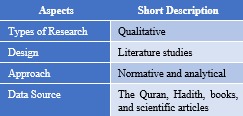
Objective: This article aims to analyze the concept of gender consciousness from an Islamic perspective and its relevance in contemporary society. This study focuses on the principles of justice, spiritual equality, and complementary gender roles. The ultimate goal is to formulate a moderate, contextual, and applicable framework for Islamic gender consciousness. Theoretical framework: This research uses the framework of Islamic justice and spiritual equality. The analysis is supported by maqashid al shariah and the thought of contemporary scholars. This framework emphasizes the balance of gender rights and responsibilities. Literature review: Previous studies have shown diverse views on Islam and gender. Gender inequality is often associated with patriarchal culture and interpretations. However, contextual synthesis studies are still limited. Methods: This study uses a qualitative approach based on literature studies. Data are obtained from the Quran, Hadith, and the latest academic literature. The analysis is carried out through content and thematic analysis. Results: The results of the study show that Islamic gender awareness is based on proportional justice, not absolute equality. Gender inequality in social practice is more influenced by cultural factors and ahistorical interpretations. Moderate Islamic gender awareness has proven to be relevant for maintaining social balance and harmony in society. Implications: These findings have implications for strengthening education and gender-fair policies. Islamic gender awareness can prevent discrimination and extremism. This approach supports social harmony. Novelty: The novelty of this research lies in the synthesis of Islamic values and modern gender issues. This article offers a moderate Islamic gender awareness concept. This approach is both applicable and contextual.
References
L. Begum, P. J. Grossman, and A. Islam, “Response to ‘A Commentary on “Gender Bias in Parental Attitude: An Experimental Approach” by Begum, Grossman, and Islam (2018),’” Demography, vol. 62, no. 6, pp. 1801–1807, 2025, https://doi.org/10.1215/00703370-12344725.
H. Zaheer et al., “Perceptions about medical aid in dying among healthcare workers in Pakistan,” Palliat. Support. Care, vol. 24, p. e7, 2025, https://doi.org/10.1017/S1478951525101284.
A. Alhussein, “Radical nostalgia: Cultural translation and the (un)translatability of Islam in Leila Aboulela’s Bird Summons,” Lit. Crit. Emp. Today, vol. 60, no. 2, pp. 341–359, 2025, https://doi.org/10.1177/30333962251346847.
L. Begum, P. J. Grossman, and A. Islam, “Response to ‘A Commentary on “Gender Bias in Parental Attitude: An Experimental Approach” by Begum, Grossman, and Islam (2018),’” Demography, vol. 62, no. 6, pp. 1801–1807, 2025, https://doi.org/10.1215/00703370-12344725.
O. Samarkandi et al., “Exploring the prevalence of chronic diseases and health status among international Hajj pilgrims,” PLoS One, vol. 20, no. 4 April, 2025, https://doi.org/10.1371/journal.pone.0317555.
T. Kakal, A. K. A. Elkarib, L. Kusters, and M. Kok, “Intersecting injustices: child marriage and the law in conflict-affected Sudan,” Int. J. Equity Health, vol. 24, no. 1, 2025, https://doi.org/10.1186/s12939-025-02706-w.
L. A. Aliyeva and S. Latifova, “Women and Islam in the Medieval Azerbaijan,” East Eur. Hist. Bull., vol. 2025, no. 34, pp. 8–18, 2025, https://doi.org/10.24919/2519-058X.34.324604.
F. Z. Rahman, “Islamic doctrine and women’s economic rights: implications of an ambiguous relationship for state policy in the Muslim world,” Polit. Relig., vol. 18, no. 1, pp. 50–73, 2025, https://doi.org/10.1017/S175504832500001X.
L. Zaknoun, S. Zarka, Y. Plakht, and O. Grinstein-Cohen, “The influence of religion on physicians` and nurses` attitudes toward medical cannabis in Northern Israel,” J. Cannabis Res., vol. 7, no. 1, 2025, https://doi.org/10.1186/s42238-025-00331-6.
R. Das Gupta et al., “Association Between Abdominal Obesity, Body Mass Index, and Hypertension in India: Evidence From a Large Nationally Representative Data,” J. Clin. Hypertens., vol. 27, no. 3, 2025, https://doi.org/10.1111/jch.70034.
C. Caliskan, L. Ke, Y. Li, Y. Shimazaki, and M. Zhong, “Measuring political polarization through visible interactions between religious and non-religious citizens,” Sci. Rep., vol. 15, no. 1, 2025, https://doi.org/10.1038/s41598-025-01307-5.
C. Infante, “‘Curiosa Impertinente’: Women and Curiosity on the Spanish–North African Borderlands,” Humanit., vol. 14, no. 2, 2025, https://doi.org/10.3390/h14020028.
M. R. Zhang and F. F. Y. Ng, “Ethnic and Gender Variations in Adolescents’ Future Aspirations,” J. Adolesc., vol. 97, no. 8, pp. 2172–2184, 2025, https://doi.org/10.1002/jad.70030.
O. M. A. A. Hazaymeh, “Gender and Religion: A Typology of Female Names in Sudan,” Onomast. desde Am. Lat., vol. 6, no. 1, 2025, https://doi.org/10.48075/odal.v6i1.34702.
P. Kolivand et al., “Epidemiology and economic burden of end-stage kidney disease by age, gender, and province among Iranian Hajj pilgrims in 2012-22: a retrospective study of 469,581 participants,” BMC Nephrol., vol. 26, no. 1, 2025, https://doi.org/10.1186/s12882-025-04248-3.
M. Abubaker and C. Adam-Bagley, “Arab Culture and Organisational Context in Work-Life Balance Practice for Men and Women: A Case Study from Gaza, Palestine,” Societies, vol. 15, no. 1, 2025, https://doi.org/10.3390/soc15010003.
N. Rezaee, M. Ghaljeh, S. Pezaro, Z. Ghiasi, and M. Mardani-Hamooleh, “Being in a different world: a phenomenological study of life with gender dysphoria,” BMC Psychiatry, vol. 25, no. 1, 2025, https://doi.org/10.1186/s12888-025-07110-w.
F. Moslehzadeh and I. Blumi, “Gulf Women and Anti-European Imperialism: Forgotten Gender Discourses in Interwar Iran’s Shi’i Reformation Movement,” Middle East Crit., vol. 34, no. 2, pp. 219–238, 2025, https://doi.org/10.1080/19436149.2025.2453318.
M. Bradshaw, V. Counted, T. Lomas, R. D. Woodberry, T. J. VanderWeele, and B. R. Johnson, “Childhood experiences and adult prayer or meditation in 22 countries around the world,” Sci. Rep., vol. 15, no. 1, 2025, https://doi.org/10.1038/s41598-025-99796-x.
F. M. A. Islam, “Gender difference in domain-specific quality of life measured by modified WHOQoL-BREF questionnaire and their associated factors among older adults in a rural district in Bangladesh,” PLoS ONE, vol. 20, no. 1. Public Library of Science, 2025. https://doi.org/10.1371/journal.pone.0317113.
L. Badran, N. Rizkalla, and S. P. Segal, “Muslim considerations in seeking mental health help in California and Israel: a qualitative approach,” BMC Public Health, vol. 25, no. 1, 2025, https://doi.org/10.1186/s12889-025-22224-2.
M. Adam et al., “The effects of fasting and dehydration on pupillary light reflex as detected by pupillometry,” Clin. Physiol. Funct. Imaging, vol. 45, no. 1, 2025, https://doi.org/10.1111/cpf.12921.
J. Mamadkul, “Globalisation and Religion: A Study of Thai Muslims’ Experiences on Gender Diversity in Thai Muslim Society through an Islamic Perspective,” Intellect. Discourse, vol. 33, no. 3, pp. 809–833, 2025, https://doi.org/10.31436/id.v33i3.2346.
T. Aleid, N. Al-Sayegh, S. E. Alsalahi, and A. Alhenaidi, “Prevalence and Risk Factors of Musculoskeletal Pain Among Kuwaiti Pilgrims During Hajj 2024,” Int. J. Environ. Res. Public Health, vol. 22, no. 10, 2025, https://doi.org/10.3390/ijerph22101585.
C. E. Ginting-Carlström, “‘Who is the ideal woman?’: The subjectification of impoverished Javanese working mothers,” Gender, Work Organ., vol. 32, no. 1, pp. 136–160, 2025, https://doi.org/10.1111/gwao.13140.
A. Namoos, N. E. Abosamak, and V. Sheppard, “A Pilot Study: Adaptation Phase of the PROMIS Women Education Program—Promoting Cervical Cancer Prevention Methods Among Muslim Women in Virginia,” Cancer Med., vol. 14, no. 19, 2025, https://doi.org/10.1002/cam4.71296.
R. Da’as and O. Slobodin, “‘God Did Not Create Us This Way’: An Investigation into the Experiences of School Counselors Working with Arab-Muslim LGBTQ Youth,” J. Homosex., vol. 72, no. 3, pp. 387–411, 2025, https://doi.org/10.1080/00918369.2024.2321239.
T. Taufik, M. Japar, F. I. Nuha, and H. Arrumaisha, “Social Support, Spiritual Well-Being, and Quality of Life Among Muslim Converts in Indonesia,” Open Psychol. J., vol. 18, no. 1, 2025, https://doi.org/10.2174/0118743501397917250919095103.
A. Lashari, W. A. Shah, and T. Memon, “‘Are we equal citizens?’: a critical discourse analysis (CDA) of language textbooks and minority faith learners’ insights in Pakistan,” Asia Pacific J. Educ., vol. 45, no. 4, pp. 1212–1229, 2025, https://doi.org/10.1080/02188791.2023.2270176.
A. P. Harahap, F. Is, and P. Juli Julaiha, “Examining Ḥadīth on Women As a Source of Fitna: Thematic and Contextual Approaches,” Aust. J. Islam. Stud., vol. 10, no. 2, pp. 123–142, 2025, https://doi.org/10.55831/ajis.v10i2.745.
L. L. Schrijvers, “Race and Religion in Everyday Life: Antisemitism, Islamophobia, and Christian Privilege Among Female Converts in the Netherlands,” Sociol. Relig., vol. 86, no. 3, pp. 382–402, 2025, https://doi.org/10.1093/socrel/srae006.
J. L. Paterson, M. A. Walters, R. Brown, and D. Carrasco, “Angry and Afraid: Exploring the Impact of Mixed Emotional Reactions to Hate Crimes With LGBT+ and Muslim Communities,” J. Interpers. Violence, vol. 40, no. 17–18, pp. 4154–4180, 2025, https://doi.org/10.1177/08862605241286455.
C. Fortier, “Introduction From Third Gender to Trans and Queer People in Muslim Societies,” Anthropol. Middle East, vol. 20, no. 1, pp. 1–24, 2025, https://doi.org/10.3167/ame.2025.200101.
M. Shaimi and C. S. Salamé, “Public Denunciation of Heteropatriarchal Oppressions in Contexts of Racism and Immigration and Their Management by Social Movements: An Intersectional Challenge,” Migraciones, no. 64, pp. 1–21, 2025, https://doi.org/10.14422/mig.21981.015.
A. A. M. Robb, S. M. Muhsi, M. Mohiuddi, M. F. M. Sawari, and K. F. Jamaludin, “Sex and Gender Identifications in the View of Islam and Western Thought: a Comparative Narrative on Gender Ambiguity Debates,” J. Fatwa Manag. Res., vol. 30, no. 3, pp. 97–115, 2025, https://doi.org/10.33102/jfatwa.vol30no3.698.
L. Toktarbekova, S. Zhandossova, and M. Bektenova, “Kazakh Women’s Visual Religious Identity and Islamic Agency on Instagram,” Pharos J. Theol., vol. 106, no. 3, 2025, https://doi.org/10.46222/pharosjot.106.3041.
S. Y. Ahn, “Does Religion Hinder Women’s Political Efficacy in Muslim-Majority Societies? Rethinking the Role of Religion, Gender Norms, and Political Engagement,” Asian Women, vol. 41, no. 3, pp. 98–116, 2025, https://doi.org/10.64446/aw.2025.9.41.3.98.
G. S. Alsaleh et al., “Radiological Findings of Chest X-Rays During the Hajj Seasons 1444–1445 H/2023–2024 G: Diagnostic Quality and Gender Differences in Interpretation Concordance,” Int. J. Environ. Res. Public Health, vol. 22, no. 9, 2025, https://doi.org/10.3390/ijerph22091415.
G. Golriz, “Challenging Identity Conflict: How Queer, Trans, and Nonbinary Muslim Organizations Incite Activism,” Sociol. Relig., vol. 86, no. 1, pp. 81–103, 2025, https://doi.org/10.1093/socrel/srae022.
A. Aziz, “I am the price of your freedom: Gender, Islam, and cyber-harassment in the aftermath of France’s Affaire Mila,” Eur. J. Women’s Stud., vol. 32, no. 3, pp. 276–291, 2025, https://doi.org/10.1177/13505068251348320.
S. Lim, “Redefining Gender Equality: A Senegalese Conversation with Islam,” Africa Spectr., vol. 60, no. 2, pp. 287–308, 2025, https://doi.org/10.1177/00020397251344304.