Religious Freedom of Minorities in Muslim Countries: The Principle of La Ikraha fī al-Din as a Constitutional Basis
DOI:
https://doi.org/10.61455/sicopus.v4i03.527Keywords:
freedom of religion, minority rights, constitution, islamic law, equalityAbstract
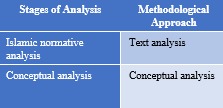
Objective: The principle of "Lā ikrāha fī al-dīn" as the constitutional basis of religious freedom of minorities in Muslim-majority countries. The study is directed at the alignment of Islamic normative values with modern constitutionalism. This formulation is aimed at strengthening the guarantee of equal and non-discriminatory religious freedom. Theoretical framework: The theoretical framework of the research integrates normative Islamic theology, maqāṣid al-sharī'ah, human rights theory, and modern constitutionalism. The principle of "Lā ikrāha fī al-dīn" is positioned as the basic norm of religious freedom. This framework is a tool for analyzing the relationship between Islamic values and constitutional law. Literature review: Previous studies of religious freedom in Islam have generally been theological and historical. Constitutional studies emphasize the perspective of universal human rights and are rarely associated with Qur'anic principles. The dominance of classical fiqh heritage still limits the recognition of citizenship equality. Methods: This study uses a qualitative method with normative and conceptual legal approaches. The techniques used include thematic interpretation of the Qur'an, philosophical-legal analysis, and comparative constitutional studies. The data was analyzed interpretively and argumentatively. Results: The analysis shows that the principle of "Lā ikrāha fī al-dīn" is in line with international standards of religious freedom. This principle has the potential to become a constitutional norm limiting the coercive power of the state. The main obstacle is the interpretation of classical jurisprudence and the ambivalent formulation of the constitution. Implications: Theoretically, this article strengthens the development of equality-based constitutional Islamic law. In practical terms, these findings are relevant for the formulation of inclusive constitutional policies and clauses. The principle of non-coercion can increase the protection of the rights of religious minorities. Novelty: The novelty of the research lies in the placement of "Lā ikrāha fī al-dīn" as an operational constitutional norm. This article integrates Islamic theology, maqāṣid al-sharī'ah, and modern constitutionalism. This approach goes beyond tolerance towards the recognition of citizenship equality.
References
R. Lukito, “State and religion continuum in Indonesia: The trajectory of religious establishment and religious freedom in the constitution,” Indones. J. Int. Comp. Law, vol. 5, no. 4, pp. 645–682, 2018, https://www.scopus.com/inward/record.uri?eid=2-s2.0-85063628415&partnerID=40&md5=0ca81e4be2165c366a78165625dfcdf1
S. Banerjee, “Politics of Secularisation, Religious Conversion, and ‘Saving’ the (Hindu) Daughter Under Hindutva: Re-Reading the Hadiya Court Case,” ReOrient, vol. 8, no. 2, pp. 193–216, 2024, https://doi.org/10.13169/reorient.8.2.0193.
F. Ispahani, “Constitutional issues and the treatment of Pakistan’s religious minorities,” Asian Aff. (Lond)., vol. 49, no. 2, pp. 222–237, 2018, https://doi.org/10.1080/03068374.2018.1468544.
F. A. Ansari, S. N. Sayem, and S. Anuram, “Minority Rights in South Asia: A Comparative Analysis of India, Pakistan, and Bangladesh with Special Reference to Blasphemy Laws,” Manchester J. Transnatl. Islam. Law Pract., vol. 21, no. 2, pp. 239–259, 2025, [Online]. Available: https://www.scopus.com/inward/record.uri?eid=2-s2.0-105018493001&partnerID=40&md5=8808e9bf23660254fd72ef56277aee74
D. Abraham, “Circumcision: Immigration, Religion, History, and Constitutional Identity in Germany and the U.S.,” Ger. Law J., vol. 18, no. 7, pp. 1745–1761, 2017, https://doi.org/10.1017/S2071832200022525.
R. Sarkar and A. Sarkar, “Sacred slaughter: An analysis of historical, communal, and constitutional aspects of beef bans in India,” Polit. Relig. Ideol., vol. 17, no. 4, pp. 329–351, 2016, https://doi.org/10.1080/21567689.2016.1259108.
C. L. Li, K. Isa, K. A. Mustaffa, A. A. Lokman, and M. F. Mohd Bakri, “From Colonial Legacies to Contemporary Challenges: The Muslim Experience in Hong Kong and Macau,” J. Al-Tamaddun, vol. 19, no. 2, pp. 277–292, 2024, https://doi.org/10.22452/JAT.vol19no2.19.
B. Ingram, “Public Islam in Post-Apartheid South Africa: The Radio Islam Controversy,” Crit. Res. Relig., vol. 3, no. 1, pp. 72–85, 2015, https://doi.org/10.1177/2050303215577490.
N. Dyani-Mhango, “South Africa and the ‘Othering’of the ‘Non-Euro-Ch Hristian’Religions,” AJIL Unbound, vol. 118, pp. 124–128, 2024, https://doi.org/10.1017/aju.2024.18.
J. L. Neo, “Competing imperatives: Conflicts and convergences in state and Islam in pluralist Malaysia,” Oxford J. Law Relig., vol. 4, no. 1, pp. 1–25, 2015, https://doi.org/10.1093/ojlr/rwv001.
M. H. Sungay, “Evaluating the Constitutional Court’s Judgment in The Women’s Legal Centre Trust v President of the Republic of South Africa and Others: Implications for the Muslim Community in South Africa from a Shari’ah Law Perspective,” Leg. Transform. Muslim Soc., vol. 1, no. 3, pp. 48–58, 2024, https://www.scopus.com/inward/record.uri?eid=2-s2.0-85218920365&partnerID=40&md5=738d8c19d291a118e01e264ca39b1803
Z. McDonald, “Religious Freedom Within a Liberal Constitution: An Overview of Muslim Personal Law in South Africa,” Politikon, vol. 41, no. 2, pp. 209–226, 2014, https://doi.org/10.1080/02589346.2014.905254.
H. Beyer, “The prevalence of identity among religious minorities in different human rights environments,” Int. J. Hum. Rights, vol. 28, no. 1, pp. 45–68, 2024, https://doi.org/10.1080/13642987.2023.2227111.
B. S. Maula, “Religious freedom in Indonesia: Between upholding constitutional provisions and complying with social considerations,” J. Indones. Islam, vol. 7, no. 2, pp. 383–403, 2013, https://doi.org/10.15642/JIIS.2013.7.2.383-403.
L. A. Bambach and Y. Çelikhası, “An Overview of Islamic Dispute Resolution in the United States,” Darulf. Ilah., vol. 35, no. 2, pp. 291–314, 2024, https://doi.org/10.26650/di.2024.35.1561956.
M. C. Green, “Religious and Legal Pluralism in Recent African Constitutional Reform,” J. Law Relig., vol. 28, no. 2, pp. 401–439, 2013, https://doi.org/10.1017/S0748081400000096.
A. D. Romadhon and A. Bahori, “Inter-religious Marriage in Indonesia: Pros and Cons in the Administrative and Constitutional Law,” Indones. State Law Rev., vol. 6, no. 2, pp. 133–176, 2023, https://doi.org/10.15294/islrev.v6i1.64973.
D. Hummel, “Principles over prejudice: Social dominance theory and the mosques’ controversy in American cities,” J. Muslim Minor. Aff., vol. 32, no. 1, pp. 32–46, 2012, https://doi.org/10.1080/13602004.2012.665620.
J. Abbink, “Contesting the ‘Secular’ via the Judiciary: Exploring Muslim Criticism of the National Politico-Legal Order in Africa,” Anthropos, vol. 118, no. 2, pp. 349–364, 2023, https://doi.org/10.5771/0257-9774-2023-2-349.
R. Surayya, “Pendekatan Kualitatif Dalam Penelitian Kesehatan,” AVERROUS J. Kedokt. dan Kesehat. Malikussaleh, vol. 1, no. 2, p. 75, 2018, https://doi.org/10.29103/averrous.v1i2.415.
A. Sholikhah, “Statistik Deskriptif Dalam Penelitian Kualitatif,” KOMUNIKA J. Dakwah dan Komun., vol. 10, no. 2, pp. 342–362, 2016, https://doi.org/10.24090/komunika.v10i2.953.
A. Prayogi, “Pendekatan Kualitatif dalam Ilmu Sejarah: Sebuah Telaah Konseptual,” Hist. Madania J. Ilmu Sej., vol. 5, no. 2, pp. 240–254, 2021, https://doi.org/10.15575/hm.v5i2.15050.
M. Mulyadi, “Penelitian Kuantitatif Dan Kualitatif Serta Pemikiran Dasar Menggabungkannya,” J. Stud. Komun. dan Media, vol. 15, no. 1, p. 128, 2013, https://doi.org/10.31445/jskm.2011.150106.
W. Yuliani, “Metode Penelitian Deskriptif Kualitatif Dalam Perspektif Bimbingan Dan Konseling,” QUANTA J. Kaji. Bimbing. dan Konseling dalam Pendidik., vol. 2, no. 2, pp. 1–10, 2018, https://doi.org/10.22460/q.v2i1p21-30.642.
C. Hogan, “Accommodating Islam in the denominational Irish education system: Religious freedom and education in the Republic of Ireland,” J. Muslim Minor. Aff., vol. 31, no. 4, pp. 554–573, 2011, https://doi.org/10.1080/13602004.2011.630862.
V. Fronzoni, “Islam Throughout the Diaspora: Balancing Cultural Characteristics, Religious Beliefs, and Criminal Activity (the Case of Italy),” Al-Istinbath J. Huk. Islam, vol. 8, no. 2, pp. 603–616, 2023, https://doi.org/10.29240/jhi.v8i2.7146.
M. S. Weiner, “Religious freedom and the rule of the clan in muslim societies,” Rev. Faith Int. Aff., vol. 9, no. 2, pp. 39–45, 2011, https://doi.org/10.1080/15570274.2011.571412.
V. Narain, “Constitutionalising Muslim Women’s Rights: A Perspective from India,” Manchester J. Transnatl. Islam. Law Pract., vol. 19, no. 1, pp. 39–53, 2023, https://www.scopus.com/inward/record.uri?eid=2-s2.0-85169137527&partnerID=40&md5=6062613a621998a6aaaa4ebb9422a519
J. Rehman, “The Sharia, freedom of religion and European human-rights law,” Irish Stud. Int. Aff., vol. 22, no. 1, pp. 37–51, 2011, https://doi.org/10.3318/ISIA.2011.22.37.
N. Nagarwal, “The Citizenship Amendment Act 2019: An Insight through Constitutional and Secularism Perspective,” J. Asian Afr. Stud., vol. 57, no. 8, pp. 1562–1576, 2022, https://doi.org/10.1177/00219096211058883.
S. Ghosh and A. Chakrabarti, “Religion-based ‘Personal’ Law, Legal Pluralism and Secularity: A Field View of Adjudication under Muslim Personal Law in India,” Oxford J. Law Relig., vol. 10, no. 2, pp. 254–274, 2021, https://doi.org/10.1093/ojlr/rwab012.
N. Tripathi and A. Kumar, “The Constitutional Struggle for Religious Freedom: A Comparative Study of India and Indonesia,” Const. Rev., vol. 8, no. 1, pp. 1–36, 2022, https://doi.org/10.31078/consrev811.
F. D. Puspaningrum, C. T. Adhi, and A. S. D. Satrio, “A comparative study of blasphemy law in Indonesia and America: Religious and legal aspects,” Contemp. Issues Interfaith Law Soc., vol. 2, no. 1, pp. 1–30, 2023, https://doi.org/10.15294/ciils.v2i1.59064.
N. Moosa, “How loud is too loud? Competing rights to religious freedom and property and the muslim call to prayer (adhan or azan) in South Africa,” Religions, vol. 12, no. 5, 2021, https://doi.org/10.3390/rel12050349.
F. Yusuf et al., “Wasatiyyah Da’Wah and Religious Freedom in Malaysia: a Constitutional Perspective,” J. Ilm. Peuradeun, vol. 13, no. 2, pp. 1527–1548, 2025, https://doi.org/10.26811/peuradeun.v13i2.1452.
K. Tonsakulrungruang, “The Revival of Buddhist Nationalism in Thailand and Its Adverse Impact on Religious Freedom,” Asian J. Law Soc., vol. 8, no. 1, pp. 72–87, 2021, https://doi.org/10.1017/als.2020.48.
A. Idrissi, “Religious conscience or religious freedom? The difference between official constitutional norms and actual legal restrictions in Morocco, Algeria, and Tunisia,” Relig. Hum. Rights, vol. 16, no. 2–3, pp. 117–142, 2021, https://doi.org/10.1163/18710328-bja10018.
S. Fehr, “Recent developments in the protection of religious freedom in Germany and its impact on religious identity,” Hum. Rights, vol. 15, no. 1, pp. 177–193, 2020, https://doi.org/10.22096/hr.2020.117320.1175.
G. Anello, “The Umma in Italy: Eurocentric Pluralism, Local Legislation, Courts’ Decisions. How to Make the Right to Worship Real,” J. Muslims Eur., vol. 9, no. 1, pp. 3–20, 2020, https://doi.org/10.1163/22117954-12341407.
E. Fratantuono, “Producing Ottomans: Internal Colonization and Social Engineering in Ottoman Immigrant Settlement,” J. Genocide Res., vol. 21, no. 1, pp. 1–24, 2019, https://doi.org/10.1080/14623528.2018.1518001.
F. Bafoev, “Liberal Islam in the contemporary world: New landmarks of Trump’s administration,” Cent. Asia Caucasus, vol. 20, no. 2, pp. 90–98, 2019, https://www.scopus.com/inward/record.uri?eid=2-s2.0-85068917795&partnerID=40&md5=240631bf9c6a48d3fd4c3134367a9a96.