Analysis of Women's Rights in Islam: Education and Gender Equality Perspective
DOI:
https://doi.org/10.61455/sicopus.v2i03.525Keywords:
women's rights, islamic education, gender equality, guarantee, social practicesAbstract
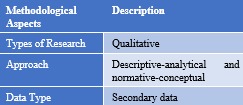
Objective: This study aims to analyze the guarantee of women's rights in Islam with a focus on education and gender equality. This study distinguishes Islamic normative teachings from social practices influenced by patriarchal culture. The goal is to build a contextual understanding that is gender-correct. Theoretical framework: The theoretical framework rests on the principles of justice ('adl) and benefit (maṣlaḥah) in Islam. Gender equality is understood as equality of dignity and responsibility, not absolute equal roles. Education is positioned as an instrument of social justice. Literature review: women's studies in Islam are dominated by normative-theological approaches and patriarchal critiques. However, the integration of Islamic education and gender equality is still limited. This research fills the gap integratively and contextually. Methods: The research uses qualitative methods with descriptive-analytical and normative-conceptual approaches. Data was obtained through literature studies from the Qur'an, Hadith, tafsir, and scientific articles. The analysis was carried out thematically. Results: The results of the study affirm that Islam guarantees women's rights, including education and social roles, without discrimination. The inequality that occurs stems from biased interpretations and patriarchal culture. Gender equality is based on justice and benefits. Implications: The findings underscore the urgency of Islamic education from a gender justice perspective. Practically, these results are relevant for the development of an inclusive Islamic curriculum and discourse. Theoretically, this study enriches the study of Islam and gender. Novelty: The novelty of research lies in the contextual integration of women's rights, education, and gender equality. This study affirms Islamic normativity while criticizing distorted social practices. This framework offers an applicable understanding.
References
M. A. Ramli, M. I. Rosele, A. D. Achmad, and H. A. Qotadah, “Women’s Right of Inheritance in Islam: Between the Sharia Provision and Demand of Socio-cultural Changes,” Khazanah Huk., vol. 5, no. 2, pp. 171–182, 2023, https://doi.org/10.15575/kh.v5i2.29181.
K. R. Hearld, J. L. Anderson, and H. Budhwani, “Examining the Relationship Between Individual Characteristics, Community-Level Traits, Multidimensional Empowerment, and Maternal Health Care Utilization in the Islamic Republic of Pakistan,” Matern. Child Health J., vol. 22, no. 9, pp. 1319–1326, 2018, https://doi.org/10.1007/s10995-018-2512-3.
A. M. A. M. Ibrahim, “The Perceptions of Modernity-Related Thought of Islamic Family Legislation: A Comparative Analytical Study,” Glob. J. Al-Thaqafah, vol. 14, no. 1, pp. 157–175, 2024, https://www.scopus.com/inward/record.uri?eid=2-s2.0-85200540520&partnerID=40&md5=3897f49a39ad609fe20da656fb5095a3
R. A. Laar, R. Liu, and Q. Zhang, “Barriers to Female Participation in Physical Activity in Pakistan: A Feminist Sport Theory Perspective,” Int. J. Women's. Health, vol. 17, pp. 2715–2727, 2025, https://doi.org/10.2147/IJWH.S533492.
A. Piwko, “Islamic Feminism Modern Life Meets Conservative Religion,” Eur. J. Sci. Theol., vol. 20, no. 5, pp. 69–80, 2024, [Online]. Available: https://www.scopus.com/inward/record.uri?eid=2-s2.0-85211618379&partnerID=40&md5=ba623ee7bfe374d787d0617c599de230
D. Rizal, Irman, D. Putri, Miftahurrahmah, Yustiloviani, and Kamaluddin, “Reinterpreting Religious Texts on Gender Equality: The Perspective of Ahmad Syafii Maarif,” Juris J. Ilm. Syariah, vol. 23, no. 2, pp. 327–336, 2024, https://doi.org/10.31958/juris.v23i2.10233.
G. Zhussipbek, A. Tasbolat, and Z. Nagayeva, “Interdisciplinary Approach to Overcoming the Persistence of Patriarchal Islamic Interpretations: Gender Equality, the Development of Empathy and Children’s Rights, and Insights from the Reformist Eurasian Scholars of the Early Twentieth Century,” Open Theol., vol. 10, no. 1, 2024, https://doi.org/10.1515/opth-2022-0243.
M. Hattab and M. Abualrob, “Under the veil: women’s economic and marriage rights in Palestine,” Humanit. Soc. Sci. Commun., vol. 10, no. 1, 2023, https://doi.org/10.1057/s41599-023-01591-4.
K. Miichi, “Feminist strategies in a Muslim democracy: case study of the 2019 marriage law revision in Indonesia,” Contemp. Islam, vol. 19, no. 3, pp. 559–575, 2025, https://doi.org/10.1007/s11562-025-00599-8.
K. Thomas and I. Kasselstrand, “A long way to liberalization, or is it? Public perceptions of women empowerment in the Middle East and North Africa,” Front. Polit. Sci., vol. 4, 2022, https://doi.org/10.3389/fpos.2022.984310.
O. Alidou, “Muslim women’s social movements in the Sahel,” Oxford Handb. African Sahel, pp. 587–603, 2021, https://doi.org/10.1093/oxfordhb/9780198816959.013.34.
S. Pandey, “Beyond Emancipation and Oppression: Post-Secular Intersectionality and the Muslim Woman in the French Republic,” Religions, vol. 16, no. 9, 2025, https://doi.org/10.3390/rel16091206.
E. Maryani, P. A. Janitra, and R. A. Ratmita, “@Indonesiatanpafeminis.id as a Challenge of Feminist Movement in Virtual Space,” Front. Sociol., vol. 6, 2021, https://doi.org/10.3389/fsoc.2021.668840.
S. D. Dedieu, U. Ouali, R. Ghachem, H. Karray, and I. Issaoui, “Violence Against Women in the Arab World: Eyes Shut Wide Open,” Handb. Healthc. Arab World, pp. 207–255, 2021, https://doi.org/10.1007/978-3-030-36811-1_169.
B. Mustafa, “Gender Found Guilty: Anti-Gender Backlash and (Dis)Translation Politics in Iraq,” Gend. Soc., vol. 39, no. 4, pp. 509–534, 2025, https://doi.org/10.1177/08912432251344267.
F. Yousufi, “The Prospect of Women’s Rights in the Post-Taliban-Government Peace Agreement,” J. Int. Women's. Stud., vol. 22, no. 9, pp. 1–18, 2021, [Online]. Available: https://www.scopus.com/inward/record.uri?eid=2-s2.0-85116885507&partnerID=40&md5=7106e17e685a0f24be443541ecbf79ac
E. Akhmetova, “Women’s Rights: The Qur’anic Ideals and Contemporary Realities,” Econ. Empower. Women in Islam. World Theory Pract., pp. 145–164, 2020, https://doi.org/10.1142/9789811212154_0008.
A. Prayogi, “Pendekatan Kualitatif dalam Ilmu Sejarah: Sebuah Telaah Konseptual,” Hist. Madania J. Ilmu Sej., vol. 5, no. 2, pp. 240–254, 2021, https://doi.org/10.15575/hm.v5i2.15050.
M. Mulyadi, “Penelitian Kuantitatif Dan Kualitatif Serta Pemikiran Dasar Menggabungkannya,” J. Stud. Komun. dan Media, vol. 15, no. 1, p. 128, 2013, https://doi.org/10.31445/jskm.2011.150106.
W. Yuliani, “Metode Penelitian Deskriptif Kualitatif Dalam Perspektif Bimbingan Dan Konseling,” QUANTA J. Kaji. Bimbing. dan Konseling dalam Pendidik., vol. 2, no. 2, pp. 1–10, 2018, https://doi.org/10.22460/q.v2i1p21-30.642.
R. Akkır, “Interpretation of Ahmet Ağaoğlu’s Perspectives on Religion and Society from the Late Ottoman Empire to the Early Turkish Republic Period,” Osmanli Medeni. Arastirmalari Derg., vol. 2025, no. 25, pp. 408–423, 2025, https://doi.org/10.21021/osmed.1616396.
S. R. Dzuhayatin, “Gender glass ceiling in Indonesia: Manifestation, roots and theological breakthrough,” Al-Jami’ah, vol. 58, no. 1, pp. 209–240, 2020, https://doi.org/10.14421/AJIS.2020.581.209-240.
A. Čustović, “Equal Before God but Not Equal Before His Law? Sharia Law and Women’s Right to Interpretation in the Light of the Human Rights Debate,” Religions, vol. 16, no. 3, 2025, https://doi.org/10.3390/rel16030362.
S. Ashraf, M. Abrar-ul-Haq, and S. Ashraf, “Domestic violence against Women: Empirical evidence from Pakistan,” Pertanika J. Soc. Sci. Humanit., vol. 25, no. 3, pp. 1401–1418, 2017, [Online]. Available: https://www.scopus.com/inward/record.uri?eid=2-s2.0-85031314280&partnerID=40&md5=3e3ef77eef2bb494cc8970731b979ddd
B. G. Bishin and F. M. Cherif, “Women, property rights, and Islam,” Comp. Polit., vol. 49, no. 4, pp. 501–519, 2017, https://doi.org/10.5129/001041517821273026.
D. A. Arimbi, “Abidah El Khalieqy’s Struggles of Islamic Feminism Through Literary Writings,” Sophia Stud. Cross-cultural Philos. Tradit. Cult., vol. 17, pp. 21–34, 2017, https://doi.org/10.1007/978-3-319-43189-5_2.
M. N. Egemba and A. J. Ajuwon, “Knowledge and perceptions of reproductive rights among female postgraduate students of the University of Ibadan, Nigeria,” African J. Biomed. Res., vol. 18, no. 2, pp. 95–107, 2015, [Online]. Available: https://www.scopus.com/inward/record.uri?eid=2-s2.0-84938217592&partnerID=40&md5=68f6e71be883872ec81197c28577da18
N. Rizvi, K. S Khan, and B. T. Shaikh, “Gender: Shaping personality, lives and health of women in Pakistan,” BMC Women's Health. Health, vol. 14, no. 1, 2014, https://doi.org/10.1186/1472-6874-14-53.
A. Hamdan, “The role of authentic Islam: The way forward for women in Saudi Arabia,” Hawwa, vol. 10, no. 3, pp. 200–220, 2012, https://doi.org/10.1163/15692086-12341237.
T. Štojs, “Some aspects of the position of women in Islam,” Obnovljeni Ziv., vol. 67, no. 2, pp. 179–194, 2012, [Online]. Available: https://www.scopus.com/inward/record.uri?eid=2-s2.0-84873111735&partnerID=40&md5=54872179ba9955f7b9b45babb9b200cf
H. Elver, “Secular constitutionalism and Muslim women’s rights: The Turkish headscarf controversy and its impact on the European court of human rights,” Fem. Const. Glob. Perspect., pp. 413–432, 2012, https://doi.org/10.1017/CBO9780511980442.030.
F. Shaheed, “Contested identities: Gendered politics, gendered religion in Pakistan,” Third World Q., vol. 31, no. 6, pp. 851–867, 2010, https://doi.org/10.1080/01436597.2010.502710.
H. Hoodfar and S. Sadr, “Islamic politics and women’s quest for gender equality in Iran,” Third World Q., vol. 31, no. 6, pp. 885–903, 2010, https://doi.org/10.1080/01436597.2010.502717.
M. Riazi, “Unveiling the Impacts of Islamic Regulations and the Limitations of Islamic Feminism: Experiences of Women from Iran,” Fem. Encount., vol. 9, no. 1, 2025, https://doi.org/10.20897/femenc/16017.
C. Pereira and J. Ibrahim, “On the bodies of women: The common ground between Islam and Christianity in Nigeria,” Third World Q., vol. 31, no. 6, pp. 921–937, 2010, https://doi.org/10.1080/01436597.2010.502725.
D. L. Bowen, “Islamic law and the position of women,” Islam Soc. policy, pp. 44–117, 2010, https://doi.org/10.2307/j.ctv17vf6q5.5.
T. Demirci and S. A. Somel, “Women’s bodies, demography, and public health: Abortion policy and perspectives in the Ottoman Empire of the nineteenth century,” J. Hist. Sex, vol. 17, no. 3, pp. 377–420, 2008, https://doi.org/10.1353/sex.0.0025
V. M. Moghadam, “Feminism, legal reform and women’s empowerment in the Middle East and North Africa,” Int. Soc. Sci. J., vol. 59, no. 191, pp. 9–16, 2008, https://doi.org/10.1111/j.1468-2451.2009.00673.x.
C. Adamson, “Gendered anxieties: Islam, women’s rights, and moral hierarchy in Java,” Anthropology. Q., vol. 80, no. 1, pp. 5–37, 2007, https://doi.org/10.1353/anq.2007.0000.
S. Taher and K. Zoghlami, “What is Holding Back Full Feminist Solidarity with Muslim Women? The Epistemic Failures of White Liberal Feminism,” Fem. Encount., vol. 9, no. 1, 2025, https://doi.org/10.20897/femenc/16016.
S. Glas, “Multiplex and messy, not essentialist and patriarchal: How Muslims connect religiosity differently to transgender people’s rights than women’s or homosexual people’s rights,” J. Ethn. Migr. Stud., vol. 51, no. 5, pp. 1160–1183, 2025, https://doi.org/10.1080/1369183X.2024.2366314.