Degradation of Labor Rights in the Era of Omnibus Law: An Analysis of the Implications of Regulation on Workers' Welfare and Protection
DOI:
https://doi.org/10.61455/sicopus.v4i01.494Keywords:
workers, leave rights, health, omnibus law, social protectionAbstract
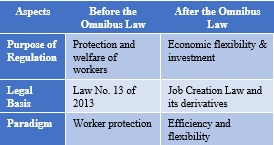
Objective: This study aims to critically analyze the degradation of labor rights in Indonesia during the Omnibus Law era, focusing on its implications for worker welfare and protection, particularly how it affects job security, wages, and workers' social rights. Theoretical framework: The theoretical framework of this study is rooted in social justice theory, legal protection theory, and industrial relations theory. These frameworks emphasize the state's responsibility to ensure basic workers' rights, secure employment, fair wages, and a balanced relationship between workers, employers, and the government. Literature review: The literature review highlights that previous studies have primarily concentrated on the economic and investment dimensions of labor laws, with limited exploration of the social, humanitarian, and normative consequences. There is a lack of comprehensive research addressing the broader impacts of labor rights erosion, particularly in relation to worker welfare and protection. Methods: This study employs a qualitative research design based on a literature review. Secondary data sources are utilized, including scientific journals, laws and regulations, Constitutional Court decisions, labor organization reports, and relevant policy documents. Results: The findings reveal that the Omnibus Law not only simplifies regulatory frameworks but also shifts the focus of labor protection towards economic flexibility. This shift leads to reduced severance pay, increased outsourcing without sectoral boundaries, uncertainty regarding employment status, potential declines in wages, and the erosion of leave rights and social protections. These changes undermine workers' bargaining power, increase their vulnerability to exploitation, and negatively affect mental health, economic stability, and human dignity. Implications: This study highlights the need for a comprehensive evaluation of labor regulations, stronger state oversight, and a restructured labor policy that balances investment interests with worker protection. Novelty: The study’s novelty lies in its approach, viewing the Omnibus Law not just as an economic tool but as a social justice issue, emphasizing the real-life experiences of workers impacted by these changes.
References
Helmi, “Penataan Peraturan Daerah dengan Metode Omnibus Law : Urgensi dan Mekanisme,” Undang J. Huk., vol. 4, no. 2, pp. 441–472, 2021, https://doi.org/10.22437/ujh.4.2.441-472.
A. D. Prasetyo, A. R. Budiono, and S. Hadiyantina, “Politik Hukum Perubahan Norma Perizinan dan Iklim Investasi Dalam Undang-Undang Cipta Kerja Menggunakan Metode Omnibus Law,” Media Iuris Vol., vol. 5, no. 2, pp. 159–188, 2022, https://doi.org/10.20473/mi.v5i2.36165.
M. A. Florisadeg, “Peran Undang-Undang Cipta Kerja dalam Reformasi Hukum Investasi di Indonesia,” vol. 2, no. 1, pp. 09–21, 2025, https://doi.org/10.62383/hukum.v2i1.67.
S. Oki Purnomo, “Hambatan Kebijakan Investasi Indonesia Untuk Mendorong Pertumbuhan Ekonomi Melalui Omnibus Law Obstacles Of Indonesian Investment Policy To Promote Economic Growth Through Omnibus Law,” JICN J. Intelek dan Cendikiawan Nusant., vol. 1, no. 2, pp. 1–8, 2024.
I. Hanifah, “Kebijakan Perlindungan Hukum Bagi Pekerja Rumah Tangga Melalui Kepastian Hukum,” Legis. Indones., vol. 17, no. 2, pp. 193–208, 2020, https://doi.org/10.54629/jli.v17i2.669.
A. Kususiyanah, “Hubungan Industrial Pancasila Dalam Undang-Undang Cipta Kerja ( Pancasila Industrial Relations in Job Creation Law ),” J. Sharia Econ. Law, vol. 1, no. 2, pp. 42–59, 2021, https://doi.org/10.21154/invest.v1i2.3478.
M. Taufik et al., “Kebijakan Publik dalam Perspektif Hukum: Studi Kasus Implementasi Undang-Undang Cipta Kerja dengan Metode Studi Dokumen,” J. Ilmu Huk. dan Polit., vol. 3, no. 1, pp. 731–749, 2025, https://doi.org/10.51903/perkara.v3i1.2335.
M. Kalkautsar et al., “Dampak Kenaikan Upah Minimum terhadap Kesajahteraan Buruh di Sektor Industri,” J. Res. Educ. Stud., vol. 5, no. 2, pp. 1–10, 2025.
U. Rauta, T. S. Kurnia, F. P. R. A. de Sousa, A. de J. Soares, M. C. Kishan, and B. A. S. Jeconiah, “Justification of the Thematic Legislation in Indonesia,” J. Konstitusi, vol. 22, no. 3, pp. 417–435, 2025, https://doi.org/10.31078/JK2231.
Widayati, Winanto, A. W. Laksana, M. N. Huda, and N. Fareha, “The Challenges of Using the Omnibus Law Method in Indonesia’s Legal System,” Volksgeist J. Ilmu Huk. Dan Konstitusi, vol. 8, no. 2, pp. 459–477, 2025, https://doi.org/10.24090/volksgeist.v8i2.13382.
K. Gupta, A. A. Patunru, and P. Gretton, “Projecting the long-run impact of an economic reform: The case of the Indonesian Omnibus Law,” Asia. Pac. Econ. Lit., vol. 39, no. 1, pp. 102–130, 2025, https://doi.org/10.1111/apel.12428.
M. Y. Agustian, J. Anwar, A. Meilansyah, Y. Sari, and M. Ajadillah, “Implementasi Omnibus Law Dalam Sistem Ketenagakerjaan Indonesia Setelah Dikeluarkannya Peraturan Pemerintah Pengganti Undang-Undang Nomor 2 Tahun 2022 Tentang Cipta Kerja,” Lex Strict. J. Ilmu Huk., vol. 2, no. 2, pp. 59–72, 2023, https://doi.org/10.46839/lexstricta.v2i2.26.
R. S. Samudera, “Implementasi Kebijakan Uu Cipta Kerja Dalam Tata Kelola Ketenagakerjaan , Lingkungan , Dan Perizinan Berusaha Berbasis Risiko Di Indonesia Pasca-Pandemi,” Dev. Policy Manag. Rev., vol. 5, no. 1, pp. 68–80, 2025, https://doi.org/10.61731/dpmr.v5i1.44206.
Naser, Haspul, MSi CHRP, and Harrys Pratama Teguh. Dinamika Hubungan Industrial Di Era Digital: Konflik Dan Konsensus Dalam Hubungan Industrial Di Era Industri 4.0. Pohon Cahaya, 2025.
R. Erlyani, P. Prihantono, T. Syahuri, P. Studi, and M. Hukum, “Dinamika Politik Hukum Dalam Konteks Perubahan Sosial,” Lex Sharia Pacta Sunt Ervanda, vol. 1, no. 3, pp. 14–24, 2024.
Arifardhani, Yoyo. Perlindungan Hukum: Hak Hidup Dan Tinggal Di Lingkungan Yang Baik Dan Sehat. Penerbit Adab, 2024. hlm 22.
A. Suntoro, “Implementasi Pencapaian Secara Progresif Dalam Omnibus Law Cipta Kerja,” J. Ham, vol. 12, no. 1, pp. 1–18, 2021, https://doi.org/10.30641/ham.2021.12.1-18.
I. Amalia, N. Isma, W. P. Ardiyanto, M. W. Aulia, D. Mawaddah, and D. Noviarani, “Analisis Putusan Mk Nomor 168/Puu-Xxi/2023: Implikasi Terhadap Perlindungan Hak Pekerja Di Indonesia,” J. Ilm. Wahana Pendidik., vol. 11, no. 168, pp. 139–147, 2025.
L. J. Moleong, Metodologi penelitian kualitatif, Edisi revi. PT Remaja Rosdakarya, 2019.
M. R. Fadli, “Memahami desain metode penelitian kualitatif,” Humanika, vol. 21, no. 1, pp. 33–54, 2021, https://doi.org/10.21831/hum.v21i1.38075.
A. S. Prabowo, A. N. Triputra, Y. Junaidi, and D. E. Purwoleksono, “Politik Hukum Omnibus Law di Indonesia,” J. Pamotor, vol. 13, no. 1, pp. 1–6, 2020, https://doi.org/10.21107/pamator.v13i1.6923.
Christiawan, Rio. Omnibus Law: Teori dan Penerapannya. Bumi Aksara, 2021.
Sabarudin, Didin. Diskursus Ekonomi: Perdebatan-Pertaruhan Ideologi dan Politik dalam Ruang Publik Relasi Ekonomi-Politik-Hukum dan Opini Publik (Tinjauan Omnibus Law Cipta Kerja). PT. RajaGrafindo Persada-Rajawali Pers, 2024.
Sudiyana and M. Z. M. Zahir, “Comparison of Indonesian and Malaysian Investment Laws Following Omnibus Legislation,” Yustisia, vol. 14, no. 1, pp. 1–22, 2025, https://doi.org/10.20961/yustisia.v14i1.83707.
R. Pajero, M. Sari, I. R. Supriyanti, A. Pratiwi, M. H. Affan, and U. P. Bangsa, “Implikasi Hukum Perburuhan Terhadap Sistem Hubungan Industrial di Perusahaan Manufaktur,” Revenue J. Lentera Bisnis Manaj., vol. 03, no. 02, pp. 66–71, 2025, https://doi.org/10.59422/lbm.v3i02.795.
Kaharuddin, D. Karunia, O. Moechthar, and A. M. F. Katherina, “Omnibus Law In The Dynamics Of Constitutional Law: A Comparative Research Of Indonesia, The United States, The Philippines, And Canada,” Adm. Environ. Law Rev., vol. 6, no. 1, pp. 1–22, 2025, https://doi.org/10.25041/aelr.v6i1.4054.
L. Djuari et al., “Licensing Issues at Primary Clinics Resulting From the Omnibus Law in Indonesia: A Case Study From Surabaya City,” Int. J. Heal. Policy Manag., vol. 14, 2025, https://doi.org/10.34172/ijhpm.9006.
H. Gunawan and Syahbudin, “Legal Reconstruction of the Omnibus Law on Job Creation for Justice in Enhancing Investment and Indonesia’S Competitiveness,” J. Huk. Unissula, vol. 41, no. 2, pp. 253–276, 2025, https://doi.org/10.26532/jh.v41i2.44442.
D. Kuswana, D. Sumpena, and Y. H. Hardiyan Syah, “Indonesian religious social movements: analysis and impacts,” Indones. J. Islam Muslim Soc., vol. 14, no. 2, pp. 351–380, 2024, https://doi.org/10.18326/ijims.v14i2.351-380.
Ma’rifah, Nur, and Umu Habibah. ‘Implikasi Hukum Omnibus Law Terhadap Ketenagakerjaan di Indonesia.’ Jejak digital: Jurnal Ilmiah Multidisiplin 1.3 (2025): 557-566.
Milinum, Sela Nopela. ‘Problematika Fleksibilitas Outsourcing (Alih Daya) Pasca-Undang-Undang Nomor 11 Tahun 2020 tentang Cipta Kerja Klaster Ketenagakerjaan.’ Jurnal Hukum Lex Generalis 3.5 (2022): 412-432, https://doi.org/10.56370/jhlg.v3i5.119.
Kusumaningtyas, Reza Octavia. ‘Sosialisasi Hak Pekerja dalam Kebijakan Ketenagakerjaan Pasca Putusan Mahkamah Konstitusi Nomor 168/PUU-XXI/2023 di Dinas Ketenagakerjaan Kota Surakarta.’ Masyarakat Berdaya dan Inovasi 6.1 (2025): 12-23.
Z. A. Mochtar, Y. Arizona, F. Rahman, U. Mubdi, G. E. Ruhpinesthi, and M. A. Wafi, “From Meaningful to Meaningless Participation: The Tragedy of Indonesia’s Omnibus Law on Job Creation,” J. Media Huk., vol. 31, no. 2, pp. 351–370, 2024, https://doi.org/10.18196/jmh.v31i2.23557.
W. Situmorang, F. R. Mella Ismelina, and Rasji, “Rupture in the Legal Hierarchy: Normative Conflicts and the Subversion of Agrarian Principles in Indonesia’s Omnibus Law,” Indones. Law Rev., vol. 14, no. 4, pp. 89–102, 2024, https://doi.org/10.15742/ilrev.v14n4.6.
M. Jufri, P. A. Aidonojie, A. A. Fahmi, L. Asyiqoh, and O. O. Ikubanni, “Standardisation of the Legislation as a Follow-Up to the Constitutional Court’s Decision on Judicial Review of Omnibus Law,” J. Konstitusi, vol. 21, no. 3, pp. 366–391, 2024, https://doi.org/10.31078/jk2132.
Hidayati, Laila Nurul, et al. ‘Perlindungan Hukum Pekerja Kontrak Dalam Perspektif Undang-Undang Nomor 13 Tahun 2003 Dan Undang-Undang Omnibus Law.’ Al-Zayn: Jurnal Ilmu Sosial & Hukum 3.3 (2025): 1934-1945.
Adityarani, Nadhira Wahyu. ‘Hak Cuti Melahirkan Bagi Pekerja Perempuan Sebagai Penerapan Hukum Hak Asasi Manusia Dan Perlindungan Hukum Bagi Perempuan Di Indonesia.’ Jurnal fundamental justice (2020): 28-45, https://doi.org/10.30812/fundamental.v1i1.631.
Rubianti, Vaganti Safa Sukma. "Tinjauan Undang-Undang Ketenagakerjaan dan Hak Asasi Manusia Terhadap Pelanggaran Hak Istimewa Buruh Perempuan PT Aice." Media Hukum Indonesia (MHI) 2.2 (2024): 310-320.
A. Kususiyanah, M. C. Huda, J. Sriwidodo, and A. S. Baharuddin, “Trends and Landscape of Omnibus Law Research: A Bibliometric Analysis,” Volksgeist J. Ilmu Huk. Dan Konstitusi, vol. 7, no. 2, pp. 219–243, 2024, https://doi.org/10.24090/volksgeist.v7i2.9633.
A. Sanders, J. Khatarina, R. Assegaf, T. Toumbourou, H. Kurniasih, and R. Suwarso, “The Omnibus Law on Job Creation and its potential implications for rural youth and future farming in Indonesia,” Asia Pac. Viewp., vol. 65, no. 2, pp. 248–262, 2024, https://doi.org/10.1111/apv.12408.
S. Purwanda, W. Wiwin, J. Pransisto, and A. Musran, “Testing the Omnibus Law Concept in Legal Theory: Evaluating Its Effectiveness As a Tool for Social Engineering,” Indones. Priv. Law Rev., vol. 5, no. 1, pp. 11–22, 2024, https://doi.org/10.25041/iplr.v5i1.3370.