Enhancing Fourth-Grade Students’ Dance Skills through Kabela Traditional Dance Using Audiovisual Media
DOI:
https://doi.org/10.61455/sicopus.v4i01.492Keywords:
kabela dance, audio-visual media, dance learning, elementary education, dance skillsAbstract
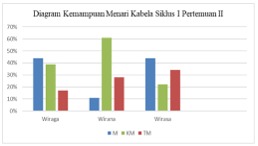
Objective: This research aimed to improve fourth-grade students' ability to perform the traditional Kabela dance at SD Laboratorium Universitas Negeri Gorontalo using audio-visual media. Theoretical framework: The study is based on multimodal learning, particularly multimedia learning theory, which suggests that combining visual and auditory elements enhances understanding and coordination, especially in kinesthetic activities like dance. Literature review: Previous studies highlight the effectiveness of audio-visual media in teaching dance by providing clear visual models, improving movement replication, and fostering engagement. It also emphasizes the importance of cultural competence in dance education. Methods: A classroom action research design was employed with two cycles, each consisting of two meetings. Data were collected through observations, performance tests, and documentation, assessing students' skills in movement, rhythm, and expression. Results: The results revealed a significant improvement in students’ performance in the Kabela dance after the implementation of audio-visual media. In the first cycle, only 8 students (44%) achieved satisfactory performance. However, in the second cycle, 16 students (89%) demonstrated mastery of the dance movements. The use of audio-visual media was shown to be an effective tool in enhancing students' understanding, coordination, and expression in performing the Kabela dance. Implications: The study suggests that audio-visual media is an effective tool for teaching traditional dance and improving students' cultural and artistic competence, especially in Seni Budaya dan Prakarya (SBDP) subjects. Novelty: This research introduces the use of audio-visual media to teach the Kabela dance, showing its potential to enhance dance learning outcomes and cultural appreciation in primary education.
References
C. Wilson, F. A. S. Bright, and S. Mooney, “Communication as a Dynamic Dance: Physiotherapy Clinical Educators’ Conceptualisations of Effective Communication in Final Year Physiotherapy Students in New Zealand,” New Zeal. J. Physiother., vol. 53, no. 3, pp. 141–150, 2025, https://doi.org/10.15619/nzjp.v53i3.483.
N. Afriyani, “Upaya Meningkatkan Kreativitas Belajar Pada Mata Pelajaran SBdP Melalui Metode Drill Siswa Kelas V MIN 1 Metro,” Institut Agama Islam Negeri (IAIN) Metro Lampung. 2020. https://repository.metrouniv.ac.id/id/eprint/3636/1/SKRIPSI NIA AFRIYANI%281601050072%29 PGMI.pdf
S. Aisyah, E. Noviyanti, and T. Triyanto, “Bahan Ajar Sebagai Bagian Dalam Kajian Problematika Pembelajaran Bahasa Indonesia,” J. Salaka J. Bahasa, Sastra, dan Budaya Indones., vol. 2, no. 1, 2020, https://doi.org/10.33751/jsalaka.v2i1.1838.
R. D. Sitharesmi and T. Semiaji, “Kabela for Enriching the Contemporary Concept of Choreography at Gorontalo,” Res. Rev. J. Ilm. Multidisplin, vol. 2, no. 1, pp. 113–122, 2023, https://doi.org/10.54923/researchreview.v2i1.36.
S. A. Ukhaira, “Peningkatan Hasil Belajar Peserta Didik Dalam Menciptakan Tari Dari Permainan Tradisional Engrang Menggunakan Model Project Based Learning di Kelas IV SDN 05 Pasaman Kabupaten Pasaman Barat Pendidikan Guru Sekolah Dasar , Universitas Negeri Padang,” J. Pendidik. Tambusai, vol. 8, no. 2, pp. 28190–28196, 2024.
U. Uminah, R. Wulandari, S. H. Agisah, and I. Apipah, “Pengaruh Seni Tari Terhadap Perkembangan Kemampuan Fisik dan Motorikanak di Ra Al Bayyan Jamanis,” Edu Happiness J. Ilm. Perkemb. Anak Usia Dini, vol. 2, no. 2, pp. 186–196, 2023, https://doi.org/10.62515/eduhappiness.v2i2.213.
G. MA and Z. WANG, “A study on dance/movement therapy to improve core symptoms in children with autism spectrum disorder,” Arts Psychother., vol. 94, 2025, https://doi.org/10.1016/j.aip.2025.102300.
M. Denysschen, R. X. Doe-Asinyo, D. Coetzee, W. du Plessis, E. Bonney, and B. Smits-Engelsman, “What Motor Skills Do Children Perceive as Important? A Child-Centred Exploration Using the Motor Coordination Questionnaire,” Child. Care. Health Dev., vol. 52, no. 1, 2026, https://doi.org/10.1111/cch.70230.
D. R. Sulistyawati, Suwarjiya, and S. N. Aini, “Nilai Pendidikan Karakter dalam Tari Anak Giha Mayau di Sanggar Permata Ije Jela Barito Kuala,” J. Rev. Pendidik. dan Pengajaran, vol. 6, no. 2, pp. 580–587, 2023.
S. Ummah and N. Nadlir, “Implementasi pembelajaran seni tari pada Kurikulum Merdeka di sekolah dasar,” Imaji J. Seni dan Pendidik. Seni, vol. 22, no. 2, pp. 142–149, 2024, https://doi.org/10.21831/imaji.v22i2.71889.
Y. S. Mariyah, A. Budiman, H. Rohayani, and W. D. Audina, “Meningkatkan Motivasi Belajar Siswa Melalui Pemanfaatan Media Audio Visual : Studi Eksperimen Dalam Pembelajaran Tari,” J. Educ. Hum. Soc. Sci., vol. 4, no. 2, pp. 959–967, 2021, https://doi.org/10.34007/jehss.v4i2.778.
D. Mahendra and J. S. Kuncoro, “Penciptaan Tari Ins Spesial Bersama Anak Tunagrahita Di Slb a Ykab Surakarta,” Greget, vol. 20, no. 1, pp. 34–44, 2022, https://doi.org/10.33153/grt.v20i1.4033.
L. Chen, “Visual language transformer framework for multimodal dance performance evaluation and progression monitoring,” Sci. Rep., vol. 15, no. 1, 2025, https://doi.org/10.1038/s41598-025-16345-2.
C. Farmer and J. Brouner, “Frequency of Upper Body Muscular Demands in Contemporary and Ballet Dance Performance: A Cross-Sectional Performance Analysis,” J. Danc. Med. Sci., vol. 29, no. 4, pp. 237–245, 2025, https://doi.org/10.1177/1089313X251313664.
M. Pasaribu, “Pengaruh Pembelajaran Berdiferensiasi dalam Seni Tari Terhadap Motivasi dan Keterlibatan Siswa di Sekolah Menengah Pertama,” J. Didakt. Pendidik. Dasar, vol. 8, no. 1, pp. 285–304, 2024, https://doi.org/10.26811/didaktika.v8i1.1327.
S. I. Pebrianti, M. Jazuli, M. H. Bisri, and A. H. Salma, “Manajemen Produksi Pertunjukan Tari Sanggar Pangreksa Budaya Kota Semarang,” Joged, vol. 23, no. 2, pp. 161–186, 2024, https://doi.org/10.24821/joged.v23i2.14159.
H. P. Putri and N. Nurafni, “Pengaruh Media Pembelajaran PowerPoint Interaktif terhadap Hasil Belajar IPS Siswa Sekolah Dasar,” Edukatif J. Ilmu Pendidik., vol. 3, no. 6, pp. 3538–3543, 2021, https://doi.org/10.31004/edukatif.v3i6.986.
et al., “Makna Simbolis dan Filosofi di Balik Gerakan Tari Tradisional Indonesia,” AKSARA J. Bhs. dan Sastra, vol. 25, no. 2, 2024, https://doi.org/10.23960/aksara/v25i2.pp760-772.
R. Dewi, Muawanah, and Nabila, “Pembelajaran Seni Tari Dalam Meningkatkan Kerja Sama Siswa,” JIMU J. Ilm. Multi Disiplin, vol. 03, no. 03, pp. 1289–1297, 2025.
I. Dewa and G. N. Semarabawa, “Media Audio Visual Untuk Meningkatkan Keterampilan Menarikan Tari Saraswati Natha Pada Kegiatan Ekstrakurikuler Tari,” Indonesian Journal of Educational Development, vol. 3, no. 3. pp. 418–427, 2022. https://doi.org/10.5281/ZENODO.7367628.
L. Fitriah and Y. I. Vivian, “Ideologi Pendidikan melalui Pendidikan Seni Musik dalam Sebuah Kreativitas,” J. Mebang Kaji. Budaya Musik dan Pendidik. Musik, vol. 2, no. 1, pp. 59–66, 2022, https://doi.org/10.30872/mebang.v2i1.26.
et al., “Makna Simbolis dan Filosofi di Balik Gerakan Tari Tradisional Indonesia,” AKSARA J. Bhs. dan Sastra, vol. 25, no. 2, 2024, https://doi.org/10.23960/aksara/v25i2.pp760-772.
I. Mokodompit, N. Djafar, M. A. Pulukadang, and L. O. Karlan, “Eksistensi Tari Kabela pada Masyarakat Bolaang Mongondow,” J. Cerano Seni Pengkaj. dan Pencipta. Seni Pertunjuk, vol. 4, no. 1, pp. 10–22, 2025, https://doi.org/10.22437/jcs.v4i1.45130.
H. Hartini, “Upaya Meningkatkan Kemampuan Gerak Dasar Tari Klasik Melalui Metode Pembelajaran Demontrasi Pada Siswa Kelas 7A SMP Negeri 13 Magelang,” JUPENJI J. Pendidik. Jompa Indones., vol. 2, no. 3, pp. 102–111, 2023, https://doi.org/10.57218/jupenji.vol2.iss3.841.
T. Parjaman and D. Akhmad, “Pendekatan Penelitian Kombinasi: Sebagai ‘Jalan Tengah’ Atas Dikotomi Kuantitatif-Kualitatif,” J. MODERAT, vol. 5, no. 4, pp. 530–548, 2019, https://doi.org/10.25157/moderat.v5i4.3077.
M. Haq and N. Yasin, “Qualitative, Quantitative, and Mixed Methodology Paradigms,” J. Pract. Stud. Educ., vol. 6, no. 6, pp. 15–29, 2025, https://doi.org/10.46809/jpse.v6i6.144.
S. Haeyen, E. Noorthoorn, and E. Joosten, “Monitoring arts and psychomotor therapies: Further development and validation of the Self-expression and Emotion-Regulation in Arts and Psychomotor Therapies Scale (SERAPTS),” PLoS One, vol. 20, no. 11 November, 2025, https://doi.org/10.1371/journal.pone.0336170.
B. Montero and J. Toner, “Victory at all costs: the role of effort in expert action,” Synthese, vol. 206, no. 5, 2025, https://doi.org/10.1007/s11229-025-05313-y.
B. Porykali et al., “Cultural immersion: Embedding Torres Strait Islander (Melanesian) history, culture, diet and health in dietetics curricula,” Nutr. Diet, vol. 82, no. 5, pp. 549–560, 2025, https://doi.org/10.1111/1747-0080.70026.
C. Mercê, S. Bernardino, N. Saramago, M. Branco, and D. Catela, “A Quasi-Experimental Hip-Hop-Based Program to Improve Motor Competence and Physical Activity in Preschoolers in Portugal: The ‘Grow+’ Program,” Healthc., vol. 13, no. 19, 2025, https://doi.org/10.3390/healthcare13192518.
J. He, J. Zhao, H. Li, J. Chen, and Y. Qin, “Exploring the Effects of Acute Digital Sports Dance Intervention on Children’s Gross Motor Development, Executive Function, and Muscle Coordination Using Electromyography Sensors: A Randomized Repeated-Measures Study,” Sensors, vol. 25, no. 19, 2025, https://doi.org/10.3390/s25195962.
G. Špinarová et al., “Arts therapies and people with visual impairment: A scoping review,” Arts Psychother., vol. 95, 2025, https://doi.org/10.1016/j.aip.2025.102317.
C. Carrillo, D. Dotov, and L. J. Trainor, “Can children at risk for developmental coordination disorder step-clap to the beat? Evidence from an online motion tracking study,” Hum. Mov. Sci., vol. 102, 2025, https://doi.org/10.1016/j.humov.2025.103387.
Q. Ma, “Harnessing generative neural networks to fuse traditional Tujia Baishou dance with contemporary choreography: Enhancing creativity and aesthetic experience in dance students,” Acta Psychol. (Amst)., vol. 258, 2025, https://doi.org/10.1016/j.actpsy.2025.105178.
M. G. Morgan, A. D. Corbitt, and C. C. Yates, “Rehabilitation of a Professional Ballerina Post-Traumatic Fourth Toe Fracture: A Case Report,” Int. J. Sports Phys. Ther., vol. 20, no. 7, pp. 1050–1059, 2025, https://doi.org/10.26603/001c.140891.
C. Almásy and A. R. Fedor, “Psychosocial Aspects of Injuries Among Professional Folk Dancers,” Int. J. Environ. Res. Public Health, vol. 22, no. 7, 2025, https://doi.org/10.3390/ijerph22071044.
M. Ö. Özbilgin and F. Aşkar, “The Phenomenon of Age in Western Anatolia Local Dance Culture in Turkey,” Musicologist, vol. 9, no. 1, pp. 259–283, 2025, https://doi.org/10.33906/musicologist.1466073.
C. Kosirnik, R. A. Philippe, and V. Pomini, “Navigating pathways to develop self-compassion in sport, dance, and music: Qualitative insights from volunteer participants on balancing criticism and compassion, the pivotal influence of the social environment and strategies to overcome setbacks,” PLoS One, vol. 20, no. 6 June, 2025, https://doi.org/10.1371/journal.pone.0326612.
A. Castelino et al., “Mixed methods feasibility study of Music Attuned Technology Care via eHealth (MATCH) for people with complex behavioral and psychological symptoms of dementia within an acute psychogeriatric ward,” Alzheimer’s Dement., vol. 21, no. 5, 2025, https://doi.org/10.1002/alz.70124.
L. Narikbayeva, T. Klyshbayev, D. Kalimullin, and D. Mochalov, “The impact of dance on enhancing social skills and emotional intelligence through creativity,” Acta Psychol. (Amst), vol. 253, 2025, https://doi.org/10.1016/j.actpsy.2025.104736.
P. O. Morris, E. Hope, T. Foulsham, and J. P. Mills, “Exploring the use of a dance-based exergame to enhance autistic children’s social communication skills in the home and school environments: a feasibility study,” Int. J. Dev. Disabil., vol. 71, no. 1, pp. 141–158, 2025, https://doi.org/10.1080/20473869.2023.2212985.