External Reserves and Macroeconomic Stability: Evidence from Sub-Saharan African Countries
DOI:
https://doi.org/10.61455/sicopus.v2i02.188Keywords:
growth, macroeconomic, stability, foreign exchange, reservesAbstract
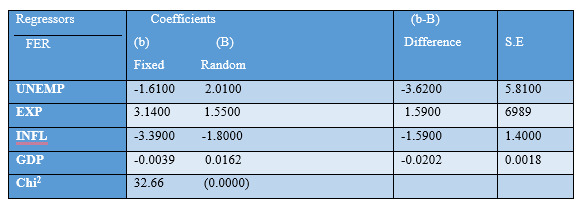
This study investigates the effect of foreign exchange reserves accumulation on macroeconomic stability proxied by inflation, unemployment, exports, and GDP for a sample of 49 Sub-Saharan African countries from 2009 to 2021 using a panel (longitudinal) fixed model. Findings from this study reveal that foreign exchange reserves have a significant negative effect on unemployment and inflation; however, it shows a significant positive effect on exports, while gross domestic product (GDP) shows no significant relationship with foreign exchange reserves. To improve the overall economy of the listed sub-Saharan countries, the paper, therefore, recommends that sub-Saharan African countries adopt a mixture of investment-friendly and unemployment reduction policies by reinvesting investible surplus into inflationary controllable and productivity-boosting policies that will stimulate economic growth rather than keeping this huge amount of resources redundant. The study adopted a qualitative research methodology where the study uses panel data, the data is secondary and is sourced from the World Bank Development Indicators.
References
J. Aizenman and J. Lee, “International reserves: Precautionary versus mercantilist views, theory and evidence,” Open Econ. Rev., vol. 18, no. 2, pp. 191–214, 2005, https://doi.org/10.1007/s11079-007-9030-z.
O. C. Chinaemerem and E. O.T, “Analysis of Effect of External Reserves Management on Macroeconomic Stability of Nigeria,” Int. J. Business, Humanit. Soc. Sci., vol. 3, no. 6, 2012.
I. A. Ojiako, “Linkages between External Reserves and Economic Performance in Nigeria, 1981-2018: Bounds Test and ARDL Approaches,” South Asian J. Soc. Stud. Econ., vol. 6, no. 1, pp. 44–62, 2020, https://doi.org/10.9734/sajsse/2020/v6i130160.
M. K. Alabi, M. A. Ojuolape, and H. A. Yusuf, “The Impact of Accumulating Foreign Reserve on Economic Growth in Nigeria Sokoto,” J. Soc. Sci., vol. 2, pp. 344–355, 2017.
M. P. Dooley, D. Folkerts-Landau, and P. Garber, An essay on the revived Bretton Woods system, Proceedings, Federal Reserve Bank of San Francisco, no. 4. Federal Reserve Bank of San Francisco, 2005. [Online]. Available: http://onlinelibrary.wiley.com/doi/10.1002/ijfe.250/abstract%5Cnpapers://6320e93a-dd76-444a-bd43-9da91fa41aaf/Paper/p4482
J. Bianchi, J. C. Hatchondo, and L. Martinez, “International reserves and rollover risk,” Am. Econ. Rev., vol. 108, no. 9, pp. 2629–2670, 2018, https://doi.org/10.1257/aer.20140443.
M. Kashif, P. Sridharan, and S. Thiyagarajan, “Impact of economic growth on international reserve holdings in Brazil,” Brazilian J. Polit. Econ., vol. 37, no. 3, pp. 605–614, 2017, https://doi.org/10.1590/0101-31572017v37n03a08.
M. . Nwafor, “External Reserves: Panacea for Economic Growth in Nigeria,” Eur. J. Bus. Manag., vol. 9, no. 33, pp. 36–47, 2018.
P. García and C. Soto, “Large hoardings of international reserves: are they worth it?,” Central Bank of Chile Working Paper, vol. 299. Documentos de Trabajo (Banco Central de Chile), pp. 1–40, 2004.
H. Ito and R. N. McCauley, “Currency composition of foreign exchange reserves,” J. Int. Money Financ., vol. 102, p. 102104, 2020, https://doi.org/10.1016/j.jimonfin.2019.102104.
M. Kato, C. R. Proaño, and W. Semmler, “Does international-reserves targeting decrease the vulnerability to capital flights?” Res. Int. Bus. Finance., vol. 44, pp. 64–75, 2018, https://doi.org/10.1016/j.ribaf.2017.06.001.
R. Beck and E. Rahbari, “Optimal reserve composition in the presence of sudden stops,” J. Int. Money Financ., vol. 30, no. 6, pp. 1107–1127, 2011, https://doi.org/10.1016/j.jimonfin.2011.02.006.
J. Aizenman and N. Marion, “The high demand for international reserves in the Far East: What is going on?,” J. Jpn. Int. Econ., vol. 17, no. 3, pp. 370–400, 2002, https://doi.org/10.1016/S0889-1583(03)00008-X.
X. Qian, “International reserves and the maturity of external debt,” J. Int. Money Financ., vol. 73, pp. 399–418, 2017, https://doi.org/10.1016/j.jimonfin.2017.02.015.
J. Zakari and A. Umar, “Spending and Public Debt Nexus in Nigeria: The Role of External Reserves,” Gusau Int. J. Manag. Soc. Sci., vol. 3, no. 1, pp. 13–13, 2020.
K. Andriyani, T. Marwa, N. Adnan, And M. Muizzuddin, “The Determinants of Foreign Exchange Reserves: Evidence from Indonesia,” J. Asian Finance. Econ. Bus., vol. 7, no. 11, pp. 629–636, 2020, https://doi.org/10.13106/jafeb.2020.vol7.no11.629.
“International Monetary Fund (IMF),” International Organization, vol. 6, no. 1. Currency Composition of Official Foreign Reserve (COFER), pp. 121–125, 2023. https://doi.org/10.1017/S0020818300016271.
A. Elhiraika and L. Ndikumana, Reserves Accumulation in African Countries : Sources, Motivations, and Effects, no. November. Scholar Works, Department of Economics Working Paper Series, 2007. [Online]. Available: https://scholarworks.umass.edu/econ_workingpaper/24.
G. Marc-Andre and P. Nicolas, “An Empirical Analysis of Foreign Exchange Reserves in Emerging Asia.” International Department, Bank of Canada Working Paper 38, Ontario Canada, 2005.
O. Jeanne, J. Aizenman, and L. H. Summers, “International Reserves in Emerging Market Countries: Too Much of a Good Thing?,” Brookings Pap. Econ. Act., vol. 1, 2007, https://doi.org/10.1353/eca.2007.0013.
J. Niehans, A History of Economic Theory: Classic Contributions, 1720–1980. Baltimore, MD: Johns Hopkins University Press, 1990.
C. B. Durdu, E. G. Mendoza, and M. E. Terrones, “Precautionary demand for foreign assets in Sudden Stop Economies: An assessment of the New Mercantilism,” J. Dev. Econ., vol. 89, no. 2, pp. 194–209, 2009, https://doi.org/10.1016/j.jdeveco.2008.01.010.
E. Levy Yeyati, “The cost of reserves,” Econ. Lett., vol. 100, no. 1, pp. 39–42, 2008, https://doi.org/10.1016/j.econlet.2007.10.027.
E. U. Kalu, O. E. Ugwu, V. C. Ndubuaku, and O. P. Ifeanyi, “Exchange Rate and Foreign Reserves Interface: Empirical Evidence from Nigeria,” Econ. Financ. Lett., vol. 6, no. 1, pp. 1–8, 2019, https://doi.org/10.18488/journal.29.2019.61.1.8.
A. U. Akpan, “Foreign Reserves Accumulation and Macroeconomic Environment: The Nigerian Experience (2004-2014),” Int. J. Econ. Financ. Stud., vol. 8, no. 1, pp. 26–47, 2016.
C. I. Ezekwe and G. Otto, “Exploring the Nexus between Trinity Policy Hypothesis and Unemployment in Nigeria,” Asian J. Econ. Finance. …, vol. Management, pp. 18–26, 2021, [Online]. Available: https://www.globalpresshub.com/index.php/AJEFM/article/download/1154/991
N. Johnny and W. Johnnywalker, “The Relationship between External Reserves and Economic Growth in Nigeria (1980-2016),” Int. J. Econ. Commer. Manag., vol. 6, no. 5, pp. 213–241, 2018.
A. A. Akinwunmi and R. B. Adekoya, “External Reserves Management and its Effect on Economic Growth of Nigeria,” Int. J. Bus. Financ. Manag. Res., vol. 4, no. 1, pp. 36–46, 2016.
O. Jeanne and R. Rancière, “The Optimal Level of International Reserves For Emerging Market Countries: A New Formula and Some Applications,” Econ. J., vol. 121, no. 555, pp. 905–930, 2011, https://doi.org/10.1111/j.1468-0297.2011.02435.x.
U. Abdullateef and I. Waheed, “External Reserve Holdings in Nigeria: Implications for Investment, Inflation and Exchange Rate,” J. Econ. Int. Financ., vol. 2, no. 9, pp. 183–189, 2010.
K. A. Sanusi, D. F. Meyer, and A. S. Hassan, “An investigation of the determinants of foreign exchange reserves in Southern African countries,” J. Int. Stud., vol. 12, no. 2, pp. 201–212, 2019, https://doi.org/10.14254/2071-8330.2019/12-2/12.
R. P. Gajurel, “Determinants of Nepal’s Foreign Exchange Reserve: An Empirical Study,” J. Manage., vol. 5, no. 1, pp. 76–98, 2022, https://doi.org/10.3126/jom.v5i1.47763.
A. K. Dash, C. S. Shylajan, and S. Dutta, “An Empirical Analysis of Macroeconomic Variables Affecting Foreign Exchange Reserves Accumulation in India,” J. Appl. Bus. Econ., vol. 19, no. 5, pp. 69–81, 2017.
E. M. Onwuka, “Impact of External Reserve and Foreign Debt on Naira Exchange Rate,” J. Int. Acad. Res. Multidiscip., vol. 2, no. 6, pp. 416–423, 2014.
J. Aizenman, Y. W. Cheung, and H. Ito, “International reserves before and after the global crisis: Is there no end to hoarding?,” in Journal of International Money and Finance, vol. 52, 2015, pp. 102–126. https://doi.org/10.1016/j.jimonfin.2014.11.015.
J. Bianchi and C. Sosa-Padilla, Reserve Accumulation, Macroeconomic Stabilization, and Sovereign Risk, vol. 91, no. 4. National Bureau of Economic Research, 2024. https://doi.org/10.1093/restud/rdad075.
J. P. Allegret and A. Allegret, “The role of international reserves holding in buffering external shocks,” Appl. Econ., vol. 50, no. 29, pp. 3128–3147, 2018, https://doi.org/10.1080/00036846.2017.1418075.
E. S. C. Osabuohien and A. J. Egwakhe, “External reserve and the Nigerian economy: The dual folded debate,” African J. Bus. Econ. Res., vol. 3, no. 2–3, pp. 28–41, 2008, https://doi.org/10.10520/EJC10434.
B. G. H. DRAMA, “An Examination of Foreign Exchange Reserve and Inflation Relationship of Four West African Countries: Evidence from ADRL Model,” J. Financ. Econ., vol. 4, no. 4, pp. 36–50, 2016, https://doi.org/10.12735/jfe.v4n4p36.
P. K. Shrestha, “Macroeconomic Impact of International Reserves: Empirical Evidence from South Asia,” NRB Econ. Rev., vol. 28, no. 1, pp. 1–26, 2016, https://doi.org/10.3126/nrber.v28i1.52538.
H. Y. Gereziher and N. Y. Nuru, “Determinants of foreign exchange reserve accumulation: empirical evidence from foreign exchange constrained economy,” J. Econ. Adm. Sci., vol. 37, no. 4, pp. 596–610, 2021, https://doi.org/10.1108/JEAS-06-2020-0093.
M. Bevir, “World Development Indicators,” Encyclopedia of Governance. 2012. https://doi.org/10.4135/9781412952613.n571.
A. A.-I. J. of E. and Finance and undefined 2016, “Foreign reserves accumulation and macroeconomic environment: The Nigerian experience (2004-2014),” Dergipark.Org.Tr, vol. 8, no. 1, pp. 1309–8055, 2016, [Online]. Available: https://dergipark.org.tr/en/pub/ijefs/issue/26144/275321
M. O. Olarinde and J. M. Jonathan, “The Impact of Corruption on Economic Growth in Nigeria,” J. Asian Dev., vol. 7, no. 2, pp. 27–50, 2021, https://doi.org/10.52941/jad.v7i2.24.
M. P. Hun, Practical Guides To Panel Data Modeling : A Step by Step. Tutorial Working Paper. Graduate School of International Relations, International University of Japan, 2011.
J. Pliskin and P. Kennedy, A Guide to Econometrics., vol. 82, no. 399. John Wiley & Sons, 1987. https://doi.org/10.2307/2288828.
B. Baltagi, Econometric analysis of panel data. Wiley, John & Sons, 2005.
V. Polterovich and V. Popov, “Accumulation of Foreign Exchange Reserves and Long Term Growth,” SSRN Electronic Journal. 2012. https://doi.org/10.2139/ssrn.1751866.
S. Arifin, Sutama, S. A. Aryani, H. J. Prayitno, and Waston, “Improving The Professional Teacher Competence Through Clinical Supervision Based on Multicultural Values in Pesantren,” Nazhruna J. Pendidik. Islam, vol. 6, no. 3, pp. 386–402, 2023, https://doi.org/10.31538/nzh.v6i3.4037
F. Furqan and A. Hikmawan, “Reason and Revelation According to Harun Nasution and Quraish Shihab and its Relevance to Islam Education,” Al-Misbah (Jurnal Islam. Stud., vol. 9, no. 1, pp. 17–30, 2021, http://doi.org/10.26555/al-misbah.v9i1.3890.
H. Hakiman, B. Sumardjoko, and W. Waston, “Religious Instruction for Students with Autism in an Inclusive Primary School,” Int. J. Learn. Teach. Educ. Res., vol. 20, no. 12, pp. 139–158, 2021, http://doi.org/10.26803/IJLTER.20.12.9.
M. Fatimah, Sutama, and A. Aly, “Religious Culture Development in Community School: a Case Study of Boyolali Middle School, Central Java, Indonesia,” Humanit. Soc. Sci. Rev., vol. 8, no. 2, pp. 381–388, 2020, http://doi.org/10.18510/hssr.2020.8243.
I. Huda, “Pemberdayaan Masyarakat Berbasis Multikultural di Majelis Taklim An Najach Magelang,” INFERENSI J. Penelit. Sos. Keagamaan, vol. 13, no. 2, pp. 253–278, 2020, http://doi.org/10.18326/infsl3.v13i2.253-278.
M. Mahmudulhassan, W. Waston, and A. Nirwana AN, “The Rights and Status of Widows in Islam: A Study from the Perspective of Multicultural Islamic Education in the Context of Bangladesh,” Multicult. Islam. Educ. Rev., vol. 1, no. 1, pp. 01–14, Sep. 2023, http://doi.org/10.23917/mier.v1i1.2674.
M. Fatimah, “Concept of Islamic Education Curriculum: A Study on Moral Education in Muhammadiyah Boarding School, Klaten,” Didakt. Relig., vol. 6, no. 2, pp. 191–208, 2019, http://doi.org/10.30762/didaktika.v6i2.1103.