Fostering Community Awareness of the Importance of Religiosity to Minimize Conflict and Violence
DOI:
https://doi.org/10.61455/sicopus.v2i02.134Keywords:
community building, religiosity, minimizing, conflict, violenceAbstract
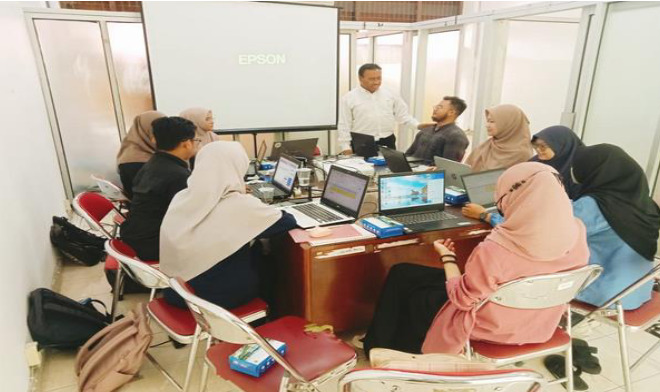
This community service aims to teach the people of Solo about the importance of religiosity in minimising conflict and violence. In the context of Solo's multicultural and multireligious society, conflict and violence often arise as a result of tensions between groups or individuals of different faiths. Through strengthening religiosity, we hold a series of activities such as seminars, workshops, and group discussions to increase understanding of religious values that value peace and tolerance. The active participation of various community groups, including religious leaders, community leaders, and youth, enables a rich exchange of views and a deeper understanding of how religiosity can be the foundation for building a peaceful and harmonious society. Evaluation of activities shows an increased understanding of the importance of religiosity in dealing with conflict and violence. At the end of the project, there was an increase in awareness of the importance of interfaith cooperation and rejection of conflict and violence as a solution to differences of faith. Thus, this dedication is the first step in efforts to build a more tolerant and peaceful society in Solo.
References
D. Anurogo, N. S. Sasmita, U. A. Syarif, R. Awaliah, B. M. Rachman, and J. Yi, “The Art of Healthy Neurophilocommunication,” vol. 1, no. 2, pp. 63–82, 2023, https://doi.org/10.23917/mier.v1i2.2893.
M. A. Wicagsono, B. Muhammad, and A. Muhammad, “Strategies for Improving Teacher Pedagogic Competence Industrial Revolution Era 4 . 0,” vol. 1, no. 1, pp. 15–25, 2023, https://doi.org/10.23917/mier.v1i1.2816.
E. Firmansyah and R. N. Fadli, “Spirituality as a Paradigm of Peace Education,” vol. 1, no. 1, 2023, https://doi.org/10.23917/mier.v1i1.2813.
D. Anurogo, “Ecofeminism 5.0,” vol. 1, no. 1, pp. 36–51, 2023, https://doi.org/10.23917/mier.v1i1.2828.
D. Rizal Munir, M. Maftuhah, I. Najmi, S. Amin, and M. Bensar, “Singing Methods to Improve College Students’ Arabic Vocabulary,” Multicult. Islam. Educ. Rev., vol. 1, no. 1, pp. 52–62, Sep. 2023, https://doi.org/10.23917/mier.v1i1.2677.
D. Anurogo, Hardin La Ramba, Nabila Diyana Putri, and Ulfah Mahardika Pramono Putri, “Digital Literacy 5.0 to Enhance Multicultural Education,” Multicult. Islam. Educ. Rev., vol. 1, no. 2, pp. 109–179, Dec. 2023, https://doi.org/10.23917/mier.v1i2.3414.
E. B. Wiranto, Suranto, Muhammad Maga Sule, and Nagoor Gafoordeen, “The Baseline of Multicultural Education: An Examination from Islamic and Buddhist Standpoints,” Multicult. Islam. Educ. Rev., vol. 1, no. 2, pp. 96–108, Dec. 2023, https://doi.org/10.23917/mier.v1i2.2895.
M. Mahmudulhassan, W. Waston, and A. Nirwana AN, “The Rights and Status of Widows in Islam: A Study from the Perspective of Multicultural Islamic Education in the Context of Bangladesh,” Multicult. Islam. Educ. Rev., vol. 1, no. 1, pp. 01–14, Sep. 2023, https://doi.org/10.23917/mier.v1i1.2674.
M. Muhtar Arifin Sholeh, Waston, A. Nirwana AN, and S. Hidayat, “Good Character, Good Deeds and Good Speech for Developing Multicultural Islamic Education: An Islamic Concept,” Multicult. Islam. Educ. Rev., vol. 1, no. 2, pp. 180–195, Dec. 2023, https://doi.org/10.23917/mier.v1i2.3427.
F. Tamami, S. Rahmawati, M. N. R. Maksum, M. S. Apriantoro, Muchammad Taufiq Affandi, and Shaifurrokhman Mahfudz, “Accusations of Islamophobia and Radicalism Against Muslim Women in Hijab in Indonesia: A Bibliometric Analysis,” Multicult. Islam. Educ. Rev., vol. 1, no. 2, pp. 83–95, Dec. 2023, https://doi.org/10.23917/mier.v1i2.3023.
S. Karim and Z. Lessy, “The contribution of the regional child protection commission of Bangka Belitung in dealing with children victims of sexual violence,” Gend. Equal. Int. J. Child Gend. Stud., vol. 8, no. 1, p. 47, 2022, https://doi.org/10.22373/equality.v8i1.12192.
A. dan I. N. Nurrohim, “Hikmah dalam Al-Qur’an: Studi Tematik Terhadap Tafsir Al-Mizan,” Profetika J. Stud. Islam, vol. 20, no. 2, pp. 179–189, 2019, https://doi.org/10.23917/profetika.v20i2.9954.
R. Hartati, M. Muthoifin, and M. Jinan, “Smartphones and the Effect of Its Use in Early Children on Students’ Learning Interest,” Profetika J. Stud. Islam, vol. 24, no. 01, pp. 149–158, 2023, https://doi.org/10.23917/profetika.v24i01.1741.
A. Diana and M. Z. Azani, “The Concept and Context of Islamic Education Learning in the Digital Era : Relevance and Integrative Studies,” Profetika J. Stud. Islam, vol. 25, no. 1, pp. 33–44, 2024, https://doi.org/10.23917/profetika.v25i01.4239.
M. S. Apriantoro, E. R. Puspa, D. I. Yafi, D. A. Putri, and R. Irfan Rosyadi, “Beyond Mortgages: Islamic Law and the Ethics of Credit Financing for Public Housing,” Profetika J. Stud. Islam, vol. 24, no. 02, pp. 196–206, 2023, https://doi.org/10.23917/profetika.v24i02.1795.
Z. Rahmah, S. Syafrilsyah, and F. Fatmawati, “Religiusitas dan Kecenderungan Melakukan Kekerasan dalam Rumah Tangga,” J. Stud. Insa., vol. 8, no. 1, p. 10, 2020, https://doi.org/10.18592/jsi.v8i1.3556.
M. Faisal Purnomosidi, A. Nirwana AN, and Q. Butlam, “The Application Of The Principle Of Coherence In Al-Hashr: Perspective Of Qawaid Tafsir By Kholid Bin Utsman Al-Sabt,” Profetika J. Stud. Islam, vol. 25, no. 01, pp. 15–32, Feb. 2024, https://doi.org/10.23917/profetika.v25i01.2500.
B. Nugraha and A. R. Rosyadi, “Module Development Of Gender Harmony In Islamic Education Perspective,” Profetika J. Stud. Islam, vol. 25, no. 1, pp. 45–54, 2024, https://doi.org/10.23917/profetika.v25i01.3846.
M. Fatimah, A. Husaen Sastra Negara, W. Waston, S. Hidayat, A. Abdul Adzim, and M. Zakir Husain, “Teacher Communication Patterns To Improve Students’ Religious Character Values At Vocational Schools,” Profetika J. Stud. Islam, vol. 24, no. 02, pp. 217–225, 2023, https://doi.org/10.23917/profetika.v24i02.2063.
M. Mulia, “Bahaya Radikalisme Dan Kekerasan Ekstrismisme,” Al-Wardah, vol. 12, no. 2, p. 96, 2019, https://doi.org/10.46339/al-wardah.v12i2.137.
A. Nurish, “Dari Fanatisme Ke Ekstremisme: Ilusi, Kecemasan, Dan Tindakan Kekerasan,” J. Masy. dan Budaya, vol. 21, no. 1, p. 31, 2019, https://doi.org/10.14203/jmb.v21i1.829.
A. M. Yahya, M. A. K. Hasan, and A. N. AN, “Rights Protection Guarantee for the Partners of Indonesian Gojek Company according to Labour Laws no 13 of 2033 and Maqasid,” Al-Manahij J. Kaji. Huk. Islam, vol. 16, no. 1, pp. 115–132, May 2022, https://doi.org/10.24090/mnh.v16i1.6382.
A. Wahid, M. Ibrahim, B. A. Shomad, A. Nirwana AN, and D. Damanhuri, “Utilizing Zuhd Hadiths For Upper-Class Crime Prevention,” J. Ilm. Islam Futur., vol. 23, no. 2, pp. 263–282, Aug. 2023, https://doi.org/10.22373/jiif.v23i2.17353.
N. Yahya, A. Nirwana, G. Giyoto, and S. D. Raharjo, “The Cases Of Student Burnout At Independent Doktor,” Profetika J. Stud. Islam, vol. 23, no. 2, 2022, https://doi.org/10.23917/profetika.v23i2.19643.
H. Hidayah, S. Sa’ad, and A. Rosa, “TRANSNATIONAL ISLAMIC MOVEMENTS IN INDONESIA,” Profetika J. Stud. Islam, vol. 25, no. 01, pp. 55–66, Feb. 2024, https://doi.org/10.23917/profetika.v25i01.2494.
N. Ahmad and A.-N. Fikri R, “Makna Kafir Dalam Tafsir Muhammadiyah: Studi Analisis Komparatif,” Profetika J. Stud. Islam, vol. 22, no. 1, pp. 159–168, 2021, https://doi.org/10.23917/profetika.v22i1.14774.
A. Amrin, K. Khairusoalihin, and M. Muthoifin, “Tax Modernization in Indonesia: Study of Abu Yusuf’s Thinking on Taxation in the Book of Al-Kharaj,” Profetika J. Stud. Islam, vol. 23, no. 1, pp. 30–42, 2021, https://doi.org/10.23917/profetika.v23i1.16792.
S. Suri, I. Irwanto, S. Akhyar, and A. N. AN, “Scientific Interpretation Study: Al Jawahir’s Review of the Interpretation of the Qur’an on the Composition of the Earth Elements in Adam’s Body,” Profetika J. Stud. Islam, vol. 23, no. 1, pp. 13–19, 2021, https://doi.org/10.23917/profetika.v23i1.16790.
W. A. Indriastuti, E. Wigati, T. Wahyuningsih, and M. Muthoifin, “The Effect of Diversity of Halal Food Products and Promotion on the Interest of Tourists,” Profetika J. Stud. Islam, vol. 23, no. 2, pp. 305–320, 2022, https://doi.org/10.23917/profetika.v23i2.19670.
W. Waston, A. R. Ridha, and K. Kumaidi, “Theoretical Construct and Development of Wasatiyah Measurement Instruments,” Profetika J. Stud. Islam, vol. 24, no. 01, pp. 137–148, 2023, https://doi.org/10.23917/profetika.v24i01.1730.
Sahman Z, Rizka, Muhammad Taufiq Affandi, Anindya Salsabila, and Muthoifin, “Productive Zakat Distribution of Building Village Model To Increase Mustahiq Income,” Profetika J. Stud. Islam, vol. 24, no. 02, pp. 292–303, 2023, https://doi.org/10.23917/profetika.v24i02.3171.
Jinan and Mutohharun, “Kritis Pemikiran Karakter Dan Budi Pekerti Dalam tinjauan Islam,” Profetika, vol. 16, no. 2, pp. 167–180, 2015, https://doi.org/10.23917/profetika.v16i2.1852.
A. Waluyo, “Efektifitas Penerapan Relaksasi Nafas Dalam Pada Pasien Skizofrenia Dengan Resiko Perilaku Kekerasan,” J. Kesehat. Panca Bhakti Lampung, vol. 10, no. 2, p. 64, 2022, https://doi.org/10.47218/jkpbl.v10i2.153.
A. Akhmad, I. Hadi, A. Askrening, and I. Ismail, “Efektivitas Terapi Spritual Shalat dan Dzikir terhadap Kontrol Diri Klien Penyalahgunaan Napza,” Heal. Inf. J. Penelit., vol. 11, no. 2, pp. 77–90, 2019, https://doi.org/10.36990/hijp.v11i2.148.
M. Muthoifin and M. Muzakkir, “Konsepsi Jihad Perspektif Abdullah Azzam Dalam Buku Di Bawah Naungan Surat Al-Taubah,” Profetika J. Stud. Islam, pp. 150–163, 2019, https://doi.org/10.23917/profetika.v19i2.8123.
M. Muhamad Subhi Apriantoro, “The Epistemology of Ushul Fiqh Al-Ghazali in His Book Al-Mustashfa Min Ushuf Fiqh,” Profetika J. Stud. Islam, vol. 22, no. 2, pp. 229–236, 2021, https://doi.org/10.23917/profetika.v22i2.16668.
M. Fatimah, M. Mustofa, Rizkiy Pratama Putra, M. M. Abu Zinah, and M. Masuwd, “Optimization of the Principal’s Role As a Supervisor To Improve the Performance of Teachers in Surakarta,” Profetika J. Stud. Islam, vol. 24, no. 02, pp. 207–216, 2023, https://doi.org/10.23917/profetika.v24i02.1986.
M. Meriyati, M. N. Agus Saputra, I. Arifin, M. Panorama, and M. S. Mubarak Bin Humaid, “Maqasid Sharia’s View on the Scarcity of Subsidized Fertilizers on the Welfare of Farmers in East Oku Indonesia,” Profetika J. Stud. Islam, vol. 24, no. 02, pp. 187–195, 2023, https://doi.org/10.23917/profetika.v24i02.1954.
D. Noviani, I. Arifin, M. S. Mubarak, and B. Humaid, “Implementation Of Ushul Fiqh As A Legal Basis For Solving Sharia-Based Economic Problems,” Profetika J. Stud. Islam, vol. 25, no. 1, pp. 57–72, 2024, https://doi.org/10.23917/profetika.v25i01.4127.
D. Istiawan, A. G. Santoso, Rosidin, and Ika Safitri Windiarti, “Religious Harmony Index in Special Region of Yogyakarta,” Profetika J. Stud. Islam, vol. 24, no. 02, pp. 171–186, 2023, https://doi.org/10.23917/profetika.v24i02.1900.
S. Rahmadani and V. F. Sari, “Pengaruh Gender dan Religiusitas terhadap Penggelapan Pajak,” Wahana Ris. Akunt., vol. 11, no. 2, p. 124, 2023, https://doi.org/10.24036/wra.v11i2.124607.
M. R. Ridlo, I. Rosyadi, and M. Muthoifin, “The Law Of Nasab For Children Born Outside Of Legal Marriage According To Imam Ibn Qayyim Al-Jauziyyah حكم نسب الولد في نكاح الحامل من الزنا غير محصن عند الإمام ابن قيم الجوزية,” Profetika J. Stud. Islam, vol. 23, no. 2, pp. 321–330, Aug. 2022, https://doi.org/10.23917/profetika.v23i2.19671.
T. Usman Karofi, “Baseline Survey Of Tsangaya Qur’anic Schools In Taraba State Nigeria,” Profetika J. Stud. Islam, vol. 25, no. 01, pp. 01–14, Feb. 2024, https://doi.org/10.23917/profetika.v25i01.4249.
K. Nugroho, M. Z. Kiram, and D. Andriawan, “The Influence Of Hermeneutics In Double Movement Theory (Critical Analysis Of Fazlurrahman’s Interpretation Methodology),” QiST J. Quran Tafseer Stud., vol. 2, no. 3, pp. 275–289, Aug. 2023, https://doi.org/10.23917/qist.v2i3.2531.
W. Parwanto and E. A. Z. Engku Alwi, “The Pattern of Sufism on Interpretation of Q.S. Al-Fatihah in the Tafsir Manuscript By M. Basiuni Imran Sambas, West Kalimantan,” QiST J. Quran Tafseer Stud., vol. 2, no. 2, pp. 163–179, 2023, https://doi.org/10.23917/qist.v2i2.1472.
S. Mangasik, C. H. Soetjiningsih, and K. S. Wacana, “Analisis Forgiveness Istri Terhadap Suami yang Melakukan Kekerasan dalam Rumah Tangga,” J. Bimbing. dan Konseling Indones., vol. 7, no. 1, pp. 54–62, 2022, https://doi.org/10.23887/jurnal_bk.v7i1.1070.
N. Nali, B. Prasetiya, And H. R. Halili, “Hubungan Kegiatan Keagamaan Dan Motivasi Religiusitas Terhadap Kesehatan Mental Anggota Majelis Taklim Nurul Hidayah,” J. Pendidik. Islam Al-Ilmi, vol. 4, no. 2, p. 218, 2021, https://doi.org/10.32529/al-ilmi.v4i2.1251.
R. Adiansyah, A. Sofia, M. Bensar, A. Adams, and M. A. Barakat, “Roland Barthes Semiotic Study: Understanding The Meaning Word Of ’Azab, A Reinterpretation For Modern Society,” QiST J. Quran Tafseer Stud., vol. 2, no. 3, pp. 255–274, Jul. 2023, https://doi.org/10.23917/qist.v2i3.1445.
S. A. Munandar and S. Amin, “Contemporary Interpretation of Religious Moderation in the Qur’an: Thought Analysis Quraish Shihab and Its Relevance in the Indonesian Context,” QiST J. Quran Tafseer Stud., vol. 2, no. 3, pp. 290–309, 2023, https://doi.org/10.23917/qist.v2i3.1448.
A. N. AN, S. Suri, S. Akhyar, M. Amin, S. Hidayat, and D. Junaedi, “Exploration of Wasatiyah Diction to Realize Sustainable Tolerance Between Religious Communities: A Study of the Translation of the Quran of the Ministry of Religious Affairs of The Republic of Indonesia,” J. Law Sustain. Dev., vol. 11, no. 12, p. e2148, Dec. 2023, https://doi.org/10.55908/sdgs.v11i12.2148.
U. Saprudin, J. Junaedi, K. Kerwanto, and D. Anurogo, “Limiting The Number Of Polygamies To Realize Economic Justice: A Hermeneutic Analysis Of Muhammad Syahrur,” QiST J. Quran Tafseer Stud., vol. 2, no. 3, pp. 347–368, Sep. 2023, https://doi.org/10.23917/qist.v2i3.2769.
N. H. Rochmah and A. Munir, “Interpretation Of The Quran With A Philanthropic Approach (Tafsir At-Tanwir Study By Majelis Tarjih Dan Tajdid Pp Muhammadiyah),” QiST J. Quran Tafseer Stud., vol. 2, no. 3, pp. 310–330, Sep. 2023, https://doi.org/10.23917/qist.v2i3.1903.
M. M. Sule, “Response To Muslims Da’wah Activities’ By Non-Muslims In Akwanga And Nassarawa Eggon Local Government Areas Of Nasarawa State, Nigeria,” QiST J. Quran Tafseer Stud., vol. 3, no. 1, pp. 23–39, Dec. 2023, https://doi.org/10.23917/qist.v3i1.3110.
N. Fadli, “Contribution Of Acehnese Scholars To The Development Of Quranic Exegesis In Indonesia: A Study Of Tengku Muhammad Hasbi Ash-Shiddieqy And His Work ‘Tafsir An-Nuur,’” QiST J. Quran Tafseer Stud., vol. 3, no. 1, pp. 1–22, Dec. 2023, https://doi.org/10.23917/qist.v3i1.3381.
A. Abulmajd, “What Is The Model Of Muslim Relations With The Kaaba From The Perspective Of The Qur’an,” QiST J. Quran Tafseer Stud., vol. 3, no. 1, pp. 107–145, Dec. 2023, https://doi.org/10.23917/qist.v3i1.3583.
A. Romadhona, M. S. Apriantoro, and L. M. Rasyid, “Exploring The Distinctive Features Of Indonesian Tafsir Al-Quran: A Study Of Sheikh Abdul Latif Syakur’s Ad-Da’wah Wa Al-Irsyād Ilā Sabīli Ar-Rasyād,” QiST J. Quran Tafseer Stud., vol. 3, no. 1, pp. 91–106, Dec. 2023, https://doi.org/10.23917/qist.v3i1.2912.
B. Abdoulaye, Y. F. Rozy, and A. S. Konate, “Muhammad Ibn Abdul Wahhab’s Perspective About The Verses Of The Qur’an Regarding The Science Of Theology,” QiST J. Quran Tafseer Stud., vol. 3, no. 1, pp. 57–74, Dec. 2023, https://doi.org/10.23917/qist.v3i1.2913.
Y. F. Rozy, Y. Matsuyama, and D. Sijamhodžić-Nadarević, “The Development Of Qur’an Commentators’ Requirements: From The Affirmative Era To The Reformative Era,” QiST J. Quran Tafseer Stud., vol. 3, no. 1, pp. 75–90, Dec. 2023, https://doi.org/10.23917/qist.v3i1.2910.
T. R. Wawointana, K. Dareda, A. A. Laya, J. Sasuit, T. No, and S. Utara, “Hubungan Pola Asuh Orang Tua Dengan Masalah Ketergantungan Minuman Alkohol Pada Siswa SMK Nasional Molompar Minahasa Tenggara,” J. Kesehat. Amanah, vol. 4, no. 2, 2020, https://doi.org/10.57214/jka.v4i2.189.
E. Risnawati, A. Arisandi, and R. Dawanti, “Peran Religiusitas dan Psychological Well-Being terhadap Resiliensi Korban KDRT,” J. Ilm. Psikol. Mindset, vol. 10, no. 02, pp. 67–77, 2020, https://doi.org/10.35814/mindset.v10i02.836.
D. Robiansyah, B. L. Syah, A. E. Pasetyo, and A. N. M. Afandi, “Excessive Lifestyle According To Al Munir Tafsir By Wahbah Az Zuhaili,” QiST J. Quran Tafseer Stud., vol. 2, no. 1, pp. 18–43, 2022, https://doi.org/10.23917/qist.v2i1.1278.
P. Armita and M. F. M. Saad, “The Concept of Writing in the Qur’an: Analysis of the Terms Kataba, Khat, and Satara,” QiST J. Quran Tafseer Stud., vol. 2, no. 1, pp. 68–87, 2022, https://doi.org/10.23917/qist.v2i1.1339.
A. Rohman, B. Mubaroka, and Q. Butlam, “Methodology of Tafseer Al-Qurtubi: Sources, Styles and Manhaj,” QiST J. Quran Tafseer Stud., vol. 2, no. 2, pp. 180–202, 2023, https://doi.org/10.23917/qist.v2i2.1451.
Z. Arifin, M. R. Hasan, and A. R. A. Haqqi, “Qat’I and Zanni Debate From the Perspective of Qur’Anic Studies,” QiST J. Quran Tafseer Stud., vol. 2, no. 1, pp. 63–67, 2022, https://doi.org/10.23917/qist.v2i1.1248.
A. A. M. Alhaj, “Exploring Syntactic and Cultural Problems Faced By Translators in Translating the Quranic Arabic Hope Word L-Amalu لَمَألْا in Surahs Al-Hijr and Al-Kahf Into English,” QiST J. Quran Tafseer Stud., vol. 2, no. 2, pp. 116–133, 2023, https://doi.org/10.23917/qist.v2i2.1679.
T. Saumantri, “Hyper Religiusitas di Era Digital: Analisis Paradigma Postmodernisme Jean Baudrillard Terhadap Fenomena Keberagamaan di Media Sosial,” Al-Mutharahah J. Penelit. dan Kaji. Sos. Keagamaan, vol. 20, no. 1, pp. 107–123, 2023, https://doi.org/10.46781/al-mutharahah.v20i1.646.
A. Sutrisno, M. R. Haqiqi, B. M. Roza, and M. M. Dalail, “Qur’Anic Insights on Religious Moderation and Its Relevance To Religious Harmony in Indonesia,” QiST J. Quran Tafseer Stud., vol. 2, no. 1, pp. 102–115, 2023, https://doi.org/10.23917/qist.v2i1.1470.
I. Ridha, M. M. A. Zinah, M. Subhi, and M. Nasir, “The Qur’an’s Statement About The Etiquette Of Dealing With The Holy Qur’an From Sayyid Qutb’s Perspective In His Interpretation Of (Adh-Dhilal): An Analytical Study,” QiST J. Quran Tafseer Stud., vol. 3, no. 1, pp. 40–56, Dec. 2023, https://doi.org/10.23917/qist.v3i1.2874.
A. Saiin and M. Karuok, “The Concept of Sense in the Qur’an: Tazakkur, Nazara, and Tadabbur As the Basic Human Potential Towards a Superior Human Being,” QiST J. Quran Tafseer Stud., vol. 2, no. 1, pp. 44–62, 2022, https://doi.org/10.23917/qist.v2i1.1288.
Y. M. Soeli, R. Djunaid, A. Rizky, and D. Rahman, “Analisis Faktor yang Berhubungan Dengan Kejadian Perilaku Kekerasan Pada Remaja,” Jambura Nurs. J., vol. 1, no. 2, pp. 85–95, 2019, https://doi.org/10.37311/jnj.v1i2.2511.
I. Nurmansyah, S. K. Oktaviana, and M. A. A. Azid, “Human Pig Heart Transplant: Application Of Abdullah Saeed’s Contextual Approach To Qs. Al Maidah Verse 3,” QiST J. Quran Tafseer Stud., vol. 2, no. 2, pp. 238–254, Apr. 2023, https://doi.org/10.23917/qist.v2i2.1469.
Y. F. Rozy, A. Benichou, and N. Gafoordeen, “The Hermeneutics Influence On Feminist Exegesis: A Case Study On Amina Wadud,” QiST J. Quran Tafseer Stud., vol. 2, no. 3, pp. 369–381, Oct. 2023, https://doi.org/10.23917/qist.v2i3.2908.