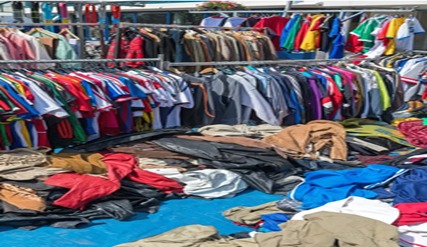
The Sale and Use of Second-Hand Clothing in Islamic Law
DOI:
https://doi.org/10.61455/deujis.v3i03.584Keywords:
second-hand clothing, islamic law, sharia compliance, online transactions, ghararAbstract
Objective: This study aims to analyze the sale and use of second-hand clothing from the perspective of Islamic law, with particular attention to the growing practice of trading imported used clothing through social media platforms in Indonesia. The study examines whether such transactions comply with the principles and requirements of Sharia in commercial activities. Theoretical framework: The research is grounded in Islamic commercial jurisprudence (fiqh al-muamalah), emphasizing the principles of lawful trade, transparency, mutual consent, fairness, and the prohibition of uncertainty (gharar) and deception in economic transactions. Literature review: Previous studies generally acknowledge that Islam permits trade and encourages economic activities that fulfill legal and ethical requirements. However, scholars have highlighted concerns regarding transactions involving ambiguity in product quality, quantity, ownership, and condition, particularly in the context of second-hand goods and online commerce. These concerns are closely associated with the concept of gharar, which may undermine transactional justice. Method: This study employs a descriptive qualitative approach. Data were analyzed through a Sharia review of second-hand clothing transactions conducted via Instagram and compared with the realities of market practices. The analysis focuses on the conformity of such transactions with Islamic legal principles governing trade and exchange. Results: The findings indicate that Islam fundamentally permits buying and selling activities, including transactions involving used goods, provided that all contractual pillars and conditions are fulfilled. Nevertheless, the widespread practice of selling imported second-hand clothing in bulk packages often involves items whose quantity, quality, size, and physical condition are unknown to buyers at the time of purchase. This uncertainty creates speculative elements and increases the possibility of deception. Consequently, such transactions may contain gharar and are therefore inconsistent with Sharia principles governing commercial dealings. Implications: The findings encourage traders and consumers to improve transparency and product disclosure in second-hand clothing transactions to ensure Sharia compliance. Novelty: This study contributes by specifically examining Instagram-based imported second-hand clothing transactions through the lens of Islamic commercial law and the concept of gharar.
References
Y. Yoyo, M. Hussin, A. Rahman, A. R. Zaini, and R. Ru’iya, “Cultural Perceptions Of Santri On Arabic Language Learning,” J. Pendidik. Islam, vol. 9, no. 2, pp. 187–198, 2023, https://doi.org/10.15575/jpi.v9i2.24103.
S. Mohammed and R. Emil Larsen-Reindorf, “Menstrual knowledge, sociocultural restrictions, and barriers to menstrual hygiene management in Ghana: Evidence from a multi-method survey among adolescent schoolgirls and schoolboys,” PLoS One, vol. 15, no. 10 October, 2020, https://doi.org/10.1371/journal.pone.0241106.
O. Schihalejev, A. Kuusisto, L. Vikdahl, and A. Kallioniemi, “Religion and children’s perceptions of bullying in multicultural schools in Estonia, Finland and Sweden,” J. Beliefs Values, vol. 41, no. 3, pp. 371–384, 2020, https://doi.org/10.1080/13617672.2019.1686732.
D. Sirdeshmukh, J. Singh, and B. Sabol, “Consumer trust, value, and loyalty in relational exchanges,” J. Mark., vol. 66, no. 1, pp. 15–37, 2002, https://doi.org/10.1509/jmkg.66.1.15.18449.
L. Yana and A. Trigiyatno, “Pemenuhan Hak Nafkah Anak Pasca Perceraian,” Al-Hukkam J. Islam. Fam. Law, vol. 2, no. 2, pp. 113–122, 2022, https://doi.org/10.28918/al-hukkam.v2i2.
M. Harry and M. Fajarani, “Examining the Provision of Legal and Religious Education to Islamic Families to Safeguard the Rights and Well-Being of Women and Children: A Case Study Conducted in Malang Regency, East Java,” Samarah, vol. 8, no. 3, pp. 1526–1546, 2024, https://doi.org/10.22373/sjhk.v8i3.19566.
E. Rahmawati, F. Abdul Aziz, and G. Raudhatul Jannah, “The Phenomenon of the Hijab Wrapping Tightly in the Qur’an Sunnah Review and its Comparison with the Veil and Burqa,” Bull. Islam. Res., vol. 2, no. 1, pp. 93–112, Jun. 2024, https://doi.org/10.69526/bir.v2i1.24.
A. Hamid, M. Said, and E. Meiria, “Potency and Prospect of Halal Market in Global Industry: An Empirical Analysis of Indonesia and United Kingdom,” Bus. Manag. Stud., vol. 5, no. 2, p. 54, 2019, https://doi.org/10.11114/bms.v5i2.4167.
M. Y. Yusuf, I. Djakfar, Isnaliana, and H. Maulana, “Social Sciences & Humanities Halal Tourism to Promote Community ’ s Economic Growth : A Model for Aceh, Indonesia,” Pertanika J. Soc. Sci. Hum., vol. 29, no. 4, pp. 2869–2891, 2021, https://doi.org/10.47836/pjssh.29.4.42.
K. Y. Salaam, Women’s rights are human rights, vol. 10, no. 6–7. 1979. https://doi.org/10.1080/00064246.1979.11414043.
S. M. Hoover, Religion in the media age, vol. 113, no. 9. 2002. https://doi.org/10.1177/001452460211300904.
R. Priyatmoko and A. Maulana, “Halal Tourism And Its Misconceptions: A Study on The Rejection of Indonesian Non-Muslim Destinations,” Dinar J. Ekon. dan Keuang. Islam, vol. 9, no. 1, pp. 74–87, 2022, https://doi.org/10.21107/dinar.v9i1.13976.
K. F. Maulinda, L. W. Purnama, M. A. Marelyno, S. Sa, and F. Hidayat, “Review of Islamic Family Law : Social Implications and Juridical Implementation in the Family Context in Indonesia,” Demak Univers. J. Islam Sharia, vol. 2, no. 3, pp. 271–290, 2024, https://doi.org/10.61455/deujis.v2i03.159.
S. Z, “The Practice of Buying and Selling Fish with a Tariff System in Fishing Islamic Law Perspective,” Demak Univers. J. Islam Sharia, vol. 1, no. 2, pp. 143–153, 2023, https://doi.org/10.61455/deujis.v1i02.62.
E. Abazi, “Importing Religion into Post-Communist Albania: Between Rights and Obligations,” Religions, vol. 14, no. 5, 2023, https://doi.org/10.3390/rel14050658.
C. for E. D. and S. and C. Ministry of Education and Culture, “The Management of National Education in Year 2014/2015 at a Glance,” in Ministry of Education and Culture, Indonesia: Division of Utilization and Services. – Jakarta: Center for Educational and Cultural Data and Statistics, MoEC, 2016, 2016, p. 124. [Online]. Available: http://publikasi.data.kemdikbud.go.id/uploadDir/isi_6549DA84-7A7F-44B5-AD22-829B1F002A4F_.pdf
“Optimizing educational research findings to improve the quality of life 2 0 1 7,” 2017, pp. 8–9.
B. B. Zaman, M. T. Affandi, and A. Benichou, “Professional Work and Productive Work to Improve the People’s Economy: an Analysis Based on Prophetic Revelation,” Demak Univers. J. Islam Sharia, vol. 1, no. 2, pp. 131–142, 2023, https://doi.org/10.61455/deujis.v1i02.20.
M. Apriantoro, A. Suryaningsih, and M. M, “Bibliometric Analysis of Research Development of Economic Dispute Settlement,” in EUDL European Union Digital Library, 2023. https://doi.org/10.4108/eai.19-10-2022.2329068.
M. M. Nugroho. M, “Outsourcing System in View of Islamic Law : Study on Employees at Universitas Muhammadiyah Surakarta,” in Proceedings of the International Conference on Engineering, Technology and Social Science (ICONETOS 2020), Atlantis Press, 2021, pp. 91–95.
M. M, I. Amelia, and A. B. Eprahim Ali, “Islamic accounting: Ethics and contextualization of recording in Muamalah transactions,” Multidisciplinary Rev., vol. 7, no. 8, p. 2024132, May 2024, https://doi.org/10.31893/multirev.2024132.
D. Astuti, E. Supriyanto, and M. M, “Model Penjaminan Mutu Ketercapaian Kompetensi Dasar Dalam Sistem Pembelajaran Online Pada Situasi Work From Home (Wfh),” Profetika J. Stud. Islam, vol. 21, no. 1, pp. 129–139, 2020, https://doi.org/10.23917/profetika.v21i1.11655.
A. Husaini. M, Didin Saefuddin, “Pemikiran Pendidikan Ki Hadjar Dewantara Dalam Perspektif Pendidikan Islam,” Ta’dibuna J. Pendidik. Islam, vol. 2, no. 2, pp. 155–200, 2013.
M. and A. H. Anfas, “Optimizing the Potential of Zakat to Alleviate Poverty Problems and Improve Community Economy in Surakarta City,” J. Ecohumanism, vol. 3, no. 3, pp. 121–127, 2024, https://doi.org/10.62754/joe.v3i3.3394.
M, Q. Q. Yusran, . M., . N., . W., and A. Nirwana, “The Practice of Changing the Status of Change of Waqf Property in the Islamic Social Economic View,” J. Ecohumanism, vol. 3, no. 6, pp. 229–238, Sep. 2024, https://doi.org/10.62754/joe.v3i6.3996.
A. Nirwana et al., “The Role of Traditional Salt Production in Achieving Halal Standards of the Ulamaconsultative Council: Implications for Sustainable Development Goals,” J. Lifestyle SDG’S Rev., vol. 4, no. 2, pp. 1–47, 2024, https://doi.org/10.47172/2965-730X.SDGsReview.v4.n02.pe01721.
A. Umi Markhamah Zahra Ayyusufi and A. Anshori, “Evaluation of the CIPP Model on the Tahfidz Program in Islamic Boarding Schools,” Nazhruna J. Pendidik. Islam. Pendidik. Islam, vol. 5, no. 2, pp. 466–484, 2022, https://doi.org/10.31538/nzh.v5i2.2230.
Nuha. M, “Mengungkap Isi Pendidikan Islam Perspektif Al- Qur ’ an Surat Al -Ashr Ayat 1-3,” in The 7th University Research Colloqium 2018 STIKES, 2018, pp. 206–218.
Y. E. Prayitno, F. Hidayat, and P. A. Widodo, “The Agreement to Buy and Sell Mu’athah in Supermarkets Reviewed from the Rules of Fiqhiyah Al-Istihsanu bil ’Urf,” Demak Univers. J. Islam Sharia, vol. 2, no. 1, pp. 15–26, 2024, https://doi.org/10.61455/deujis.v2i01.84.
Erna Indasari, “The Role of Affiliates in Consumer Purchase Interest in Online Shops in the Digital Business Era,” Interkoneksi J. Comput. Sci. Digit. Bus., vol. 1, no. 1, pp. 9–18, 2023, https://doi.org/10.61166/interkoneksi.v1i1.2.
M. R. Kurniawan and S. T. Anggraeni, “The Problem of Akad Murabahah in Sharia Banks : Between Profit-Oriented and Sharia Compliance,” Demak Univers. J. Islam Sharia, vol. 2, no. 1, pp. 55–66, 2024, https://doi.org/10.61455/deujis.v2i01.97.
M. G. I. E. Irham Maulana, Nourelhuda S. B. Elmanaya and N. Ubed Abdilah Syarif, “Application of Hadith on Accounts Receivable and Its Implementation in Sharia Bank Guarantees,” Demak Univers. J. Islam Sharia, vol. 1, no. 2, pp. 121–130, 2023, https://doi.org/10.61455/deujis.v1i02.19.
A. H. O. Hussein A.B. Sani, “Liquidity Management and Performance of Deposit Money Banks in Nigeria,” J. Econ-Islamic Law Soc. Res., vol. 1, no. 2, pp. 77–94, 2025, https://doi.org/10.36713/epra3138.
M. D. Arham, A. Said, E. Tarek, and Q. Bezibweki, “Halal Tourism as a Sharia-Based Economic System : Legal, Business, and Sustainability Dynamics at Sheikh Zayed Grand Mosque,” J. Econ-Islamic Law Soc. Res., vol. 2, no. 1, pp. 227–244, 2026.
A. A. Mohamed, M. W. Shohib, and L. E. Rahmawati, “The Contribution of K.H. Ahmad Dahlan’s Thought to the Advancement of the Muslim Community in Indonesia,” J. World Thinkers, vol. 2, no. 1, pp. 153–164, 2024.
R. Al-Sabahi and A. Said, “The Relevance of Abdul Fattah Abu Ghuddah ’ s Educational Thought for Society 5 . 0 and SDGs,” J. World Thinkers, vol. 2, no. 2, pp. 129–146, 2025.
L. Yafi and No., “Parental Economics and SDG-Linked Mobility in Malaysia,” Maktab. Rev. Sustain. Dev. Goals, vol. 2, no. 1, pp. 49–62, 2025.
L. M. Pipit Pinangsih, “Online Loans, Student Lifestyles, and Financial Behavior: Implications for the SDGs,” Maktab. Rev. Sustain. Dev. Goals, vol. 1, no. 2, pp. 131–144, 2024.
L. Yafi and T. Al Mutawakkil, “Innovating Finance: Applying the Nash Concept to Develop a Sustainable Pawn Model Aligned with the SDGs,” Maktab. Rev. Sustain. Dev. Goals, vol. 1, no. 1, pp. 1–12, 2024.
A. Wahyudi, C. R. Utami, and ..., “Halal Certification of Drugs and Food in Normative and Health Review,” Solo Int. Collab. Publ. Soc. Sci. Humanit., vol. 1, no. 3, pp. 154–162, 2023, https://doi.org/10.61455/sicopus.v1i03.56
A. A. Jabbar, M. Achour, E. Geraldine, and I. Afiyah, “The Relevance and Dynamics of Muamalat Transactions in the Context of Modern Economics : A Holistic Review,” Solo Int. Colab. Publ. Soc. Sci. Humanit. Publ. Soc. Sci. Humanit., vol. 2, no. 1, pp. 47–60, 2024, https://doi.org/10.61455/sicopus.v2i01.119.
R. Shodiqoh, “Digital Ethics : Social Media Ethics in a Contemporary Islamic Perspective,” Solo Int. Collab. Publ. Soc. Sci. Humanit., vol. 2, no. 3, pp. 215–226, 2024, https://doi.org/10.61455/sicopus.v2i03.153.
M. Abuzar, L. Yafi, I. Afiyah, and I. Amelia, “Strategy and Implementation of Islamic Personality Development through the Internalization of Religious Values at Madrasah Aliyah Dakka, Bangladesh,” Solo Univers. J. Islam. Educ. Multicult., vol. 2, no. 2, pp. 167–180, 2024, https://doi.org/10.61455/sujiem.v2i02.201.
D. M. Putri, “The Impact of Social Inequality on Educational Quality in Indonesia: Challenges and Policy Recommendations,” Solo Univers. J. Islam. Educ. Multicult., vol. 3, no. 1, pp. 43–56, 2025, https://doi.org/10.61455/sujiem.v3i01.248.
A. Maryanto, “Principal Performance and Leadership in Facing the COVID-19 Pandemic at SMK Muhammadiyah 1 Surakarta,” Solo Univers. J. Islam. Educ. Multicult., vol. 1, no. 2, pp. 118–126, 2023, https://doi.org/10.61455/sujiem.v1i02.65.
T. Sanyoto, N. Fadli, R. Irfan Rosyadi, and M. Muthoifin, “Implementation of Tawhid-Based Integral Education to Improve and Strengthen Hidayatullah Basic Education,” Solo Univers. J. Islam. Educ. Multicult., vol. 1, no. 01, pp. 30–41, 2023, https://doi.org/10.61455/sujiem.v1i01.31.
Q. Arsadani, F. Djamil, A. S. Jahar, and M. A. N. Sholeh, “The Progressiveness of Sharia Economic Fatwas: Direction of Islamic Legal Thoughts within NU and Muhammadiyah,” Ahkam J. Ilmu Syariah, vol. 24, no. 1, pp. 153–170, 2024, https://doi.org/10.15408/ajis.v24i1.37775.
M. N. Siddiqi, “Methodology of Islamic economics,” in Handbook on Islam and Economic Life, Aligarh Muslim University, India: Edward Elgar Publishing Ltd., 2014, pp. 71–89. https://doi.org/10.4337/9781783479825.00009.
S. Khodijah, M. Iqbal Fasa, and Suharto, “Islamic Economics and Business Review,” IslamicEconomicsandBusinessReview, vol. 1, no. 1, pp. 132–144, 2023.
S. Dwiono, A. K. Ja’far, and S. Haryadi, “An Analysis on the Omnibus Law and Its Challenges in Indonesia: The Perspectives of the Constitutional and the Islamic Law,” Samarah, vol. 8, no. 2, pp. 706–725, 2024, https://doi.org/10.22373/sjhk.v8i2.22720.
K. Kamalu and W. H. B. W. Ibrahim, “Islamic banking development and financial inclusion in OIC member countries: The moderating role of institutions,” J. Islam. Monet. Econ. Financ., vol. 7, no. 3, pp. 527–544, 2021, https://doi.org/10.21098/jimf.v7i3.1364.