The Relevance of SDGs and Islamic Legal Principles in Divorce Cases to Judicial Reasoning
DOI:
https://doi.org/10.61455/deujis.v3i02.480Keywords:
islamic family law, judicial reasoning, sdgs, ṭalāq, marriageAbstract
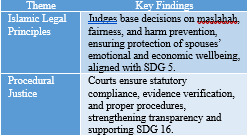
This study investigates the relevance of the Sustainable Development Goals (SDGs) and Islamic legal principles in shaping judicial reasoning in divorce by ṭalāq cases, with empirical attention directed toward a decision from the Selangor, Malaysia Religious Court. Objective: The primary objective is to examine how judicial reasoning incorporates Islamic legal norms, statutory requirements, and SDG commitments—particularly SDG 5 (Gender Equality), SDG 16 (Peace, Justice, and Strong Institutions), and SDG 10 (Reduced Inequalities)—in ensuring procedural justice, fairness, and the protection of vulnerable parties in family law disputes. Theoretical framework: The analysis draws upon Islamic family law, emphasizing maṣlaḥah, justice, and judicial discretion, combined with legal positivism and socio-legal jurisprudence. This framework allows for understanding how judges interpret textual provisions while simultaneously addressing broader social objectives aligned with the SDGs. Literature review: Existing scholarship highlights the significance of judicial discretion in Islamic family law, the evolving social dimensions of divorce litigation, and the tension between formal rules and contextual considerations. However, limited research explicitly addresses the integration of SDG principles into judicial reasoning in Muslim-majority jurisdictions, revealing a gap that this study seeks to fill by linking global development commitments with Islamic judicial practice. Method: Using a qualitative descriptive design, the study analyzes primary data derived from judicial interviews and official court documents, supported by secondary materials such as statutory instruments, Islamic legal texts, and contemporary academic literature. Results: The findings show that judges in Selangor apply a balanced approach that upholds procedural legality while considering the psychological, economic, and social welfare of both spouses. Judicial reasoning demonstrates sensitivity to gender equality, equitable access to justice, and family well-being—aligning implicitly with SDGs—while firmly grounded in Islamic legal principles. The decision-making process reflects harmonization between legal certainty, maṣlaḥah, and the pursuit of substantive justice. Implications: The study offers practical insights for policymakers, legal practitioners, and scholars seeking to integrate SDG-aligned values into Islamic family law jurisprudence. Novelty: Its key contribution lies in articulating how SDG commitments and Islamic legal principles converge within judicial reasoning, offering a new analytical lens for understanding contemporary divorce adjudication in Muslim legal systems.
References
Mustakim, Syafrida, W. Warsito, and Masidin, “Enhancing the Competence of Supreme Court Judges Through the Specialization of Judges at the Supreme Court,” J. IUS Kaji. Huk. dan Keadilan, vol. 12, no. 1, pp. 91–106, 2024, https://doi.org/10.29303/ius.v12i1.1368.
A. Hanapi, S. Aini, and C. E. P. Sari, “Bridging Fiqh and Positive Law: A New Paradigm for Child Legality and the Best Interest of the Child in Indonesia,” Juris J. Ilm. Syariah, vol. 23, no. 2, pp. 293–308, 2024, https://doi.org/10.31958/juris.v23i2.10712.
N. Insani, S. Beddu, R. Rahman, A. Arpin, and M. A. A. Samuri, “Judicial Considerations in Child Marriage Dispensations: An Empirical Study of the Gorontalo Religious Court,” J. Ilm. Al-Syir’ah, vol. 22, no. 1, pp. 41–52, 2024, https://doi.org/10.30984/jis.v22i1.2066.
A. Fitri, M. Bahar, Z. Azwar, M. H. Ediz, and Y. Yusrial, “Divorce Lawsuit Due to Impotence Perspective Maslahat Theory: Case study of the Andoolo Religious Court Decision, Southeast Sulawesi,” El-Usrah, vol. 7, no. 1, pp. 220–236, 2024, https://doi.org/10.22373/ujhk.v7i1.21860.
N. P. Hidayah, G. W. Wicaksono, C. S. K. Aditya, and Y. Munarko, “Artificial Intelligence and Quality of Composition Verdicts in Indonesia: Lessons from New Zealand,” J. Hum. Rights, Cult. Leg. Syst., vol. 4, no. 1, pp. 101–120, 2024, https://doi.org/10.53955/jhcls.v4i1.175.
L. Santoso, A. Amaliyah, and M. Huda, “Refusal Of Polygamy Permit In Religious Court Decision: Criticism of Gender Justice Against Judge’s Legal Reasoning,” Al-Risalah Forum Kaji. Huk. Dan Sos. Kemasyarakatan, vol. 23, no. 2, pp. 160–173, 2023, https://doi.org/10.30631/alrisalah.v23i2.1472.
I. A. Maliki, Z. Z. Ali, and M. Khusaini, “Artificial Intelligence and the Law: The Use of Artificial Intelligence as a Tool to Assist Judges in Deciding Polygamy Cases,” Nurani, vol. 23, no. 2, pp. 211–228, 2023, https://doi.org/10.19109/nurani.v23i2.20152.
U. Supraptiningsih, T. Rahmawati, M. M. Fauzi, and L. Zainab, “Gender Analysis: of Polygamy Permit Based on the Reason of Benefit,” Nurani, vol. 23, no. 2, pp. 365–376, 2023, https://doi.org/10.19109/nurani.v23i2.16937.
M. N. Hadi, F. Syuhadak, and Z. M. Kusrin, “Social Justice And Humanity On Polygamous Marriage At The Religious Court Of Pasuruan-Indonesia,” Justicia Islam, vol. 20, no. 2, pp. 281–300, 2023, https://doi.org/10.21154/justicia.v20i2.7324.
F. Fitriyani, A. S. Jahar, Z. Subhan, and R. Rosdiana, “The Judges’ Legal Consideration on Divorce of Nushūz Cases at the Kupang High Religious Court: Gender Perspective,” Samarah, vol. 7, no. 3, pp. 1971–1989, 2023, https://doi.org/10.22373/SJHK.V7I3.14425.
N. Rahmah, “The Problem Of The Jakarta High Court Decision Number 10 / Pid. Sus-Tpk/2021/Pt Dki Against” MILRev Metro Islam. Law Rev., vol. 2, no. 1, pp. 65–78, 2023, https://doi.org/10.32332/milrev.v2i1.6930.
E. Susylawati, “The Acceptability of Active Judge Principle in Divorce Talak Cases of Religious Courts at Madura to Assure the Wife's Rights,” Al-Ihkam J. Huk. Dan Pranata Sos., vol. 14, no. 2, pp. 267–282, 2019, https://doi.org/10.19105/al-lhkam.v14i2.2435.
A. Liem, V. Julianto, null Kamsi, A. Haq, R. L. Shofa, and Kamilatissa’adah, “Factors associated with child marriage during the COVID-19 pandemic in Indonesia,” Contemp. Islam, vol. 18, no. 3, pp. 457–478, 2024, https://doi.org/10.1007/s11562-023-00545-6.
I. A. Ahyu, null Jamilah, null Yusmita, and I. S. Malik, “Husband’s Nusyuz in Female-Initiated Divorce: A Mubadalah Perspective,” J. Ilm. Mizani, vol. 11, no. 2, pp. 391–400, 2024, https://doi.org/10.29300/mzn.v11i2.5069.
M. Ali, “Measuring ex officio judge rights and application of the ultra petitum partium principle in deciding cases in religious courts,” J. Law Leg. Reform, vol. 5, no. 1, pp. 383–408, 2024, https://doi.org/10.15294/jllr.vol5i1.2314.
L. A. Yuni and J. Kusuma, “The Fulfillment of Women’s Rights in Verstek Decisions at Samarinda and Sangatta Religious Court,” Al-’Adalah, vol. 20, no. 2, pp. 257–282, 2023, https://doi.org/10.24042/adalah.v20i2.16119.
S. Perdana, “The Government As The Intermediate In The Settlement Of Labor Disputes In Indonesia; O Governo Como O Intermediário Na Resolução De Disputas Trabalhistas Na Indonésia,” J. Law Sustain. Dev., vol. 11, no. 6, 2023, https://doi.org/10.55908/sdgs.v11i6.1225.
M. Afandi, J. Nelli, and M. Yunus, “An Examination of Islamic Family Law in Kampar Regency, Riau: Focusing on the Causes and Prevalence of Divorce in the Community,” El-Usrah, vol. 6, no. 2, pp. 298–317, 2023, https://doi.org/10.22373/ujhk.v6i2.19089.
M. Fahmi, M. Iqbal, R. Akbar, and A. R. Nurdin, “Raj’i Talaq Law According to the Shafi’i School in Polyandry Cases (Case Study of Banda Aceh Shar’iyah Court Decision Number 383/Pdt.G/2020/MS. Bna),” El-Usrah, vol. 6, no. 1, pp. 161–173, 2023, https://doi.org/10.22373/ujhk.v6i1.14144.
M. Hayati and N. Ali, “Ex-Officio Rights in Talak Divorce: Study on Judges’ Considerations in the Compliance of Ex-Wife’s Rights,” Maz. J. Pemikir. Huk. Islam, vol. 21, no. 1, pp. 93–116, 2022, https://doi.org/10.21093/mj.v21i1.4219.
K. Anwar, M. S. Bin Awang, and M. M. Sahid, “Maqasid Syariah According To Imam Al-Ghazali And Its Application In The Compilation Of Islamic Law In Indonesia; Maqasid Syariah Menurut Imam Al-Ghazali Dan Aplikasinya Dalam Penyusunan Kompilasi Hukum Islam Di Indonesia,” Malaysian J. Syariah Law, vol. 9, no. 2, pp. 75–87, 2021, https://doi.org/10.33102/mjsl.vol9no2.315.
Maimunah, A. Helim, N. Aina, and R. Adawiyah, “Juridical and Sociological Considerations of Judges in Granting Marriage Dispensation after Enactment Law No. 16 Of 2019,” J. Ilm. Al-Syir’ah, vol. 19, no. 2, pp. 136–148, 2021, https://doi.org/10.30984/jis.v19i2.1460.
A. N. Thaharah, “Criminal Sanctions for Unauthorized Transportation of Protected Animals within the Perspective of the Purpose of Punishment,” Adm. Environ. Law Rev., vol. 4, no. 2, pp. 97–106, 2023, https://doi.org/10.25041/aelr.v4i2.2980.
A. Trigiyatno, “Persaksian talak: Perspektif ulama sunni dan syi’ah imamiyah,” Al-Manahij J. Kaji. Huk. Islam, vol. 14, no. 2, pp. 267–280, 2020, https://doi.org/10.24090/mnh.v14i2.3928.
Y. Oktaber, “The Implementation Of National Regulations On The Division Of Joint Property During Divorce,” Indones. Priv. Law Rev., vol. 4, no. 1, pp. 19–28, 2023, https://doi.org/10.25041/iplr.v4i1.2945.
R. R. D. Anggraeni, I. Imanuddin, and Purmanto, “The Debtor’s Liability For The Loading Of Personal Security In Indonesia,” J. IUS Kaji. Huk. dan Keadilan, vol. 11, no. 1, pp. 17–30, 2023, https://doi.org/10.29303/ius.v11i1.1180.
S. Devy and D. M. Suci, “The implementation of verdict execution on providing Mađiyah maintenance following divorce according to Islamic law (Case study in Syar’iyyah Court Banda Aceh); Pelaksanaan eksekusi putusan pemberian Nafkah Mađiyah pasca perceraian menurut hukum islam (Studi kasus di Mahkamah Syar’iyyah Banda Aceh),” Samarah, vol. 4, no. 2, pp. 416–442, 2020, https://doi.org/10.22373/sjhk.v4i2.6179.
S. Devy, A. Amrullah, and U. Zulfiana, “Divorce Petition Against Drug User Husband: Case Study of Kuala Simpang Syar’iyah Court Decision, Aceh Tamiang,” El-Usrah, vol. 6, no. 2, pp. 281–297, 2023, https://doi.org/10.22373/ujhk.v6i2.12062.
null Muhazir, “Dualisme Peraturan Perceraian Di Aceh Kontestasi Fatwa dan Hukum Negara,” Al-Ahwal, vol. 13, no. 2, pp. 198–208, 2020, https://doi.org/10.14421/ahwal.2020.13208.
R. N. Arifah, A. A. Ahmad, and S. O. Rochmawati, “Trademark Cancellation Of The Pt. Diposin In The Principle Of Legal Certainty By Sudikno Mertokusumo,” El-Mashlahah, vol. 13, no. 1, pp. 17–38, 2023, https://doi.org/10.23971/el-mashlahah.v13i1.5333.
S. C. Van Huis, “Khul’ over the longue durée: The decline of traditional fiqh-based divorce mechanisms in Malaysian legal practice,” Islam. Law Soc., vol. 26, no. 1–2, pp. 58–82, 2019, https://doi.org/10.1163/15685195-00254A05.
E. M. Sholecha, A. Saiful, S. Yunika, H. Hariyanto, and N. Unsil, “Justice Collaborator’s Position and Function on Witness Protection’s Rights as a Suspect from the Perspective of Criminal Law in Indonesia,” Volksgeist J. Ilmu Huk. dan Konstitusi, vol. 6, no. 1, pp. 131–143, 2023, https://doi.org/10.24090/volksgeist.v6i1.7246.
Ö. Düzbakar, “Divorce and Types of Divorce at the End of Seventeenth-century Bursa,” J. Fam. Hist., vol. 41, no. 2, pp. 118–130, 2016, https://doi.org/10.1177/0363199016635218.
N. Sutrisno, D. Heryansyah, S. Hadi, and C. M. Cason, “The Regulation of Defendant’s Religious Identity in Court Decisions,” Bestuur, vol. 10, no. 2, pp. 85–104, 2022, https://doi.org/10.20961/bestuur.v10i2.61409.
A. Noormansyah and U. H. Sanjaya, “The Legal Vacuum Of Interreligious Marriage In Indonesia: The Study Of Judges’ Consideration In Interreligious Marriage Court Decisions 2010-2021,” Prophet. Law Rev., vol. 4, no. 2, pp. 177–194, 2022, https://doi.org/10.20885/PLR.vol4.iss2.art3.
M. Hadiati and F. Ramadhan, “Observing The Differences in Constitutional Court Decision About the Legal Age of Marriage; Meninjau Perbedaan Putusan Mahkamah Konstitusi tentang Norma Batas Usia Minimum Perkawinan,” J. Konstitusi, vol. 19, no. 3, pp. 643–672, 2022, https://doi.org/10.31078/jk1937.
A. E. Ozkul, “The divorce instances in Cyprus under Ottoman rule during the 18th century; 18. Yüzyilda Osmanli Idaresinde Kibris’ta Medana Gelen Bošanma Olaylari,” Belleten, vol. 79, no. 284, pp. 125–162, 2015, [Online]. Available: https://www.scopus.com/inward/record.uri?eid=2-s2.0-84930910932&partnerID=40&md5=98ff8cf6af6819a50f3eb8066f6cd6c1
R. S. Manurung, “Implementation of Criminal Sanctions Against Business Actors In The Sale of Toys Not With Malaysian National Standards,” Qual. - Access to Success, vol. 23, no. 188, pp. 204–208, 2022, https://doi.org/10.47750/QAS/23.188.27.
N. Yusuf, N. Azizah, and F. Hasan, “Feminism Analysis of Judges’ Considerations for Post-Divorce Domestic Violence Victims in Medan and Banda Aceh Religious Courts,” Al-’Adalah, vol. 20, no. 2, pp. 283–308, 2023, https://doi.org/10.24042/adalah.v20i2.16177.
I. K. Makinara, Jamhuri, and F. Arrazi, “Physical Handicap as a Reason for Divorce: Case Study at the Sharia Court, Banda Aceh, Indonesia,” El-Usrah, vol. 6, no. 2, pp. 318–334, 2023, https://doi.org/10.22373/ujhk.v6i2.7836.
R. S. Manurung, “Juridical Review on The Crime of Fraud in The Implementation of The Pyramid Scheme System of Business Actors,” Qual. - Access to Success, vol. 23, no. 188, pp. 139–144, 2022, https://doi.org/10.47750/QAS/23.188.20.