Environmental Stewardship in Islam: Integrating Ethics, Sharia, and Contemporary Da’wah
DOI:
https://doi.org/10.61455/deujis.v3i02.474Keywords:
ummah, environmental stewardship, sharia ethics, islamic da’wah, sustainabilityAbstract
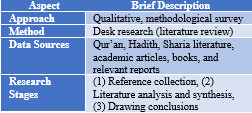
Objective: This study examines the role of the global Muslim community (Ummah) in promoting environmental stewardship by integrating Islamic teachings, Sharia principles, and contemporary Da’wah practices. It aims to highlight environmental protection as a religious and ethical responsibility embedded within Islamic faith and communal obligations. Theoretical framework: The study is grounded in core Islamic concepts, particularly tawhid (the oneness of Allah), khilafah (human stewardship of the earth), and amanah (trust), alongside Qur’anic and prophetic teachings that emphasise balance, moderation, and care for nature. These principles provide a normative Sharia-based framework for understanding environmental ethics in Islam. Literature review: Existing literature on Islamic environmental ethics, the socio-religious role of the Ummah, and faith-based environmental movements is reviewed. The discussion highlights how Islamic moral values intersect with sustainability discourse and how Da’wah has been utilised to encourage ethical behaviour, social responsibility, and environmental awareness within Muslim societies. Methods: This study employs qualitative desk research, drawing on secondary sources such as classical Islamic texts, contemporary scholarly works, journal articles, and reports on environmental sustainability and religious engagement. The data are analysed thematically to identify key ethical principles and practical approaches relevant to environmental stewardship. Results: The findings indicate that Islamic teachings offer a comprehensive ethical foundation for environmental protection. Da’wah emerges as a strategic instrument for translating Sharia and ethical principles into practical action, including community education, environmental campaigns, institutional collaboration, and media-based awareness initiatives addressing pollution, resource exploitation, and climate challenges. Implications: The study demonstrates that integrating Da’wah with environmental stewardship can strengthen Muslim engagement in sustainability initiatives and contribute to national and global environmental policies. It also underscores the potential of faith-based approaches to complement scientific and policy-driven environmental efforts. Novelty: This research advances scholarship by explicitly linking Islamic Da’wah with environmental stewardship, presenting a holistic Sharia-based framework that positions the Ummah as an active moral agent in addressing contemporary environmental crises.
References
J. Rockström et al., “A safe operating space for humanity,” Nature, vol. 461, no. 7263, pp. 472–475, 2009, https://doi.org/10.1038/461472a.
M. Allsopp, R. Page, P. Johnston, and D. Santillo, State of the world’s oceans. New York, NY: Springer, 2009. https://doi.org/10.1007/978-1-4020-9116-2.
F. M. Khalid, “Exploring Environmental Ethics in Islam: Insights from the Qur’an and the Practice of Prophet Muhammad,” in The Wiley Blackwell Companion to Religion and Ecology, J. Hart, Ed., Hoboken, NJ: Wiley Blackwell Companions to Religion, 2017, pp. 130–145. https://doi.org/10.1002/9781118465523.ch11.
R. Worrell and M. C. Appleby, “Stewardship of natural resources: Definition, ethical and practical aspects,” J. Agric. Environ. Ethics, vol. 12, no. 3, pp. 263–277, 2000, https://doi.org/10.1023/A:1009534214698.
M. Romolini, W. Brinkley, and K. L. Wolf, What is urban environmental stewardship? Constructing a practitioner-derived framework, vol.. 86, no. 566 PNW-RN. Portland: United States Department of Agriculture, 2012. https://doi.org/10.2737/PNW-RN-566.
V. Shandas and W. B. Messer, “Fostering green communities through civic engagement: Community-based environmental stewardship in the Portland area,” J. Am. Plan. Assoc., vol. 74, no. 4, pp. 408–418, 2008, https://doi.org/10.1080/01944360802291265.
J. Welchman, “The virtues of stewardship,” Environ. Ethics, vol. 21, no. 4, pp. 411–423, 1999, https://doi.org/10.5840/enviroethics19992146.
N. Ammar, “Islam and Deep Ecology,” in Deep Ecology and World Religions, R. S. Gottlieb and D. L. Barnhill, Eds., State University of New York Press, 2024, pp. 193–211. https://doi.org/10.1515/9780791491058-011.
S. E. D. Hamed, “Seeing the environment through Islamic eyes: Application of Shariah to natural resources planning and management,” J. Agric. Environ. Ethics, vol. 6, no. 2, pp. 145–164, 1993, https://doi.org/10.1007/BF01965481.
R. Sabrina, “Environmental and Sustainable Development in Islamic Perspective,” Budapest Int. Res. Critics Inst. Humanit. Soc. Sci., vol. 3, no. 4, pp. 2975–2985, 2020, https://doi.org/10.33258/birci.v3i4.1320.
Azwar, A. H. Usman, U. M. Noor, and M. F. R. Abdullah, “Iṣlāḥ of Al-Ghazālī’S Ideas and Movements and Their Relevance To Contemporary Islamic Preaching,” Ulumuna, vol. 28, no. 1, pp. 453–484, 2024, https://doi.org/10.20414/ujis.v28i1.513.
M. Ibrahim, “Islam in the digital infrastructure: the rise of Islamic cyber practices in Northern Nigeria,” Relig. State Soc., vol. 52, no. 2–3, pp. 114–132, 2024, https://doi.org/10.1080/09637494.2024.2353956.
M. Nasor, R. N. Rifai, E. P. Utama, and N. A. P. Sari, “Teenagers’ Perception of Da’Wah in Constructing Good Morality,” J. Ilm. Peuradeun, vol. 10, no. 1, pp. 135–148, 2022, https://doi.org/10.26811/peuradeun.v10i1.611.
F. H. Yusri, “Kajian Musawarah : Contemporary Da’Wah, Pious Identity and Virtual Ummah,” J. Ilm. Islam Futur., vol. 21, no. 1, pp. 117–134, 2021, https://doi.org/10.22373/jiif.v0i0.5789.
S. Rijal, “Crafting Hizbiyyin in contemporary Indonesia: Da’wah and recruitment of Hizbut Tahrir Indonesia in South Sulawesi,” J. Indones. Islam, vol. 5, no. 1, pp. 130–152, 2011, https://doi.org/10.15642/JIIS.2011.5.1.130-152.
L. Bellaire, O. Grothaus, and P. Stevens, “Practice Innovation: Smartphone Monitoring of Guided Growth,” J. Pediatr. Orthop. Soc. North Am., vol. 13, p. 100266, 2025, https://doi.org/10.1016/j.jposna.2025.100266.
P. Carrasco-Pena et al., “Implementing IMO indices in warships: An in-depth case study in the Spanish Navy,” Sustain. Energy Technol. Assessments, vol. 83, 2025, https://doi.org/10.1016/j.seta.2025.104604.
P. Bhusal, R. Parajuli, E. Sills, C. Song, and G. E. Frey, “What motivates local leaders of community forests in Nepal? An examination of leaders’ expressed values and experiences,” Environ. Sci. Policy, vol. 173, 2025, https://doi.org/10.1016/j.envsci.2025.104220.
C. Rossitto, R. Comber, J. Tholander, M. Lindrup, J. Solsona Belenguer, and M. Jacobsson, “The Collaborative Work of Stewardship in Waste Management in Multi-tenant Apartment Buildings,” Proc. ACM Human-Computer Interact., vol. 9, no. 7, 2025, https://doi.org/10.1145/3757669.
S. M. Livas, D. H. Locke, and N. F. Sonti, “Urban environmental stewardship networks: How organizations collaborate, share resources, and exchange knowledge within Baltimore, Maryland,” Soc. Networks, vol. 83, pp. 105–119, 2025, https://doi.org/10.1016/j.socnet.2025.05.002.
K. Mahran, B. A. Ibrahim, H. Albarrak, and A. A. Elamer, “Green workforce in tourism and hospitality: A systematic review and future research agenda,” Int. J. Hosp. Manag., vol. 131, 2025, https://doi.org/10.1016/j.ijhm.2025.104325.
S. Saiyed, M. Hasan, R. Chowdhury, K. M. Tousif Bin Parves, E. Hariyadi, and V. Kumar, “Harnessing artificial intelligence to strengthen green innovation capacity in pursuit of sustainable development goals: Evidence from Taiwan’s manufacturing sector,” Equilibrium. Q. J. Econ. Econ. Policy, vol. 20, no. 3, pp. 877–904, 2025, https://doi.org/10.24136/eq.3748.
K. Slobodníková and A. Tóth, “Planning for People with People: Green Infrastructure and Nature-Based Solutions in Participatory Land-Use Planning, Co-Design, and Co-Governance of Green and Open Spaces,” Land, vol. 14, no. 9, 2025, https://doi.org/10.3390/land14091801.
A. Singh, R. Kazi, S. Gorde, R. P. Shukla, A. Gawande, and A. Kumar, “Exploring the Role of Environmental Education in Promoting Sustainability Mindset: An Empirical Analysis Using Forward and Hierarchical Regression Methods,” Nat. Environ. Pollut. Technol., vol. 24, no. 3, 2025, https://doi.org/10.46488/NEPT.2025.v24i03.B4290.
A. A. Kaurov, D. Cherhykalo, D. Javeline, J. H. Evans, and N. Oreskes, “Unspoken crisis: the absence of climate change communication in U.S. Catholic churches,” Clim. Change, vol. 178, no. 9, 2025, https://doi.org/10.1007/s10584-025-04001-7.
I. A. Owolabi, M. O. Erdiaw-Kwasie, and E. Tenakwah, “Analyzing Fraud Risk Management, Environmental Disclosures and Stewardship in Nigeria’s Oil and Gas Sector: A Machine Learning Method Towards Environmental Sustainability,” Bus. Strateg. Dev., vol. 8, no. 3, 2025, https://doi.org/10.1002/bsd2.70204.
A. Roy and A. Sengupta, “Assessing the socio-psychological implications of Community Forest Resource (CFR) rights for forest-dwelling communities in Central India,” Trees, For. People, vol. 21, 2025, https://doi.org/10.1016/j.tfp.2025.100938.
R. Haikal, T. Firdaus, H. Herdiansyah, and R. S. Chairunnisa, “Urban Planning Policies and Architectural Design for Sustainable Food Security: A Case Study of Smart Cities in Indonesia,” Sustain., vol. 17, no. 16, 2025, https://doi.org/10.3390/su17167546.
H. B. Albaker, K. N. Ellis, J. First, D. A. Herrera, and S. Muñoz, “Knowledge, Attitudes, and Practices on Climate Change in a Muslim Community in Knoxville, Tennessee,” Sustain., vol. 17, no. 15, 2025, https://doi.org/10.3390/su17156770.
E. D. Shin, R. Hemstreet, S. Alexeeff, S. S. Wadwa, and J. S. Rana, “A Healthcare System’s Path to Carbon Neutrality: Addressing Climate Change and Role of the Health Care,” AJPM Focus, vol. 4, no. 4, 2025, https://doi.org/10.1016/j.focus.2025.100377.
H. Qudrat-Ullah, “Enhancing Biodiversity Education and Outreach for Conservation Awareness and Environmental Stewardship,” Adv. Environ. Eng. Res., vol. 06, no. 02, pp. 1–7, 2025, https://doi.org/10.21926/aeer.2502016.
E. A. Ebisi, Y. Guo, and Z. A. Soomro, “Environmental Conservation and Corporate Social Responsibility (CSR): Insights from Nigerian Oil and Gas Industry Using Stakeholder and Environmental Justice Theories,” Adm. Sci., vol. 15, no. 7, 2025, https://doi.org/10.3390/admsci15070275.
Y. Diao, M. Liang, C. Jin, and H. Woo, “Virtual Influencers and Sustainable Brand Relationships: Understanding Consumer Commitment and Behavioral Intentions in Digital Marketing for Environmental Stewardship,” Sustain., vol. 17, no. 13, 2025, https://doi.org/10.3390/su17136187.
A. A. Nabi, M. K. Anser, M. Asif, and K. Zaman, “Digital and precision farming, emissions trade-offs, and food crop yields in Pakistan,” Asian J. Water, Environ. Pollut., vol. 22, no. 3, pp. 104–118, 2025, https://doi.org/10.36922/AJWEP025130096.
Z. Liang et al., “Fostering Children’s Self-Efficacy Through Nature Education: Insights From a Wildlife Education Program in Rural China” Integr. Conserv., vol. 4, no. 2, pp. 154–164, 2025, https://doi.org/10.1002/inc3.70017.
H. F. Monteiro et al., “Antibiogram use on dairy cattle for bovine respiratory disease: Factors associated with bacterial pathogen identification and prediction of bacterial recovery using machine learning,” J. Dairy Sci., vol. 108, no. 6, pp. 6284–6296, 2025, https://doi.org/10.3168/jds.2024-26205.
J. Garnier-Laplace et al., “The vital role of radiation protection research in Europe’s future: a PIANOFORTE white paper,” J. Radiol. Prot., vol. 45, no. 2, 2025, https://doi.org/10.1088/1361-6498/adc7c0.
G. T. Reta, M. Tolera, and M. Mokria, “Multispecies allometric models for estimating aboveground biomass in plantation and natural dry Afromontane forests in northcentral Ethiopia,” PLoS One, vol. 20, no. 5, May 2025, https://doi.org/10.1371/journal.pone.0322025.
X. Zhang, X. Bai, L. Guo, M. A. Waqas, and M. A. Bhat, “How Do Nuclear Energy, Geothermal Energy, Urbanization, and Mineral Depletion Affect Environmental Quality: New Insights From E7 Countries,” Nat. Resour. Model, vol. 38, no. 2, 2025, https://doi.org/10.1111/nrm.70003.
J. P. Singh, R. J. Staples, and J. M. Shreeve, “Coordination-driven safer and sustainable energetic materials,” J. Mater. Chem. A, vol. 13, no. 16, pp. 11475–11485, 2025, https://doi.org/10.1039/d5ta01130b.
L. Lees et al., “Crafting blue visions for a sustainable blue bioeconomy in European coastal regions through communities of practice,” Ocean Coast. Manag., vol. 262, 2025, https://doi.org/10.1016/j.ocecoaman.2025.107588.
Y. Lee, “Integrating Circular Economy and Laudato Si’: A Christian Framework for Sustainable Development and Environmental Stewardship,” Religions, vol. 16, no. 3, 2025, https://doi.org/10.3390/rel16030326.
V. Garcia-Bustos, “Conservation Attitudes and Perceived Biodiversity Among Divers on the Spanish Mediterranean Coast: Insights from Local Ecological Knowledge,” Oceans, vol. 6, no. 1, 2025, https://doi.org/10.3390/oceans6010004.
A. S. Golden et al., “What Is(n’t) Environmental Stewardship? Eliciting Unspoken Assumptions Using Fisheries as a Model,” Conserv. Lett., vol. 18, no. 2, 2025, https://doi.org/10.1111/conl.13083.
S. S. Tinilau, S. L. Hemstock, T. G. Mercer, M. J. Hannaford, and A. P. Kythreotis, “Environmental Stewardship Education in Tuvalu, Part 1: The Role of Policy Alignment,” Sustain., vol. 17, no. 3, 2025, https://doi.org/10.3390/su17030872.
I. Muhammad, X. Luo, I. Khan, A. A. Al-Ghamdi, M. S. Elshikh, and W. Shen, “Exploring Synergies: Greenhouse Gas Dynamics, Soil Mechanisms, and Forest Ecosystems for Climate Resilience and Sustainable Environmental Stewardship,” GCB Bioenergy, vol. 17, no. 2, 2025, https://doi.org/10.1111/gcbb.70016.
H. S. Shange, L. K. J. Zogli, and B. I. Dlamini, “Green campus initiatives and strategies for sustainability in higher education,” Transform. High. Educ., vol. 10, 2025, https://doi.org/10.4102/the.v10i0.364.