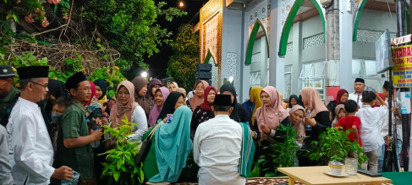
The Role of Mosques as Centers for Social and Religious Development in Communities
DOI:
https://doi.org/10.61455/wijce.v1i2.458Keywords:
mosques, social development, religious education, community engagement, social welfare programsAbstract
Objective: This study explores the role of mosques in promoting both social and religious development, focusing on their impact on social cohesion, education, and spiritual well-being within local communities. Theoretical framework: The study is based on community development theory and Islamic social welfare principles, including zakat, waqf, and sadaqah, to understand the mosque's role in fostering social capital and collective action. Literature review: Previous research highlights the mosque’s spiritual role, with limited focus on its broader social functions, especially in non-urban contexts. This study addresses this gap by examining mosques in Indonesian communities. Methods: A qualitative case study approach was used, involving interviews with mosque leaders and community members, as well as participant observation and document analysis of mosque programs in Banten and Jakarta. Results: The findings show that mosques contribute to religious education and social programs addressing poverty, education, and health, enhancing community resilience through charity events, seminars, and communal activities. Implications: The study suggests that mosques can be powerful centers for both spiritual and social development, and policymakers should leverage their influence for community empowerment and development. Novelty: This research provides new insights into mosques as dual-purpose institutions that balance spiritual and social roles, highlighting their untapped potential in fostering sustainable social development in Indonesian communities.