Islamic Marriage Principles and SDG 5: Purpose, Pillars, and Conditions in Indonesia
DOI:
https://doi.org/10.61455/mrsdgs.v2i02.174Keywords:
islamic marriage, sdg 5, maqaṣid al-shariah, indonesian marriage law, family resilienceAbstract
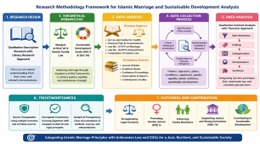
Objective: The purpose of this study is to analyze the objectives, pillars, and conditions of Islamic marriage in Indonesia while demonstrating their relevance to Sustainable Development Goal (SDG) 5 (Gender Equality) through the promotion of equitable family rights, legal certainty, and mutual responsibilities between spouses. Theoretical framework: The theoretical framework is grounded in Islamic family law, maqāṣid al-sharīʿah, and the Indonesian Marriage Law, emphasizing the protection of religion, lineage, human dignity, and justice as essential foundations of marital life. Literature review: The literature review synthesizes classical Islamic jurisprudence, contemporary studies on Islamic marriage, and Indonesian legal regulations, revealing that previous studies predominantly discuss the legal validity of marriage but provide limited integration between Islamic marital principles and the SDG framework. Method: The method employs qualitative descriptive research using a library research approach. Data were collected from the Qur'an, Hadith, classical and contemporary Islamic legal literature, statutory regulations, and relevant scholarly publications, followed by content analysis and thematic interpretation. Results: The findings demonstrate that the objectives of marriage are to establish a sakinah, mawaddah, and raḥmah family; the pillars comprise the bride and groom, guardian (wali), witnesses, and ijab-qabul; while the legal conditions ensure the legitimacy and enforceability of marriage under both Islamic and Indonesian law. These principles strengthen legal protection, clarify rights and obligations, prevent marital disputes, safeguard family welfare, and promote gender justice consistent with SDG 5. Implications: The implications indicate that integrating Islamic marital principles with sustainable development can reinforce family resilience, improve legal awareness, and support inclusive family policies in Indonesia. Novelty: The novelty of this study lies in systematically connecting the objectives, pillars, and conditions of Islamic marriage with the SDG 5 framework, offering a comprehensive conceptual model that bridges Islamic jurisprudence, national legal regulations, and sustainable development discourse within the Indonesian context.