Digital Zakat Platforms as Tools for Financial Inclusion: An Islamic Economic Perspective
DOI:
https://doi.org/10.61455/jeisr.v2i01.577Keywords:
digital zakat platforms, financial inclusion, islamic economics, maqasid al-shariah, fintechAbstract
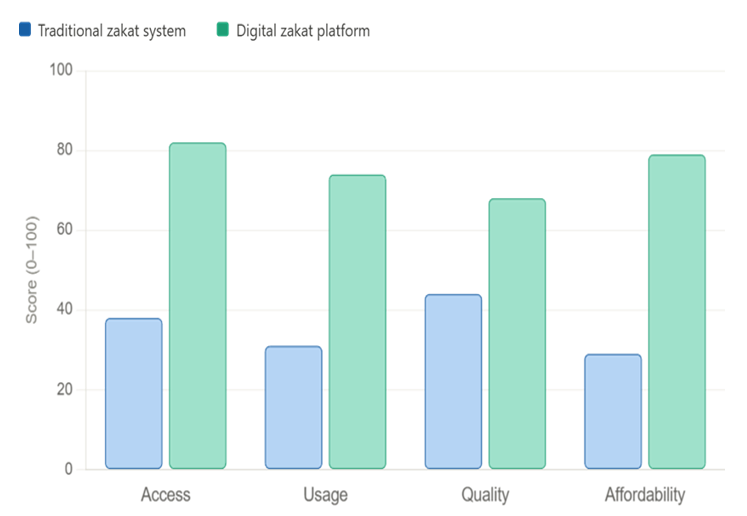
Objective: This study examines the role of digital zakat platforms in enhancing financial inclusion and promoting socio-economic welfare from an Islamic economic perspective. It seeks to explore how digital technologies can improve the collection, management, and distribution of zakat while increasing access to financial services for marginalized populations. Theoretical Framework: The study is grounded in Islamic economic principles, particularly the objectives of Shariah (Maqasid al-Shariah), financial justice, wealth redistribution, and social solidarity. It also draws on the concept of financial inclusion as a mechanism for reducing poverty and economic exclusion. Literature Review: Previous studies have highlighted the potential of financial technology (FinTech) in improving zakat administration and expanding access to financial services. However, limited research has examined the relationship between digital zakat platforms and financial inclusion within a comprehensive Islamic economic framework. Methods: This study employs a qualitative doctrinal and analytical approach. Relevant literature, policy reports, and scholarly works on zakat, financial inclusion, Islamic economics, and digital finance are critically reviewed and analyzed. Results: The findings indicate that digital zakat platforms can enhance transparency, efficiency, accessibility, and accountability in zakat management. They also contribute to financial inclusion by facilitating access to financial resources for low-income groups and underserved communities. Implications: The study provides insights for policymakers, zakat institutions, and financial regulators seeking to develop effective digital zakat ecosystems that support inclusive economic development while maintaining Shariah compliance. Novelty: This research offers an integrated analysis of digital zakat platforms as instruments for financial inclusion through the lens of Islamic economics and Maqasid al-Shariah, highlighting their developmental and social impact.