Short-Term Imprisonment under Egyptian Penal Law and Its Impact on Family Economic Security
DOI:
https://doi.org/10.61455/jeisr.v1i02.493Keywords:
short-term imprisonment, egyptian penal law, family economic security, islamic jurisprudence, criminal policyAbstract
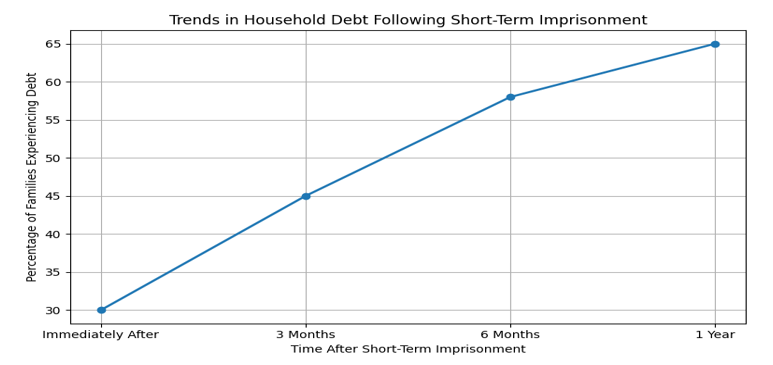
Objective: This study aims to examine the impact of short-term imprisonment under Egyptian penal law on family economic security, assessing whether this form of punishment achieves its intended deterrent purpose without generating disproportionate social and economic harm to offenders’ families. Theoretical framework: The research is grounded in the objectives of Islamic law (Maqāṣid al-Sharīʿa), particularly the preservation of wealth, family stability, and human dignity, alongside modern theories of criminal punishment that emphasize proportionality, social justice, and economic efficiency. Literature review: The study draws on classical Islamic jurisprudential writings on punishment and imprisonment, as well as contemporary legal scholarship analyzing short-term custodial sentences and their social consequences. It also engages with modern criminological and socio-economic studies that highlight the negative effects of short-term imprisonment on household income and social integration. Methods: A qualitative analytical and comparative methodology is adopted. Relevant provisions of Egyptian penal legislation are analyzed, then evaluated in light of Islamic jurisprudential principles and selected contemporary legal approaches. Secondary data from legal texts, jurisprudential sources, and socio-economic studies are utilized. Results: The findings indicate that short-term imprisonment often fails to achieve effective rehabilitation or deterrence, while producing significant adverse economic effects on families, including loss of income, increased dependency, and social vulnerability. These outcomes conflict with key objectives of Islamic law. Implications: The study highlights the need for reconsidering the extensive use of short-term imprisonment in favor of alternative sanctions that better protect family economic security and social stability. Novelty: This research offers an integrated jurisprudential–legal analysis linking Egyptian penal policy with family economic security, a dimension insufficiently addressed in existing literature.