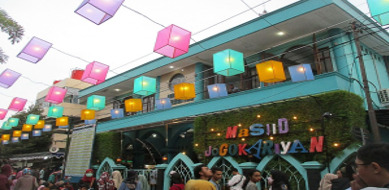
Mosque-Centered Economic and Social Empowerment: Comparative Insights from Al Falah Sragen and Jogokariyan Yogyakarta
DOI:
https://doi.org/10.61455/jeisr.v1i02.461Keywords:
mosques, economic empowerment, social capital, muslim communities, faith-based social strategiesAbstract
Objective: This study aims to analyze the economic and social empowerment strategies carried out by mosques in the development of Muslim communities, focusing on the comparison of the Jogokariyan Mosque (urban) and the Al Falah Mosque (rural). Theoretical framework: The theoretical framework used is Putnam's theory of social capital, which emphasizes the importance of social attachment, trust, and networks in the development of society. Literature review: Mosques play a role as centers of social transformation, although the approaches and implementation of empowerment vary. Previous research has shown the role of mosques in integrating Islamic values in community empowerment programs. Methods: A descriptive qualitative approach with a double case study method. Data was collected through in-depth interviews, observations, and documentation with informants from mosque takmir, worshippers, beneficiaries, and business partners. Results: The results of the study show that the two mosques developed an empowerment strategy that integrates Islamic values with the principles of the people's economy and social solidarity. The Jogokariyan Mosque maximizes the management of congregational funds to support MSME programs, while the Al Falah Mosque emphasizes the empowerment of agriculture-based communities and sharia cooperatives. Implications: These findings show the importance of mosques as strategic actors in faith-based social development. This study recommends strengthening the institutional capacity of mosques and social networks. Novelty: The novelty of this research lies in the comparative approach between two different local contexts (urban and rural) and the integration of social capital theory with Islamic values in community empowerment.