Liquidity Management and Its Impact on The Performance of Deposit Money Banks in Nigeria
DOI:
https://doi.org/10.61455/jeisr.v1i02.439Keywords:
liquidity, management, deposit money banks, performance, profitabilityAbstract
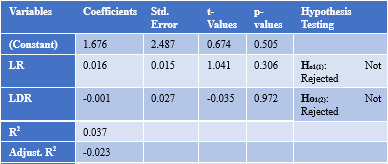
Objective: This study assesses the impact of liquidity management on the performance of Deposit Money Banks (DMBs) in Nigeria, focusing on liquidity ratios, loan-to-deposit ratio, and cash reserve ratio, and their influence on Return on Assets (ROA) and Return on Equity (ROE). Theoretical framework: Grounded in financial management theory, the research highlights the importance of liquidity management in balancing profitability and short-term obligations. It also explores the potential of Islamic liquidity management as an alternative to conventional banking practices in Nigeria. Literature review: The review covers global and regional studies on liquidity management, emphasizing the role of liquidity ratios and the loan-to-deposit ratio in maintaining financial stability. It also discusses the growing relevance of Islamic banking principles in addressing liquidity challenges. Methods: The study uses an ex-post facto design with secondary data from the annual reports of selected Nigerian DMBs. Multiple regression analysis assesses the relationship between liquidity variables and bank performance. Results: Effective liquidity management enhances bank performance, with the liquidity ratio and loan-to-deposit ratio being key determinants of profitability. Excessive liquidity and high cash reserve ratios, however, negatively impact performance. Islamic liquidity management is proposed as a viable alternative for Nigerian banks. Implications: Bank managers should adopt proactive liquidity management strategies, while policymakers are encouraged to design systems that balance stability and profitability. Integrating Islamic liquidity management could help address the challenges faced by Nigerian banks. Novelty: The study contributes new insights into liquidity management in Nigeria, particularly by exploring the potential of Islamic liquidity practices as an alternative to conventional methods, offering a unique perspective on the country’s banking sector.