Public Debt, Governance, and Economic Growth in Emerging Economies: A Comparative Analysis
DOI:
https://doi.org/10.61455/jeisr.v1i01.426Keywords:
public debt, economic growth, emerging economies, debt sustainability, governanceAbstract
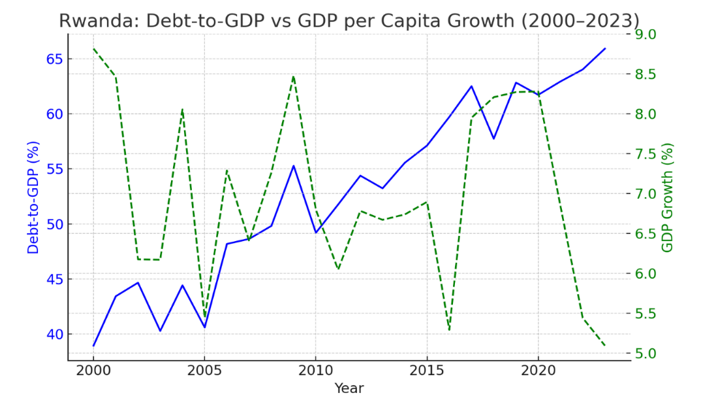
Objective: This study examines the relationship between public debt and economic growth in emerging economies, emphasizing how debt management and governance influence fiscal performance and development outcomes. The paper aims to identify the conditions under which debt supports or constrains economic growth. Theoretical framework: The research is guided by the debt overhang theory and Keynesian economics. Debt overhang suggests that excessive debt discourages private investment, while Keynesian theory highlights that debt-financed spending can stimulate growth when allocated productively. Literature review: Previous studies provide mixed results. Some show that moderate debt enhances growth by financing infrastructure, whereas others argue that high debt levels reduce fiscal space and crowd out investment. Many studies identify threshold effects, often finding that growth slows when debt exceeds 60–90% of GDP. This study builds on existing literature by integrating governance and debt composition into the analysis of the debt–growth nexus. Methods: A quantitative and comparative cross-country design was employed using secondary data from the World Bank and IMF for the period 2000–2023. Descriptive statistics and panel regression models were applied to examine the relationship between debt-to-GDP ratios and GDP per capita growth, while case contrasts provided contextual insights. Results: The findings reveal that moderate and well-managed debt typically below 75–80% of GDP contributes positively to growth, while excessive and poorly managed debt slows economic performance. Countries such as Rwanda and Indonesia benefited from effective debt management, while Zambia and Argentina experienced weaker growth outcomes due to unsustainable borrowing. Implications: The study highlights the importance of maintaining debt sustainability, improving governance, and prioritizing productive investments. Policymakers should ensure transparency, strengthen fiscal institutions, and balance external borrowing with domestic resource mobilization. Novelty: The study’s originality lies in its comparative analysis of emerging economies, integrating governance quality and debt composition into the debt–growth framework. It contributes to policy debates by showing that debt outcomes depend not only on size but also on how effectively it is managed within institutional contexts.