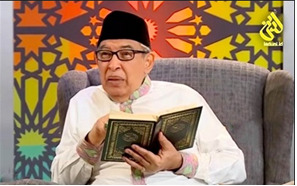
M. Quraish Shihab and the Epistemic Shift in the Study of Religions from a Qur’anic Perspective
Keywords:
qur'anic paradigm, m. quraish shihab, religious pluralism, thematic tafsir, islamic thoughtAbstract
Objective: The primary objective of this study is to uncover and analyze the paradigm of religious studies according to M. Quraish Shihab, particularly as outlined in his magnum opus, Tafsir al-Mishbah. Theoretical framework: The research is theoretically framed within the thematic (mawḍū‘ī) interpretation method, drawing from the Qur’an as the foundational text, supported by contemporary Indonesian exegesis. This paradigm offers a critical response to the dominance of Western secular approaches to comparative religion, and seeks to restore a Qur’an-based framework that integrates revelation and human reason. Literature Review: The literature review explores prior contributions from figures such as Mukti Ali, al-Biruni, Ibn Hazm, and al-Shahrastani, who laid the groundwork for comparative religious studies from within Islamic intellectual traditions. However, these perspectives often remained fragmented and did not construct a holistic Qur'anic paradigm. Methods: Methodologically, this study adopts a qualitative content analysis using the thematic tafsir approach (tafsir mawḍū‘ī), by identifying, classifying, and interpreting Qur'anic verses related to the concept and discourse of religion. Core sources include the Mushaf al-Qur'an, Tafsir al-Mishbah, and the official Tafsir al-Qur’an dan Terjemahannya by the Indonesian Ministry of Religious Affairs, complemented by indexes, classical tafsir works, and interdisciplinary literature in religious studies. Results: The findings indicate that the Qur'an presents religion in twofold: as divine revelation (absolute) and as human understanding (relative). Shihab emphasizes that both should be studied through principles of plurality and tawhid. The Qur’an encourages a multi-method approach involving theological, historical, psychological, sociological, dialogical, and comparative frameworks. The study concludes that Qur'anic religious studies are not only scientific but also carry social, ethical, and theological implications. Implications: This research contributes to the development of a Qur’an-based epistemology for religious studies, offering a novel integration between classical Islamic thought and contemporary scholarly discourse. Novelty: It reclaims religious studies from purely secular narratives, advancing a model that is both faithful to revelation and relevant to interdisciplinary inquiry.