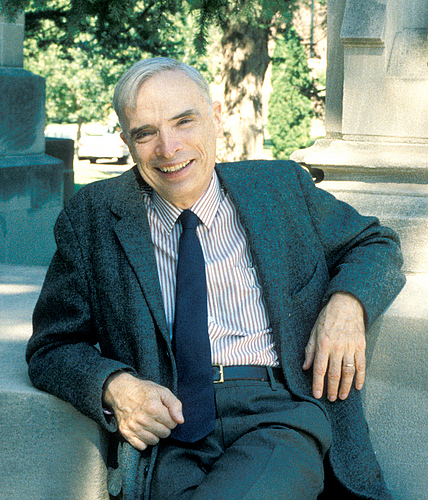
Ian G. Barbour's Thoughts on Science and Religion
DOI:
https://doi.org/10.61455/jwt.v1i01.80Keywords:
thought, Ian Barbour, dialogue of religion and science, independent, integrationAbstract
The purpose of this article is to explore Ian G. Barbour's thoughts on the relationship between science and religion from the perspective of the philosophy of science and how relevant they are to the development of contemporary Christian and Islamic thought. The research method is qualitative with biographical, historical, and content analysis approaches. This discussion found that there are four typologies of the relationship between science and religion made by Barbour, namely: (1) Conflict typology, which involves scientific materialism and biblical literalism; (2) Independent typology, separating the two types in two different regions. The two can be distinguished based on the problem studied, the domain to which they are referred, the methods (existentialism and neo-orthodoxy) used and the two different languages and their two functions (the analytic tradition); (3) the Typology of dialogue, which considers presuppositions in scientific endeavours, or explores in parallels the methods between science and religion, (4) Integration, which consists of natural theology, theology of nature, systematic synthesis (science or religion contributes to the development of inclusive metaphysics such as Whitehead's philosophy of processes). A view similar to but not the same as Barbour's was put forward by John F. Haught who divided the approaches to science and religion into conflict, contrast, contact, and confirmation. These four views can be seen as a kind of typology like Barbour's, but Haught also sees them as a kind of journey. However, there are some criticisms from contemporary Christian and Islamic thinkers of Barbour's typology.