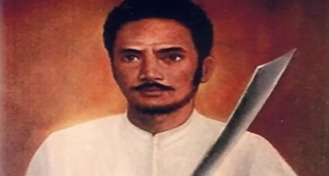
Rethinking Kapitan Pattimura: Political Thought, Nationalism, and Anti-Colonial Resistance in Maluku
DOI:
https://doi.org/10.61455/jwt.v3i01.609Keywords:
kapitan pattimura, political thought, nationalism, collective memory, malukuAbstract
Objective: This study aims to analyze the political thought of Kapitan Pattimura by examining his role as a symbol of Moluccan nationalism and assessing the contemporary relevance of his ideals in strengthening national consciousness amid ongoing social transformation. Theoretical framework: The theoretical framework integrates anti-colonial nationalism theory, emphasizing collective consciousness, shared identity, and resistance to foreign domination, with the concept of collective memory to explain how Pattimura has been continuously preserved and reconstructed as a symbolic figure within the historical and cultural identity of the people of Maluku. Literature review: The literature review indicates that previous studies have predominantly focused on Pattimura’s military leadership and his resistance against Dutch colonial rule during the 1817 uprising. However, limited attention has been devoted to interpreting Pattimura as a living symbolic representation of nationalism embedded in the collective memory and cultural practices of Moluccan society. This study addresses that gap by emphasizing the symbolic, intellectual, and socio-cultural dimensions of his legacy. Method: The method employs qualitative research using a historical and descriptive-analytical approach. Data were collected through an extensive library study consisting of historical books, scholarly journal articles, official documents, and other relevant academic sources. Data were analyzed through systematic processes of data reduction, data display, and interpretative conclusion drawing. Results: The findings demonstrate that Kapitan Pattimura should be understood not merely as an anti-colonial resistance leader but also as an enduring symbol of unity, courage, sacrifice, collective identity, and political consciousness. His symbolic legacy is continually reproduced through commemorative events, public monuments, educational curricula, artistic expressions, and the naming of public institutions, thereby reinforcing patriotism and national awareness, particularly among younger generations. Implications: The implications highlight the importance of integrating Pattimura’s values into history education and character education to strengthen national identity in the era of globalization. Novelty: The novelty of this study lies in reconceptualizing Kapitan Pattimura as both a historical actor and a symbolic construction of nationalism whose political thought and collective significance continue to shape the social and cultural life of contemporary Maluku.