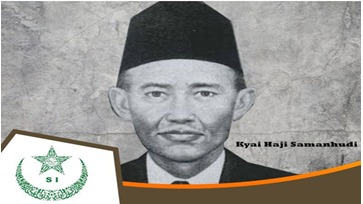
KH Samanhudi's Economic Thought: Developing the Ummah through Sarekat Islam
Keywords:
kh samanhudi, sarekat islam, people's economy, national movement, indigenous tradersAbstract
Objective: This study aims to analyze the struggle of KH Samanhudi in developing the economy of the ummah through Sarekat Islam and examine its contribution to improving the welfare of indigenous traders and the growth of national awareness in Indonesia during the colonial period. KH Samanhudi is one of the figures of the national movement who views that economic progress is an important foundation for the revival of indigenous peoples. Theoretical framework: The theoretical frameworks used in this study are community economic empowerment theory and social movement theory. Economic empowerment theory is used to explain how organizations can be a means of increasing the economic capacity of communities through cooperation, solidarity, and strengthening the bargaining positions of marginalized groups. Literature review: The literature review in this study refers to various previous studies that discuss the biography of KH Samanhudi, the history of Sarekat Islam, the economic development of the ummah during the colonial period, and the role of community organizations in building national awareness. Various studies show that Sarekat Islam is an organization that has a great influence on the development of the economic and social life of the Indonesian people. Methods: The research method used is a qualitative method with a historical approach. Data were obtained through literature studies sourced from books, scientific journals, academic articles, historical documents, and archives related to KH Samanhudi and Sarekat Islam. Data analysis is carried out through the stages of data collection, criticism of sources, interpretation, and the preparation of historiography to obtain a better understanding of KH Samanhudi's struggle in developing the people's economy. Results: The research shows that KH Samanhudi succeeded in building an economic movement based on the solidarity of the ummah through Sarekat Islam, which was able to strengthen the position of indigenous traders in the face of colonial economic competition. This organization not only increases economic cooperation among members, but also fosters social awareness, education, and nationalism that are an important part of Indonesia's national movement. Implications: This research shows that the economic aspect is the main foundation behind the development of Sarekat Islam and has a significant contribution to the process of Indonesian national awakening. Novelty: The novelty of this research lies in the analysis that places KH Samanhudi as a pioneer in the economic empowerment of the ummah who uses Islamic-based organizations as an instrument of economic strengthening as well as the formation of national consciousness.