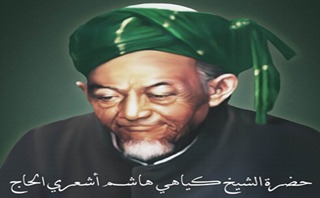
Moderate Da'wah in Hasyim Asy'ari’s Thought and Its Relevance to Religious Moderation in Indonesia
DOI:
https://doi.org/10.61455/jwt.v2i01.552Keywords:
moderate da'wah, hasyim asy'ari, religious moderation, wasathiyyah, nahdlatul ulamaAbstract
Objective: This study aims to analyze the concept of moderate da'wah in the thought of Hasyim Asy'ari and examine its relevance to strengthening religious moderation in contemporary Indonesia. This study departs from the problem of increasing religious polarization, radicalism, and social fragmentation that demands an inclusive and contextual formulation of the da'wah paradigm. Theoretical framework: The theoretical framework of this research combines Islamic moderation theory (wasathiyyah), transformative da'wah theory, and a sociological approach to religion to read the construction of Hasyim Asy'ari's thought in the socio-political context of colonial to post-independence. Literature review: A literature review shows that the study of Hasyim Asy'ari tends to be historical-biographical and normative, with an emphasis on his role in the establishment of Nahdlatul Ulama. However, there is still limited research that systematically constructs the concept of moderate da'wah within the theoretical framework of modern religious moderation. Therefore, this research fills the academic gap by conducting a conceptual reinterpretation of his da'wah ideas. Methods: The method used is a qualitative research based on library research with a content analysis approach to the main works of Hasyim Ash'ari, such as Adab al-'Alim wa al-Muta'allim and Risalah Ahl al-Sunnah wa al-Jama'ah, as well as relevant secondary documents and literature. The analysis was carried out descriptively-analytically and contextually to identify the principles of moderation in his thinking. Results: The results of the study show that the concept of moderate da'wah of Hasyim Asy'ari is based on the principles of tawassuth (middle way), tasamuh (tolerance), tawazun (balance), and i'tidal (justice). Da'wah is positioned as an instrument to maintain social harmony, strengthen ukhuwah, and maintain the tradition of Ahl al-Sunnah wa al-Jama'ah without closing the space for dialogue with national reality. Its relevance to religious moderation in Indonesia can be seen in its contribution to building an adaptive, constitutional, and local wisdom-based religious paradigm. Implications: The implications of this study confirm that Hasyim Asy'ari's thinking can be used as a theoretical foundation in formulating moderate da'wah strategies in the digital era and global pluralism. Novelty: The novelty of this research lies in the systematic construction of the concept of moderate da'wah by Hasyim Asy'ari from the perspective of contemporary religious moderation theory, thereby enriching the discourse of Islamic studies and strengthening the academic base of religious moderation in Indonesia.