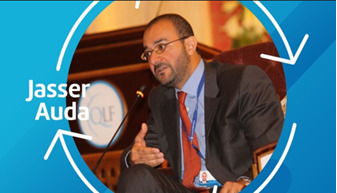
Jasser Auda's Thoughts on the Integration of Classical and Contemporary Sharia Maqasid for the SDGS
DOI:
https://doi.org/10.61455/jwt.v1i03.398Keywords:
maqāṣid al-sharīʿah, jasser auda, sustainable development goals, islamic ethics, systems thinkingAbstract
Objective: This study explores Jasser Auda's innovative approach to integrating classical and contemporary Maqāṣid al-Sharīʿah (higher objectives of Islamic law) and its relevance to advancing the United Nations Sustainable Development Goals (SDGs). The objective is to critically examine how Auda’s systems-based methodology can serve as a dynamic ethical framework to support sustainable, holistic development in Muslim societies. Theoretical framework: The theoretical framework is based on Auda’s "maqasid-based systems theory," which emphasizes multidimensionality, openness, and purpose-driven interpretation of Islamic legal texts. Literature review: The literature review highlights classical scholars such as Al-Ghazali, Al-Shatibi, and Ibn Ashur, juxtaposed with contemporary thinkers like Yusuf al-Qaradawi and Jasser Auda, focusing on the evolution of maqāṣid discourse. Methods: This study employs qualitative library research through critical content analysis of Auda's key writings, including Maqasid al-Shariah as Philosophy of Islamic Law and other related works, and aligns them with SDG values. Results: Findings reveal that Auda’s expansion of maqāṣid to include contemporary values such as human rights, environmental sustainability, and gender justice provides a relevant ethical paradigm for operationalizing the SDGs within Islamic frameworks. His methodology bridges traditional legal maxims with modern global challenges, promoting justice, well-being, and ecological balance. Implications: The implications of this integration include the potential for faith-based policies, Islamic education, and jurisprudence to more directly contribute to goals like SDG 1 (No Poverty), SDG 3 (Good Health and Well-being), SDG 4 (Quality Education), and SDG 16 (Peace, Justice, and Strong Institutions). Novelty: The novelty of this study lies in its interdisciplinary approach, combining Islamic jurisprudence with global development ethics, offering a fresh model for aligning religious values with universal sustainability objectives.